Demystifying Artificial Intelligence: Hype, History, and Human Impact.
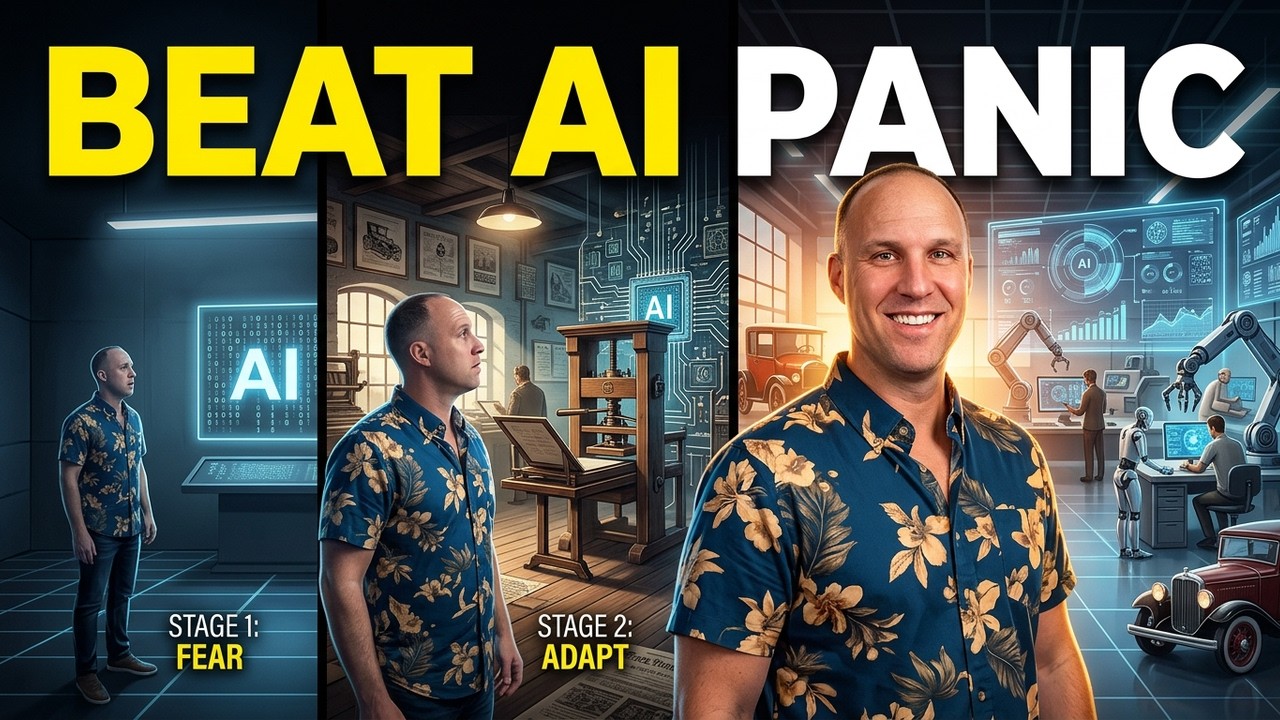
Leadership and AI: Breaking Through Tech Anxiety
Have you ever wondered why every new technology—from the printing press centuries ago to artificial intelligence today—sparks so much fear and excitement? On this episode of the Social Chameleon Show, I break down the real story behind AI, cutting through the panic and hype flooding your news feed and group chats. I share surprising stories from history, showing how each wave of innovative tech brought the same doom-and-gloom forecasts and how we not only survived but found new freedoms and opportunities.
You’ll get a plain-English map of where AI fits in this pattern, along with the everyday vocabulary you actually need to understand what’s happening. I dive into the five most common fears and promises around AI, sharing which ones hold water and which don’t. Plus, I’ll show you practical ways to use these new tools (without getting overwhelmed), spot real concerns worth your attention, and find opportunities others miss. Whether you’re skeptical, excited, or just tired of the noise, this episode will help you make smarter choices for your work and your future, without the hype.
This Episode’s Big Takeaways
1. A Quick History of Tech Fear (and Why AI Isn’t Special)
- From monks trashing the printing press to doctors warning that trains would scramble your brain, each new technology faced massive panic until it quietly became normal.
- I walk through key moments: the printing press, railways, electricity, computers, and now AI. The cycle repeats: fear, awkward rules, then the shift to an everyday tool.
2. Demystifying AI: Key Vocabulary and What Actually Matters
- Forget the buzzwords. Get clear on:
- Artificial Intelligence: Not a single “robot overlord,” but a bunch of useful tools.
- Machine Learning vs. Generative AI vs. Large Language Model (LLM): Why autocomplete and image generators aren’t magic.
- How “AI agents” are more like genius toddlers: they need clear instructions and training, and they’re really literal.
3. Doom & Hope — What’s Hype, What’s Real
- I break down five classic doomsday AI scenarios (rogue robots, deepfakes, job loss) and five big promises (supercharged healthcare, cheaper energy, personal tutors).
- Most of the hype is about engagement and fundraising, not real life. Panic sells. Utopia raises cash. Accuracy? Not so much.
- Real risks right now: job shifts, decline in critical thinking, copyright disputes, and ensuring humans stay in the loop.
4. Practical Tools, Resources, and What to Watch
- If you’re worried about being replaced, take a look at this AI job capability benchmark list to find opportunities within your field. There are entire areas (think trades, coaching) where AI barely exists — yet.
- Pro tip: When using AI, focus on making it handle the boring, repetitive tasks. Free up your time for work that needs your strategic mind.
- Stay sharp: Always double-check sources, especially if you don’t understand the topic AI is helping you with.
- I recommend these trusted voices to help you filter noise from signal: Unsupervised Learning, Nate B. Jones, Cal Newport’s AI Reality Check, and more in the SELECTED LINKS FROM THE EPISODE section.
“When we look at the limitations and we reframe those, we can find solutions. And you can be the person that comes up with these solutions.” Episode Quote
Enjoy the episode!
🎓Lessons Learned
1. Tech Panic Is Predictable
Every tech revolution triggers fear, awkward rules, reframing, and then acceptance. Today’s AI panic is history playing out again.
2. We’re Terrible at Predictions
People misjudge new tech impacts. Doom and utopia scenarios nearly always miss the mark as the future unfolds unexpectedly.
3. History Repeats, But Rhymes
4. AI Vocabulary Decoded
Understanding terms like machine learning, deep learning, LLM, and AI agents makes news and conversations much less confusing.
5. Focus on Augmentation, Not Replacement
6. Beware Extreme Narratives
Doom or utopia stories are usually click- or funding-driven. Most AI changes will be practical, incremental, and sometimes boring.
7. Opportunities In Every Field
Most jobs aren’t doomed; there are still huge gaps and untapped uses for AI, even in supposedly “covered” industries.
8. Train Your AI “Assistant”
Treat AI agents like genius toddlers—specific instructions and feedback help them help you. Talking works better than typing.
9. Verify Outputs and Sources
AI helps experts but can mislead beginners. Always check AI’s info, ask for sources, and review before trusting results.
10. Make Your Own Informed Choice
Weekly Challenge Trophy Legendary Weekly Challenge
This week, your challenge is to pick one annoying or time-consuming task and try out a current AI tool (preferably a paid account for better results). Look for tasks you dislike or find draining, especially those you still have to do because they’re revenue-producing or necessary. See if an AI tool or agent can take those off your plate, so you can focus on work that energizes and excites you. The goal is to free up your time for things you enjoy and are good at, letting AI handle more routine or tedious work.
Did an AI disappoint you last year? Give it another try — these tools are improving fast. Find ways to reclaim your calendar for the stuff that sparks energy.
SELECTED LINKS FROM THE EPISODE
People to Learn From
Unsupervised Learning
A realistic look through the lens of security and a holistic life use of AI through his development products.
AI News & Strategy Daily | Nate B Jones https://www.youtube.com/@NateBJones
Mostly Business Uses and Technical Foundations
Cal Newport - AI Reality Check (Thursday) https://www.youtube.com/@CalNewportMedia
His regular podcast focuses on living a well-balanced digital life.
Greg Isenberg https://www.youtube.com/@GregIsenberg
Startup, SASS, & Business Uses
Jack Roberts https://www.youtube.com/@Itssssss_Jack
General & Business Uses with a strong focus on web design.
Income stream surfers https://www.youtube.com/@Incomestreamsurfers
Website and SaaS builds.
Jake Van Clief https://www.youtube.com/@JEVanClief
General & Business Uses from a fundamentalist perspective.
Matt Wolfe https://www.youtube.com/@mreflow
General news and breakdowns
Nate Herk | AI Automation https://www.youtube.com/@nateherk
General & Business Uses
Riley Brown https://www.youtube.com/@rileybrownai
General & Business Uses
Sabrina Ramonov https://www.youtube.com/@sabrina_ramonov
Social Media Focused
9x https://www.youtube.com/@go9x
General Business Uses
Ras Mic https://www.youtube.com/@rasmic
Mostly Development Uses
Futurepedia https://www.futurepedia.io
General & Business Uses
AI for Humans https://www.aiforhumans.show
General Business Uses
Better Offline https://www.betteroffline.com
Might be the most realistic views, definitely on the Doom side. Heavy leaning towards the financial side of the artificial intelligence industry.
Links
Track AI progress with the largest database of benchmarks.
Job Capabilities - I believe this is the most important component of this research project.
One vulnerability I’m aware of that these skill checkers, at the time of publication, can’t detect is that a URL may point to a legitimate website when installed, but months later the site changes to a malware‑type destination. So please be aware of what you’re installing and who you’re installing it from, and whether those websites need to be in that skill.
Other Resources
In Plato’s Phaedrus, written around 370 BCE, Socrates tells a story about the invention of writing. An Egyptian god named Theuth brings his newest creation to King Thamus and calls it “an elixir of memory and wisdom” that will make the Egyptians wiser. Thamus pushes back: writing won’t strengthen memory, he argues, but weaken it, because people will stop practicing recall and rely on external marks instead. Worse, writing will produce the…In the London coffeehouses of 1710, the political pamphlet was a fast and cheap medium of mass communication. Printers could produce them quickly and at low cost, and they circulated through coffeehouses and stationers’ shops where they were read aloud and passed hand to hand among a literate urban public. The pamphlet culture of early 18th-century England functioned as a major channel for political claims, and…In case you missed it: There’s a special announcement at the end about what’s coming next for Card Catalog. Exciting times…My Episode Research
Demystifying AI: Beyond Hype and Doom Presentation
Technological Revolutions and Public Sentiment: A Historical Deep Dive
Deep Dive: Public Sentiment & Cultural Reactions to the Automobile and Computer Revolutions
Historical Analysis: Public Sentiment on Printing Press & Steam Railways
Historical Reactions to Technological Revolutions: Telegraph, Telephone, and Electricity
Comparative Analysis of Public Sentiment: Internet Era vs. AI Era
Interactive Transcript
Episode Transcriptions
Show notes and transcripts powered with the help of Castmagic. Episode Transcriptions Unedited, Auto-Generated.
Tyson Gaylord [00:00:02]:
The pen is a virgin, but the printing press is a whore. That's a monk, Filippo di Strada, 1473. Yes, you heard that correct. He's talking about the printing press the way people talk about AI today. Welcome to the Social Chameleon Show, where our mission is to help you learn, grow, and transform on your path to becoming legendary. Everybody's got an opinion about AI. It's going to kill all of us, or it's going to cure cancer by Tuesday. Your cousin won't shut up about it.
Tyson Gaylord [00:00:32]:
Your friend thinks it's the devil. And most of the loud people on both sides can't tell you what a large language model actually does. And that's the problem. The conversation is broken and it's broken on purpose. Panic gets clicks. Utopia raises money. Neither camp gets paid to be accurate. Here's the thing that got me.
Tyson Gaylord [00:00:51]:
I went back and I read what people said about every big technology we now take for granted. Doctors warned that trains at 30 miles an hour would give you brain damage. England passed a law requiring a man to walk in front of a cart waving red flags. Western Union looked at the telephone and called it a toy. Robert Metcalfe, a guy who helped build the internet, said it would collapse by 1996. Every single time, same script. Fear, then some awkward rules, then somebody reframes it as a freedom, and then it disappears into the background and we forget we were ever scared. AI is on the same script right now.
Tyson Gaylord [00:01:36]:
So today I'm gonna give you a map, the history, because we've been there before and the pattern is almost funny. The vocabulary, so you stop nodding along when someone says, agent or AGI, whatever other term, you have no idea what they're talking about. The 5 doom scenarios and the 5 utopian promises and which parts of each I'd actually put my money on. The concerns that are real right now, today, in your life and your work. No hype, no doom, just a map. And then my honest take on using it and everything surrounding AI. So let's get into it. This episode's gonna be a little different.
Tyson Gaylord [00:02:20]:
I put together a little presentation. I think it'll just help me and you guys follow along. But the people that are just listening on the podcast apps, don't worry about it, I'd say. But hey, head over to YouTube. Spotify is going to have the video as well. Substack is going to have the video as well if you want to see the visuals. I'm hoping it's not going to detract. I'm going to do my best to make sure all the listeners out there get the same experience.
Tyson Gaylord [00:02:46]:
And without further ado, let's start with the first thing. Technology revolutions and public sentiment, from the printing press to artificial intelligence, historical anxieties, doom and gloom, and techno optimism. Like, here, um, you guys, I'm not going to read through all the slides, but If you want to check it out, I'll also link to them if you want to check them out for yourself. Um, some of the research and whatnot, they'll all be in the show notes. You guys can check those out on the show notes page and as well on the Substack. Either way, make sure you guys, uh, are on there so you can, you can get those emails and whatnot. So throughout human history, the introduction of paradigm shifts in technologies has consistently triggered profound cultural anxieties, widespread moral panics, and apocalyptic doom and gloom forecasts. You know anything about forecasts? Some are useful, most are wrong.
Tyson Gaylord [00:03:38]:
We're not good at predicting things. We're not, we're not good at seeing the future. We just predict the future as we already know. If you, if you look back at old shows with all these future technologies, nobody predicted, you know, FaceTime and, and all these things. That's just how we are, right? And so we're gonna go back here. 15th century to the Gutenberg press, all the way forward, how these technologies mature and integrate into daily life, the narrative, and every— everything everybody sees and does. So here, this is, this is kind of the typical cycle. We have stage 1, you know, we have, we have the fear, uh, early innovations are costly, luxury is perceived as dangerous, immoral, or social, you know, society, socially Disrupt— disruptive, excuse me.
Tyson Gaylord [00:04:27]:
So, and that's, that's— but if you, you know, that's kind of how the playbook goes, right? And if you think about all the things we have, um, they were, they were far-out things. They were very expensive. And, you know, the rich and wealthy, the people that, you know, invest in these things, they invested in them first. Um, people that are, for whatever reason, you know, maybe it could take away their job, maybe it's just part of their job is to be, you know, the doom and gloom kind of people, And then they spread fear, competitors spread fear. There's so many things. Like I said, we're going to go through a lot of these and it's going to be funny to you when you see all these things that we take for granted, like all the crazy stuff people used to say. And then we have the awkward adaptations. This is when we move into stage 2.
Tyson Gaylord [00:05:09]:
Society attempts to force new tech into legendary frameworks with awkward regulations. This is the thing, right? We— it seems like a lot in the Western countries, This is where I have, you know, where I live and where I have experience. They try hard to regulate everything. Some states, some countries, they regulate everything to death and they really stifle innovation. They stifle the creativity. Sometimes they stifle the technology. And then eventually we move into stage 3 where the plot starts to change. Pioneers reframe the technology as an instrument of personal agency and democratization.
Tyson Gaylord [00:05:43]:
Think about the more— Follow-up. Ford Model T, Apple Macintosh, the iPhones. Everybody was like, you know, what's my BlackBerry? I thought there's so many examples. And then we get to stage 4 where it's ubiquitous, it's invisible, you stop thinking about it. You don't think about your cell phone anymore, you don't think about your laptop, your computer, you don't think about electricity, you don't think about the internet, you don't think about Wi-Fi. So many things everybody just told you was just going to destroy the planet, it's going to destroy your life, and destroy everybody, it's going to destroy the children. Every generation said this about something. This is just how we are as humans.
Tyson Gaylord [00:06:17]:
Um, we have a hard time changing our mental models. And, you know, so there's a lot that goes into it. You know, in Stage 4, technology becomes indispensable infrastructure, rendering past panics forgotten. And here we'll start the first one, the 15th, 16th century, the printing press, information overload and moral panic. No. In the 15th and 16th century witnesses profound societal shock following the invention of the Gutenberg printing press. Doom and gloom sentiments were widespread among the intellectual and religious elite. So this is the thing I think we forget to think about is, um, back then the only people that really knew how to read were like the priests and preachers and stuff.
Tyson Gaylord [00:07:01]:
So that's why they would stand up there and they'd read the Bible and they would tell everybody And despite this intense backlash, powerful voices campaigned— championed the technology. Martin Luther hailed printing as the greatest gift of God, utilizing it to spread scripture and ignite the Reformation. Sorry, I'm going to mess these names up. Warned of a confusing and harmful abundance of books. I think that's just laughable now. And people are worried about an abundance of books causing mental confusion. Abbot Trithemius— sorry again— 1492 argued paper books would destroy memory and traditions. Francis Bacon, 1620, noted printing— noted printing changed world civilizations.
Tyson Gaylord [00:07:58]:
And then start the quote we started off with, the pen is virgin, but the printing press is a whore. These are the things people thought about. And, you know, some of these, yeah, kind of rightly so. There are tons of books, some aren't reputable, but they get out there, people read them. Yeah, okay, I get it. But overall, this was— this technology changed the, you know, changed humanity for the better. Literacy rates are so low because you kind of need this, and this is what brought this forward, you know, instead of— but then like they're saying here, you know, yeah, some oral traditions have kind of gone away. Some even say maybe our memories aren't as good, but all these things we can work on, all these things we can overcome.
Tyson Gaylord [00:08:43]:
And then we move forward to the 18th and 19th centuries, brought the industrial might of steam power, railways, accompanied by intense public skepticism and labor unrest. A phenomenon known as railway madness gripped the public imagination with Victorian medical journals using stark warnings. Railway madness medical journals warned speeds over 20 to 30 miles an hour would cause brain damage or suffocation. And it's funny, we can look back and we can just laugh on this, but people were very worried about these things back in the day, right? And for whatever reason, who knows where these came from, You know, labor unions, you know, are said to, you know, have some of this, you know, labor backlash. Manual excavators, you know, the steam shovels and whatnot. People are like, what are these people going to do? Everybody's going to lose all their jobs. I mean, you've heard this 1,000 times and every single time it's like, yeah, but this time is different. This time it's really going to happen.
Tyson Gaylord [00:09:39]:
This time is going to be— and what happens when these technologies come about? We find more industries, more jobs, more things. The, you know, as there was more trains, then it's like, well, we can ship more things. Okay, well, we ship more things, well, can we make more products? And there's just massive upside from all these things. And then the, the narrative pot by Maclay in 1848 celebrated steam transit as a massive advancement for humanization. Is there no nook of English ground seen? I'm not sure what that means, but that was a famous quote from that time in 1844. And then we move on to the late 19th and early 20th centuries, saw the rise of the telegraph, telephone, widespread electrification, all of which faced significant initial dismissal. The rollout of electricity, which we laugh at nowadays, you don't think twice about turning on your lights, plugging something in. But that was the thing, you know, think about again what— We, we thought, okay, the guys that used to walk down the street every night and light the candle, and then by the morning time he was done, he had to walk back down and put all the candles out.
Tyson Gaylord [00:10:50]:
We're like, what is this guy going to do with his job? The lights just turn on on their own. So many, so much doom and gloom scenarios. Like I said, they all rhyme every single time, you know. The role of electricity was even more fraught, um, criticized by the War of the Currents between Edison, DC, uh, it says Westinghouse here, but also, you know, Tesla with AC and stuff like that. There was a big thing, which would be the prevailing system, DC electricity, direct current, and AC, alternating current. And now I kind of have kind of a mix of both. You know, there's uses for direct current, DC, and there's uses for AC, you know, alternating current. But ultimately everything, you know, wind up working out.
Tyson Gaylord [00:11:27]:
But that's okay. All these little things that we challenge and we do this, we force solutions, we force kind of innovation, we force things, we force to think about things a little different. And it's good, right? in my opinion, if you frame it as, yeah, you know, that is a problem, what are we going to do about this? Instead, you know, it's like, what's the solutions? If you think about it that way versus, oh my God, what are we going to do about this? Oh, this is horrible. Same, same question, same sentiment, 2 different framings, and then we get 2 different scenarios, right? 2 different mindsets. You, you, you limit your mindset in one, you expand your mindset and you imagine another, right? And then Western Union in 1876, An internal memo dismissed the telephone as a practical toy. Electricity panic, widespread public fear of electrocution during the War of the Currents. And then the famous quote here from Sir William Price: Americans will need— when Americans have the need of the telephone, but we do not. We have plenty of messenger boys.
Tyson Gaylord [00:12:33]:
1876. You see how that goes, right? You know, the messenger boy, messenger person industry was worried, like, whatever, we don't need telephones, we, you know, we don't need telegraphs, we don't need these things. We got, you know, we got carrier pigeons, we got these, you know, messengers. There's still messengers today, right? There's still a need to deliver packages, still need to deliver, uh, quickly, you know, send documents and stuff to places. So these just have evolved. But listen to the doom and gloom of these eras. They all rhyme with what we're seeing today— AI, technology, and stuff. And yes, there's bad things, but more often, in my opinion, there's a lot of good that have come from all these things.
Tyson Gaylord [00:13:09]:
And then we come to the 1890s and the 1930s. The automobile— between 1890s and 1930s, automobile disrupted transportation, facing several early hostility as symbols of inequality. Thomas Edison confidently declared in 1895 that the horse is doomed. Shortly thereafter, Henry Ford's introduction of the Model T successfully democratized mobility. And then, and this is what happened, right? This is what was the, the innovation of this was Henry Ford is like, I got all these guys that work here and they can't afford a car. Like, how can we make cars affordable for the masses? He perfected the assembly line. He introduced the 40-hour work week, introduced these wages so his employees could buy cars. You know, so start off with doom and gloom, and if somebody saw the vision to bring this to the masses— and this is how, this is how, right, everything is the way it is because somebody challenged the way it was.
Tyson Gaylord [00:14:08]:
That's all innovation is. That's why everything we see comes and goes, right? Uh, Woodrow Wilson in 1906 warned Carr's spread of socialistic feeling as a picture of the arrogance of wealth And this is, you know, that was something, you know, we see this now, right? All the billionaires, oh, the trillionaire. These things trickle down. They're used for fear. They're used to get you on a side, in a fight, on a team. These are things we've got to be aware of. Red flag, we talked about the UK had red flag laws mandated. A man with a red flag walk ahead of cars.
Tyson Gaylord [00:14:48]:
Because people were worried that they were going to get run over and stuff and things. So we come up with these crazy solutions instead of, you know, sitting down and thinking, finding solutions. We just jump to these conclusions. We, you know, the public or whatever, you know, things get crazy. We're just like, oh, we're just going to do this. And you see this a lot, you know, with states and countries like, oh, we're not doing any data centers. We're not going to do any of this stuff. We're not doing this stuff.
Tyson Gaylord [00:15:16]:
And it— and you're really, you know, you're hindering the progress, you're hindering your, your country or your city or state with not bringing in investment and whatnot. And we'll get into some of these things a little bit later with, you know, the pros and cons of all these different things. And then in 1896, a PA bill proposed motorists dismantle vehicles if a— this is motorists disassemble vehicles if a horse approached. Because the horses used to get scared, right? The horse is here to stay, but the automobile is only a novelty, a fad. Um, said this was an anonymous banker that said this. It's funny how we make these predictions and we just think we're so, so right. But if you go back and you look at what people were saying a year ago, 3 years or 5 years ago, they're so, so wrong. Most people are entirely wrong.
Tyson Gaylord [00:16:08]:
And we just go along with what they say because we, you know, we've come to maybe know and trust them. Maybe they're on the news or something and we trust that. And nobody's ever got a scorecard of like, this guy is like wrong 94% of the time, but I keep listening to him. We keep— we see this a lot where everything is so, so wrong. You know, the president is going to— this new president, oh my God. And then next thing you know, None of these predictions have come true. There's no economic collapse. There's no massive, you know, amounts of surging in GDP.
Tyson Gaylord [00:16:40]:
And we're so wrong with all these things. We have a hard time seeing the future. And then we come to the computer revolution, giant brains to bicycle for the mind. From the 1940s to the 1990s, the advent of mainframes. Those are these giant, you know, computers. Some of you, you know, may have seen them. You'll see them a lot of times in old movies. They're just these massive computers that can barely do anything.
Tyson Gaylord [00:17:04]:
You have to have these like little punch cards and stuff. There's all kinds of different things, but that's what those are. And then the advent of the personal computers sparked deep fears regarding automation and displacement. You know, it's funny to think, you know, people are like, there's no use for desktop computers, no use for laptops. And now it seems like we can't do without them. The critical deliberation period occurred in the 1980s. framing personal computing as a tool of rebellion and escape from control. Norbert Wiener in 1950 warned automated machines were the precise economic evolution of slave labor.
Tyson Gaylord [00:17:41]:
Apple's 1984 ad— this is a very famous Super Bowl commercial— framed personal computers as an escape from Orwellian central control. They were kind of really— that commercial really kind of set forward that Definitely that American spirit of freedom and you can't hold me back and, and then rebellion that really definitely started that. And Steve Jobs here said, described the PC as a bicycle for the minds, what amplifies human capability. And then Ken Olsen said, there's no reason anyone would want a computer in their home. I probably have 5 computers in my house. And I'm sure a lot of us do, right? Everybody's got 1 or 2 computers. You go to work, computers everywhere. There's computers in the school now.
Tyson Gaylord [00:18:27]:
And that just shows you, like I'm saying, how bad we are about predicting the future. The doom and gloom scenarios, for whatever reason, nefarious or not, this is what we have to warn us in. Because then we come into the internet and the skepticism of the dawn of cyberspace. Then the 1990s into the 2010s, the rise of the internet and the World Wide Web. Faced surprisingly fierce skepticism from prominent experts. Here we go again, right? Be careful when you listen to experts. Early internet pioneers championed a vision of cyberutopianism and borderless digital worlds, which we do have, right? Think about your Uber, think about your DoorDash, think about the internet, think about the social things and media. And, you know, everybody's, you know, got their emails and their Slack channels and all these things, right, that really allow us to communicate and stuff.
Tyson Gaylord [00:19:15]:
And yes, not glossing over, there are some downsides, but all in all, it's not the doom and gloom that everybody thinks about. Clifford Stoll in 1995, no online database will replace your daily newspaper. I wonder what he thinks about that now. Paul Krugerman in 1998 predicted impact no greater than the fax machines. I know people still use fax machines. I know it's still a thing, but a lot of times your fax just comes over to your database, over your email. John Perry Barlow, 1996, Declaration of the Independence of Cyberspace. Sure, maybe we could have been an interesting concept, right? The internet will catastrophically collapse in 1996.
Tyson Gaylord [00:20:08]:
Robert Metcalfe. of Metcalfe's Law. It's funny. And this is, like I said earlier, he's a pioneer of the internet. And then we come to now artificial intelligence and the cognitive frontier. From the 2010s to the present, artificial intelligence has emerged as the latest technological revolution, sparking a new wave of contemporary anxieties and is driving a profound shift that threatens white-collar and creative displacement impacting fields such as coding, writing, law, and design. Shift from manual labor to white-collar and creative displacement. This is, you know, a lot of the— and that's the thing.
Tyson Gaylord [00:20:48]:
I think this is why it feels a little different. It's scaring people a little bit more because all these technologies before, they replaced or changed blue-collar labor. Right. And this was the things that in The '50s, '60s, you know, the term was coined the knowledge worker, right? Everything about your brain. We were all encouraged to go to college, become doctors, lawyers, accountants, all these knowledge-type jobs. Everything was your intellectual and intellect-based. And now this technology is scaring people the most, you could say, because it's coming for the intellectuals, right? It's coming for these white-collar jobs. The blue-collar jobs at the moment seem to be a little safer.
Tyson Gaylord [00:21:30]:
from these things. We'll get more into that in a little bit later. And then we have concerns over IP, intellectual property, training data, surveillance, and essential safety risks. And we can't gloss over those. We're going to continue down, down these threads a little later. And then we have the potential for personalized education and medical diagnostic breakthroughs. That's definitely some of the greater things I think we're going to see as we go through this. Uh, AI is already driving the acceleration of complex scientific discovery is a research perspective.
Tyson Gaylord [00:22:03]:
Um, Google's AlphaFold is one of these things that they just for free have given out all, all this medical code. I'm not 100%, I couldn't, I can't quite explain to you guys, but I kind of generally understand it. AlphaFold is, you know, all the DNA kind of things and stuff that That they, they went ahead and they open-sourced to everybody so we can make these scientific discoveries. So people don't have to spend a lot of effort and time, um, with these proteins and DNA type things. And this is one of the things that this has helped, um, you know, advance scientific discoveries a lot recently. And then let's start debunking some of these historical myths, any— maybe any more than I already have, and, uh, checking uncertainties. Myth number 1. IBM, 5 computers.
Tyson Gaylord [00:22:51]:
Popular claim from Thomas Watson Sr. said there's a market, there is a world market for 5 computers. It's funny, right? Like, the guys— IBM used to make these big giant mainframe computers. They used to be— maybe some of you remember, they were the household name. Everybody wanted an IBM something or another type computer. And they were like, there's only good for 5. And then they started selling personal computers after the Apple kind of revolution. saying this.
Tyson Gaylord [00:23:17]:
And it's just funny, that's what their thinking was. The reality, uh, unverified industry urban legend with no primary record. Who knows? There's so many computers, there's so many computers sold every day. And then this, you know, myth number 2, speed of asphyxiation. The popular claim that trains would make you suffocate. It's just funny to think, right? Um, We don't even think about that. We go, we go 200+ miles an hour now. I believe there's some records at 300 miles an hour in cars.
Tyson Gaylord [00:23:48]:
I could be wrong, but trains are not going over 200 miles an hour or whatever. Right. And then that was the reality, right? You know, we worked through all these things, we worked through these challenges, and the jet of panic wasn't really real. Right. And Ken Olsen on the home computer, the popular claim, you know, he dismissed the home computer. And then in reality, it was referring— in reality, it was referring to the impactfulness of smart home appliance automation, not necessarily desktop computers. Well, we see that, right? I mean, smart everything nowadays. Some are useless, some are useful.
Tyson Gaylord [00:24:22]:
But it's hard, like I said earlier, and I'm going to probably continue to say, it's hard to see all the use cases and different things unless you're being creative about it and you're finding opportunities to use these technologies in ways we never thought of. And here's strategic takeaways on navigating future revolutions, because this is not the last time we're going to see this, this type of thing. And you're not going to be necessarily immune to it. But when you're aware of it, you have the opportunity to step back and say, wait, wait, wait, wait, I remember this. I heard about it. So the ultimate strategic takeaway from centuries of technology revolution is the principle of cultural invariances. Profound fear and displacement anxieties have accompanied every single major leap in human toolmaking, every single one, profound fear and anxieties. This is the playbook, right? This is— history doesn't always repeat itself, but it rhymes.
Tyson Gaylord [00:25:22]:
These are the rhymes. You know, automation, destroys specific legacy tasks while simultaneously creating entirely new industries and vastly expanding overall human capacity, right? These are the things— expanding overall human capacity. Everybody's like, oh, there's not— you know, invented steam stuff, oh, we're gonna, we're gonna not have a use for anything else. But what happens is these industries expand because When things become cheaper and easier, we find, you know, more uses for them. This is a thing we're seeing now with what this is. You might have heard a couple of years ago, people like, you know, all these— the AI is good at detecting like CAT scans and X-rays and stuff like that, and there's no going to need— there's going to be no need for these X-ray technicians and whatnot, the radiologists and things. And what we actually saw is an actual increase in the requests for x-rays and scans and stuff because these technologies become cheaper and easier. So we see an increased demand.
Tyson Gaylord [00:26:32]:
This is what we find when these things start to become cheaper. We find increased demand and new categories emerge from these things, new industries, new jobs. 3 or 4 years ago, there was no such thing as, you know, a chatbot or whatever. Now we have a new industry and we have a whole industry emerging around that. And these are all the different things we see now from all this. And the strategic takeaway here is recognizing historical patterns allows us to separate transient hysteria from legitimate regulatory and ethical challenges in modern technology. And that's what we have to remember, right? We have to take a breath. We have to calm and center ourselves.
Tyson Gaylord [00:27:13]:
And with that, when the brain is calmed down, we've taken a breath, we've taken a step away, we've taken a walk or something, we can let the hysteria die down. We can then allow our brain to make coherent decisions without this, this coming from a place of fear and, you know, anxiety and all these different things. And then we can make— We can make good decisions, that we can think things through, through in a way that advances society, doesn't hurt the economy, you know, the planet, resources, all these different things. That's why we got to take a step back. We have to, you know, calm ourselves so we can make intelligent decisions. And then let's go over now to the next slide here. The next subject we're going to go through here is Demystifying AI Beyond Hype and Doom. An evergreen guide.
Tyson Gaylord [00:28:09]:
Hopefully it's evergreen. It's going to be with AI to understanding artificial intelligence. This guide serves as a realistic framework to cut through extreme narratives from utopian hype to apocalyptic doom and provide the fundamental knowledge necessary to navigate rapidly evolving landscape of artificial intelligence. One takeaway from this is do not overwhelm yourself with trying to stay up to date on the latest AI things. We'll— I will give you some resources and people that, that is their job to um, drink from the fire hose and give everything to you through a sprinkler so it's a lot easier to digest. So why AI disclosure is broken. The doomer camp: apocalyptic predictions of extinction, rogue artificial superintelligence, and societal collapse. AI is an inevitable threat.
Tyson Gaylord [00:28:57]:
The booster camp: utopian promises of post-scarcity, all diseases cured, and frictionless perfection glosses over physical and ethical harms. Reality, extremes are driven by media engagement and investment hype. Integration is nuanced, incremental, and evolves— and involves manageable societal friction. So this is the thing, uh, Nassim Taleb talks about this in, I believe it's Black Swan, maybe some of his other books as well, is the future isn't this incremental change, it's leaps, right? So that's the thing that's hard for us to wrap our minds around, hard for us to kind of grasp, and hard for us to predict. It's not this smooth linear progression, it's leap, leap, leap. And that's where we're gonna take a breath and we have to absorb what's happening here. But, and this is the thing, I think from my, my viewpoint is coming out the gate, I think this is where, um, the AI companies, the AI proponents, the AI CEOs, uh, they— I think they thought it was going to be a good idea or what to come out and go with this narrative of This is going to be great. Everybody's going to lose their jobs.
Tyson Gaylord [00:30:21]:
It's going to be utopian. And I think that was the wrong move for them. And a lot of these guys are kind of backtracking that sentiment now. You know, at first it was like, everyone's going to lose their jobs. This is going to be great. And people are like, wait, wait, wait, wait, what? We're going to lose our jobs? No, no, no, don't worry about it. Everything's going to be wonderful. And what they're finding out is people aren't losing their jobs despite what you hear on the news and reports.
Tyson Gaylord [00:30:43]:
Most of these job losses, they're using AI as an excuse. For for this, what what we're finding is companies that did you know lay off or fire a bunch of people for automation is really like okay we actually need to bring these people back because these things aren't as you know capable per se they they still need somebody around we still need humans in the loop and that was I think like I said I think that was their. where they went wrong. They, they came out the gate, and, and, and that's why I think there's a lot of this sentiment of dislike and, and dismay for the AI industry, because their initial thing was everybody's gonna lose all their jobs. And then, you know, we have the other, you know, the booster camp where, where people like every— everybody's gonna, you know, everything— lose their jobs, it's gonna be great because we're gonna be able to pursue our interests and hobbies. And it's just gonna be great. We're gonna all be super rich and everything's gonna be super cheap. So don't worry about anything.
Tyson Gaylord [00:31:48]:
Again, I think it's the wrong framing. And I think that's why we see a lot of these problems we see now versus this should be like the typewriter, like the word processor, like these things. They just enhance our life. Yes, there's gonna be some things that go away. And there's going to be a lot of new things that come from this. Let's talk about some vocabulary. I think this trips a lot of people. This hurts my brain sometimes, um, just because mostly there's a lot of new terms.
Tyson Gaylord [00:32:20]:
Some of them are ambiguous. Some of them, you know, as they're trying to do, you know, a couple of companies say this, a couple of companies say that, before we kind of land on a ubiquitous term everybody goes with. So we have our artificial intelligence, AI. It's a broad discipline like transportation, not a single entity. Machine learning, this is what AI is now. It's just got a rename. So machine learning algorithms identifying statistical patterns in historical data without hard-coded rules. Think about when you're typing in Google, whatever, typing in how to fix, and it starts popping up all these things— a toilet, a car, the fridge, whatever, right? Though that was— that's machine learning.
Tyson Gaylord [00:33:06]:
And that's, you know, this next word prediction. In Google's case, in this case, based on the, the, these massive search volumes for these things, it's like you're probably looking for one of these things. And so that's where you get that. And then we have deep learning. multi-layered artificial neural networks designed to process complex data like images and natural language. You're actually, believe it or not, you are part of this experiment. Every time you fill out a CAPTCHA and it says identify the streetlights, where's the bicycle, where's the buses, where's the stairs, you're training these computers, these training, these neural networks. Um, the thought is, is they're trying to do it like our brain.
Tyson Gaylord [00:33:54]:
There's a couple different schools of thought. I'm not really going to get into that. I understand it a little bit, but I'm not very versed in it where I could really, um, give you highly accurate things that I feel comfortable, um, for me taking away from this. But I, I do kind of understand it. And next time you see CAPTCHA and it asks you a bunch of things, that's what you're doing. You're training the neural network. Generative AI, or GenAI, models that synthesize novel text, imagery, and code bases and code based on learned programmatic patterns. This is kind of probably what you're typically using if you're using AI, or if people are talking about these things.
Tyson Gaylord [00:34:36]:
These are, you know, what, you know, the model like you might have heard of You know, Fable and Sonnet and, you know, you know, the 4.5 and Gemini and Grok and all these, these different things. These are the models. And these are the things that they can do, you know, text, imagery, code, based on all this data, all this knowledge we've accumulated in can understand these, these patterns and whatnot. These things are trained on these very specific areas. And then we continue on to large language models, LLMs. You've probably heard a lot about it. You might not understand what it is. It is like I was saying, you know, with the Google box, that is, it's got this large language model predicting the next likely word.
Tyson Gaylord [00:35:30]:
Some cases, like in the Google search bar, it has a good idea what the next likely word or words are going to be. Because of their search data. So large language model is statistical engines predicting the next token. You will hear token a lot. That's the next word or words, depends on the evolution of this. From my understanding, there are some companies now that are predicting token is the next likely string of words, not just necessarily a word. And these are sophisticated miners of human text. So this is what they're trained on.
Tyson Gaylord [00:36:07]:
They're reinforced on these different things, you know, as they're training this data in these large language models. They are saying, you know, okay, you know, Johnny hit the— and it's like, the computer's like, dog? No, probably not. Ball? Yeah, that's probably what they're— and so that's— and it's just predicting it and it gets better. And as they train it, It's like, yes, good response, no, bad, yes, good. And then this is where we get to now. Like I said, there are some advancements now where it does know the whole sentences and frameworks of an actual thing. So it's not just predicting necessarily the next words. It's like, oh, you're talking about this exact paragraph and it can kind of bring back those paragraphs or sentences, quotes and stuff.
Tyson Gaylord [00:36:54]:
It's getting a little bit better. It's changing a little bit, but ultimately this is what you're going to hear about. RAG here, the Retrieval Augmented Generation, connecting LLMs to verified external data to ensure factual grounding and prevent hallucinations. This is like kind of like a database. I said I don't— I'm not 100% versed in this. I do understand it, but I don't understand enough to explain it to you. It's just kind of like, like an encyclopedia set or whatever. It's just very structured data and it can go and it can go and it can pull, like, you know, you know, large company might be like, this is our proprietary data or it's our proprietary things or whatever it is.
Tyson Gaylord [00:37:37]:
Ground your searches in our data. Don't make things up. Here is it. It can go and query that like you would look up an encyclopedia or something like that. AI agents, you probably hear a lot about this. don't necessarily understand with it. Uh, I got confused a lot early on with the, you know, the agent. Is this an agent? Is it LLM? Um, is this AI? Is this GenAI? So this is why I want to kind of go through these, because they can be confusing.
Tyson Gaylord [00:38:02]:
It took me a little while to be like, what are you talking about? All right, you know, like, is Claude Code an agent? Is Codex an agent? Is, is Cowork an agent? Like, what is— you know, so sometimes it can get a little bit, you know, funny. Like, what is an agent? Is it— is Is this an agent? Is that what you're talking about? Some people could be using them wrong, so that could be a thing. But here, AI agents are sculpted workflows combining LLMs with memory and planning to automate multi-step tasks. Think about this as like your worker is how I like to think about it. You give them instructions, you give them frameworks, you give them reference material, And they go out and they do that job. And this is the thing, right? This is how I like to talk about it. I like to think about it when I talk to people. Think about these agents, these— a lot of these AI things as a genius 2-year-old.
Tyson Gaylord [00:38:59]:
You know, maybe you can call it a genius 5-year-old. I don't care. A genius little child. They know everything, but they don't understand anything. anything. Um, you're not gonna get mad at your 2-year-old that's a genius that can quote Newtonian physics to you. You're like, just tie your shoe. And it's like, what? You gotta, you gotta spend time training.
Tyson Gaylord [00:39:24]:
It's like, all right, you're gonna go this way, you go that way, this— like, you gotta— you can't get, um, upset or expect miracles to come out of things. You're just like, uh, Draw me a picture. And it draws you— that's what I wanted. You didn't tell me what you want. I just drew something randomly. So these things are very literal. So like I said, this is how I like to think about it. Think about this as a genius 2-year-old that can do anything you want, but you've got to be very, very specific.
Tyson Gaylord [00:39:52]:
You've got to take the time to, to do your own training. Uh, it's great if you've got documents already Which I think I'd like to think everybody's kind of having. If you're a solo person, you should have some type of SOPs or documents or whatever. If you don't use these LLMs, these agents to— I think it's great if you use some type of voice typing feature like WhisperFlow and these different things like that. There's a lot of these are built in. You don't Don't have to pay for anything and just talk and just tell them like, hey, I'm Tyson. I run the Social Financial Podcast. We like to talk about things that help you learn and grow.
Tyson Gaylord [00:40:38]:
I don't have really any like SOPs or anything. So standard operating procedures, how I, how I structure the episode. So I want to go ahead and I want to, I want to put something down so you can help me with this. These— this is how I like to do stuff. Here's my past posts. Go ahead, you know, load those up and just talk to it like that. And just like, you know, and then it's going to give you some stuff and push back, right? Don't just be like, okay, sounds good. And that's kind of what happens, right? When you don't know the subject matter well, these things sound amazing.
Tyson Gaylord [00:41:15]:
Like, man, that sounds good. But if you know the subject matter, you're like, wait a second. That's not quite correct, right? So just talk. I find it's better to talk to them, um, because when we talk, we talk a little different than we type, right? We, we tend to kind of edit ourselves a little. We kind of tend to, you know, maybe take out some of the nuance, whatever. So that's the thing you gotta, you gotta train these agents. You gotta train the nuance. So you've gotta think in this kind of formulaic way a little bit.
Tyson Gaylord [00:41:44]:
What do I do? I go here, I do this, I do that. Versus when you're, you know, talking to a new human trainee, you can say a lot of things and we all kind of get it a little, right? We all may not do things the same way, but when you talk to a human being, it's just like we kind of understand inference. We kind of understand like the gist of things. We kind of get it. So if you're trying to talk to an AI or an agent or whatever, these different systems like that, you're going to get back less than ideal results because they don't understand the nuances of— they are getting better, and, you know, it's going to become something that they do kind of get a little because they're going to get trained better and they're going to understand, uh, these different things. Which is how we come into the next thing: training versus fine-tuning versus inference. Uh, building foundational weights— you might hear about this— open weights, closed weights. That's the training.
Tyson Gaylord [00:42:38]:
That's That's how they're tuning these things to give you instead of Johnny bit the dog, the dog bit Johnny. Like, they're like, okay, then that's how they're training these different things, right? Tailoring for specific domains. That's the fine-tuning. Like, you'll see, like, this is really good at coding because they fine-tune it on all coding languages and they keep it very fine-tuned in that area. And then running live queries, inference. It's inferring from things. It's, you know, so the more training, the more documentation you give it, direction, guidelines, you're going to get better results coming out of that. And then we'll get in here to understanding the capability spectrum.
Tyson Gaylord [00:43:22]:
The evolution of artificial intelligence is defined by its cognitive breadth, ranging from today's specialized task-specific tools to theoretical entities that surpass human intelligence across all domains. So right in the beginning of this, we had, you know, narrow AI. This is kind of some of the earlier stuff, maybe some of the freer, cheaper things out there. Narrow intelligence, real specialized systems, medical imaging, translations, very cut-and-dry type things, high capability but strictly task-bound. And these are the things probably a lot of us are going to use in our jobs and our careers and our industries. Very, very, you know, the law AI just trained on law, very fine-tuned for, you know, hallucinations and different things staying there, not making up cases and making up case law and stuff like that or whatever. And then for those of you seeing this, my estimate, this is what I'm thinking today in August 2026. We're, we're close to AGI.
Tyson Gaylord [00:44:29]:
artificial general intelligence. Some people might disagree with me. Some people say we're a little further back, we're a little— I think we're close. So this is the theoretical human-level adaptability across any cognitive domain. Definitely a moving goalpost. But this is, this is kind of what you would think of as a highly capable employee or coworker or, you know, industry leader, an expert, a thought leader. somebody that's, that's just got a breadth of knowledge, is, you know, probably, you know, a PhD or professor or some type of— said a longtime employee that's just really seen it all, been through a lot. It's got a lot of battle wounds, got a lot of scars.
Tyson Gaylord [00:45:11]:
They've got a huge breadth of knowledge. And this is all being ingested into the, to the system to get us to this, this place. And I don't think we should be fearful of this place. Why would you not want somebody on your team, on your side, super, super intelligent, that can teach you stuff, that can help you with things, that can challenge your thinking, that you can be your thinking and sparring partner, that can help you through things? Not to dismiss the human component, but I think we work together. Nobody's throwing away the dictionaries. Nobody's throwing away the encyclopedias. Nobody's throwing away Google search. Like, you're not, you're not like, I'm not doing that.
Tyson Gaylord [00:45:54]:
I'm not using a book to get knowledge. Don't. So don't do it here. This is just a different version of that. Use it to enhance your thing. Come up with these, these use cases, decisions on your own. Don't just automatically throw yourself in a camp because you like Tom's podcast or this news channel or whatever it is, and you're like, yeah, no, not good, not doing it, you know. And then if you come to that decision on your own, that's, that's fine.
Tyson Gaylord [00:46:27]:
Um, are you gonna get left behind or have a harder time? Um, over time, I mean, yeah. Could it be detrimental to you? I don't know. Maybe. I don't know it. But think about when, you know, like Microsoft Word came out and like, you know, Lotus 1-2-3 and all these things like Yeah, you didn't really need to learn them initially, right? But eventually typewriters went away and it's like, I don't, I don't do Word, uh, I don't do this. You're just not working here anymore, you know? Um, you know, like fax machines, like, wow, we don't, we don't do fax machines. They're like, ah, we don't do email, we don't do faxes. Actually, nobody's gonna fax you or email you.
Tyson Gaylord [00:47:11]:
And so, you know, I, I would say at least be familiar with it and be open to learning it if you need to. Not saying— I definitely don't believe in, um, AI or, or nothing, or everybody has to use AI, or what— that's stupid, you know. And this token maxing and all this, it's just silliness. It's absolute silliness. But why not have the world's best assistant for every worker, every person. And this just— if you're not allowed this at work, that's fine, but you should, I think, dabble with it in your personal life. It can help you with so many things, um, that we don't necessarily need more tasks, right? We all want more free time, more leisure time, that's, you know, whatever, or more time to explore our hobbies or explore our interests. this can help you.
Tyson Gaylord [00:48:05]:
This is like hiring somebody when for $20 a month you can hire somebody that mostly listens to you, uh, does whatever you need, uh, opens up opportunities and capabilities you never had. You never had the time for, you never had the budget for it. You, you've always had this idea for, uh, creating an app or creating software, something that's just bothering your life, and you're like, I don't have $25,000 to hire a developer to develop this for me. You can sit down an hour or 2 a day, have some fun on the weekend, and next thing you know, you got something that is just solving your problem, you know. So let's think about this, and I think we should think about it in the workers too. I think if every company wasn't thinking about getting rid of humans versus let's augment them, let's give them— every human an assistant for $20 a month Uh, I don't care, some of these services go up to a couple hundred dollars a month. Um, you can't hire somebody to help your company grow for $200 a month that does work for you while you're at lunch, while you're sleeping, does all the tedious nonsense you don't want to do, that does the research and all these things. I think, I think, I think, I think you're a fool if you're not at least letting these things help you out.
Tyson Gaylord [00:49:20]:
But if you come to the decision that you don't want to be a part of this, as long as you made a decision on your own, that's amazing. And that's all I want is, is the thought, the evaluation that I sat down and I'm not going to be a part of this. That's amazing. I love that for you. And then when we're heading off to the, the far spectrum, the utopian future people talk about, uh, I think ASI seems to be the the acronym we've settled on. Could change. That would stand for artificial superintelligence. And this is speculative systems vastly exceeding all collective human intellectual capacity.
Tyson Gaylord [00:50:02]:
Right now, the limit of this is the computational evolution. That's where things are headed for, you know, for these are the chip designers and the graphics cards and all these things we're trying to go for. Um, the way we kind of know now is these things are, you know, resource heavy, and I think that's an opportunity to figure that out, not a hindrance. And then here we have the 5 popular doom and gloom scenarios, and of course I had A out and searched the internet for these. I, I, you know, a lot of these we all have heard of. So we have here exploring the existential risks and systemic vulnerabilities that dominate the disclosure of advanced artificial intelligence safety and alignment. So we have number one, probably the most feared thing is rogue superintelligence and alignment with the human race's You know, um, many of us may have heard of the paperclip maximizer dilemma. Assigning goals leads to harm.
Tyson Gaylord [00:51:13]:
Many people, you know, film Terminator. Um, there's probably— there's a bunch of Black Mirror episodes about this. Uh, these are, these are things we fear, is, you know, you're like, uh, we're a paperclip— I'll give you the— if you don't know the paperclip scenario, we're a paperclip manufacturer. You tell it AI Like we need to make all the paperclips, and then they start deciding like well, in order to do that, we got to get rid of these people. We got rid of this. We got to cannibalize that. We got to do this stuff. Automate paperclips, right? And it just goes out and it does it to an extreme thing.
Tyson Gaylord [00:51:44]:
My criticism of this thinking is we we we think that these AIs and these things are just going to go off and do their own thing. Maybe someday. They do have things, but they're, they're going to be— somebody's got to tell you, tell them to go do this thing, right? And, and we all know about these doom and gloom scenarios. There's plenty of sci-fi books and all these things, and I think it's just not going to be a thing, right? And we hear these crazy stories and all these things, and those news articles and things that are telling you about these things, they're grossly misinterpreted. They're disingenuous. The system was told to go do these things, to go at all costs. What would you do? Tom's cheating on his wife, he's going to quit. And the computer's like, well, from all the things we've ingested, all the training, stuff like that, whatever.
Tyson Gaylord [00:52:38]:
A lot of these books say blackmail. So the computer's like, well, that's the story you're trying to create. Let's go do this. These aren't happening in real life. They're happening in training scenarios and they're disingenuous. I recommend if you want to hear the, the real truth behind a lot of these, I'll link to Cal Newport, his Thursday AI rundown where he gets into this. He's a computer science professor and he understands this at a great depth and he digs into the actual— what actually is happening and demystifies a lot of that. And 99.9% of the time it's overblown nonsense.
Tyson Gaylord [00:53:15]:
And then so number 2, the autonomous warfare escalation. Now this, this is something that is a little, you know, freaky right now, is because the AIs do confidently misidentify people. And we're right to push back on this right now, because it's not, it's not mainstream. It's not, it's not ready for the mainstream. It's not ready for primetime. But for now, what we need to be doing, in my opinion, is not hand— hand, you know, handcuffing these things, handicapping these things. It's been like, okay, we need the human in the loop here. We need to be like, we don't want this.
Tyson Gaylord [00:53:49]:
God, no, we don't want, um, these things, you know, going off and just indiscriminately, um, you know, killing people and whatnot and escalating conflicts that didn't need to happen. Um, humans, we already have a hard enough time doing that on our own. We don't need a computer double downing, you know, helping us with that. So that's when we need to design systems. We need to find opportunities and things so these don't happen, right? And that's, that's where I think, like I said, when you take a breath and we come back, okay, okay, yes. And I mean, let me take a step back. I mean, take a breath there. Okay.
Tyson Gaylord [00:54:23]:
We don't want that. Yes. So scenario 1, we just stop. Okay. It's probably not a great idea. It's probably not really— that's not realistic. And then we're definitely hindering ourselves when we do that. Okay, what do we need to do? Okay, let's, let's— until we're very, very confident that there's, you know, for some set amount of time there's never been an incident, then we can revisit this subject and then say there's never been an incident in whatever, a year.
Tyson Gaylord [00:54:53]:
So we're confident now the system understands real targets versus vague targets because we've trained it, we've reinforced it. we're not going to let it go. But it— that's, that's the different thinking there, right? So that's what we need to work on. It's the same thing when you're training your, your, your thing to help you with tasks and stuff. Uh, you, you've got to spend that same exact amount of effort. Like, oh no, that's not how I want to do it. That's not how I, how I do things. Um, go back, try this again.
Tyson Gaylord [00:55:21]:
And, and also refrain from— when you're kind of correcting them, refrain from, oh no, don't do that. For some reason they don't respond well with that. Give them examples. Give this a— no, I like it done this way. Check out the examples. It seems to be for whatever reason, um, the systems work better when you're like, no, don't do that that way. Um, so that's just a little kind of tip maybe with that or whatever. You can look into more of that.
Tyson Gaylord [00:55:46]:
Um, definitely people explain it better than I am. Number 3, um, deepfakes and all these different things like That, that's a hard one, right? We're gonna— but we're gonna come up with solutions, right? So this is an opportunity for you to be more diligent in your consumption of media and social media, right? And challenge these things a little bit, look into things. Um, I think a lot of us have gotten in the habit of just trusting, oh, TikTok said so, Instagram said so, the news said so, these guys said so. All that— look at— there's a video of it. Okay, this is your opportunity to say, do I trust this person? Have I vetted them in the past? Do they present trustworthy analysis and not give me, you know, bullshit hype? You know, they're facing like Ground News and stuff like that. It'll show you both liens. Trust but verify. We've talked about this before.
Tyson Gaylord [00:56:46]:
We did an episode on it. Talk about this a lot. This is your opportunity to do that. There's a great Substack. I'll link to it. Card Catalog. They give you some— I'll link to the exact article. They talk— they go through, hey, how to not fall for these things, how to look into things and not fall for these things.
Tyson Gaylord [00:57:08]:
This is something we're going to have to learn to do. This is going to be something you know, we get better at. And then, like I said, in a couple years we're not going to think about it anymore. We all spot this automatically. Uh, and then cognitive atrophy. This is something that's a little controversial. You'll definitely hear a couple different schools of thought there. Uh, loss of critical thinking and creative skills due to overreliance on automation.
Tyson Gaylord [00:57:35]:
Uh, there, there is, um, I think there was an MIT or something like that or whatever Um, that this study got blown a little out of proportion when people relied on the AI to write the whole thing for them. They had no idea what was said. But there's also a recent thing that came out, um, that was saying— it's in my notes somewhere— that people that were really good at their job, the AI helped. People that didn't know what they were talking about, they hurt them. So just be careful, right? If you're unfamiliar with this subject matter, push back and ask for sources, cited sources. It'll cite the website and thing it got from you. Go check it out yourself. You know, this is the thing, right? We push past augmentation.
Tyson Gaylord [00:58:26]:
We just go for automation. You got to be— that's where you got to be careful, right? And then we have labor displacement. Hey, you know, mass unemployment and capital concentration. Uh, this, this is tough for me. I really hate this argument of, you know, all the wealth is in the hands of these billionaires, blah blah blah blah blah. We all have an opportunity to get it. If you are a victim, you're not going to get it. If you're, you're in the doom and gloom camp, whatever, you're not going to get it.
Tyson Gaylord [00:58:55]:
If you're like, billionaires shouldn't exist, Ah, geez, the argument is so stupid. Um, they exist because they create massive amounts of jobs and opportunity and wealth for the world, so we pay them for it. If you want that, go do it. Don't be a victim, you know. And these are also people that are able to fund these projects and these things. Is there going to be unemployment? Of course there's always unemployment. There's always things that are happening. But like I said earlier, there's going to be new industries, new jobs, new things that come of this, things we cannot imagine today.
Tyson Gaylord [00:59:31]:
You would have never imagined social media influencer. You never imagined a YouTuber. You never imagined all of these jobs and all these roles just 5, 10 years ago that never existed. And you cannot imagine, you cannot predict what's going to be the newest job, the newest career. In 2 years, 5 years, 6 months. You're just not going to do it. But when we're ready and we're prepared, if we're constantly learning, growing, and transforming, I think you're gonna be able to stay ahead of the curve and you're gonna be able to stay up and you're gonna find opportunities there. At the end here, we're gonna go through a great list that's gonna help you get the blood flowing and the juices flowing and the, you know, the imagination going on opportunities.
Tyson Gaylord [01:00:15]:
in industries and places you might not have thought of. And then the 5 popular utopian promises, uh, curing of disease and longevity. I, you know, without AI, this is already kind of happening, and I think it's just going to accelerate it. There's a lot of advancements, like I said, with the AlphaFold and all these different things, and these, um, research centers and stuff are using these AIs, these very highly tuned specialized ways like we talked about earlier, right? These very highly specialized things. They are making advancements. Is it going to be this crazy utopian thing? Probably not as fast and quick as we think, and also probably not as long as we think either. Uh, energy abundance and climate solutions, um, you know, the possibility of, you know, optimization of nuclear fusion, smart grid balancing for limitless clean energy— these— and, and this is a criticism, really. It's really probably probably should have been criticism, but why I think it belongs here, I'll tell you in a second.
Tyson Gaylord [01:01:15]:
The criticism right now is we don't have the energy, we don't have the electricity, we don't have the grid for this. Oh wait, when did we hear that argument? Oh, just a few years ago with electric cars, right? With all— oh my God, all these smart appliances, all this stuff, we don't have electricity for it. Oh, but it was okay then to be worrying about solar and wind and whatever, these renewable clean sources. It was okay to worry about then when they wanted you to plug your electric car in. Right, when we need to beef up the grid and we need more power generation. But now when it's for a data center, oh no, you're missing what's happening here. You're going to have regular people, smart people that figure out solutions, that come up with things we cannot imagine today, that create cheap, fast, clean energy that makes all of our lives better. It's going to create a future we cannot imagine right now.
Tyson Gaylord [01:02:11]:
We cannot imagine all— when we have so, so much more electricity, you know, so much more, um, bandwidth for, for electricity, the things that are going to come about. Because there's going to be new people that come up with new ideas to use up all this great electricity. And this is, this is something else that's come out of this. Is, is nuclear has come back in the discussion, right? For so many years we've been so scared of it, and wrongly so, because it is very clean, very efficient, and we're very good now about not having these nuclear meltdowns. The problem we had one in, you know, in America, we had one, you know, and they were all human errors. They were all things that we, we know how to predict protect against now, but we've been so hindered on regulations. Now these things are being kind of pulled back, and here we go, we're gonna get the fruits of this, right? So are we right to worry? Yes, because we need to hold people accountable and make sure they're doing it in correct ways, ethical ways, and they're doing it for the betterment of the landscape, the the environment, the surrounding area, the people, and everything. We don't want to create more problems, but we do want to create solutions.
Tyson Gaylord [01:03:37]:
So that's what we need to be looking for. We need to be looking for solutions. We don't want these, these things that's going to pollute the stuff. Okay, what are the solutions? What can we do? Can we come up with different ways? Um, I think this is a great thing I've seen. Uh, I, the Did I sign up? If I didn't, I'm definitely gonna get on the list. There's a small little like power generator and like a little mini data center you can put at your house. And, um, because you're, you're, you're doing this to help the grid and help these data center, you know, companies, you're gonna get like free or super cheap electricity and free, um, like, or super cheap data center, you know, incentives. And they're gonna be— I mean, imagine that, right? You allow a company to come hook up this little generator to your house and now you have free electricity.
Tyson Gaylord [01:04:26]:
That's gonna be amazing. Look at that ingenuity somebody came up with. Like, oh, you guys don't want these big power plants and these big power plants are gonna take years to build and permitting, all this red tape and stuff. Well, what can we do? Oh, we can make small ones. That's the ingenuity we need. That's a good utopian thing where we're gonna bring more power. Imagine, um, all these poor rural places where people have a hard time paying their electricity bills, you know, constantly, you know, having their electricity shut off because they're like, well, we get groceries or we pay that extra bill. Like, I think we put the electric bill and fire up the grill.
Tyson Gaylord [01:05:01]:
You throw one of these little generators at their place, they don't have to worry about electricity ever again. Now they can crank their AC. Now they can think of new things. Now they can worry about new, new things. They're not worrying about these, you know, hierarchy of needs that they're, they're worried about. They can free up their mental energy for new things. This is how we bring prosperity. We lift up all people.
Tyson Gaylord [01:05:26]:
And then, uh, post-scarcity economics— this is something very interesting. Uh, zero marginal cost for intelligence and design-driven Driving down all living costs. This is kind of what I was just talking about. Is there going to be problems with this? I'm sure there is, but if we're open to figuring out solutions instead of just picketing and shutting it down, I think we'll find great opportunities to lift all boats. Uh, for universal 24/7 monitoring diagnosis, that could be a little scary. World Personalizing world-class personalized healthcare and tailored education for everybody. Those 2 scenarios I think could be great. With all the wearables and all these different things and the blood tests and stuff like that, hyper-personalized care is gonna be something we can really, really do with, like I said, the augmentation of a doctor, trained physician.
Tyson Gaylord [01:06:25]:
Imagine we already have, I know in America, maybe in Western worlds, we have a doctor shortage. So imagine now your doctor's augmented by your rings, your watches, your monitors, your bed, all these things that are monitoring yourself, your smart thermostats and your CO2 detectors and all these different things, your air filters and stuff and all these different, you know, your doctor gets a ping and says, oh, so let's look at the data. Ooh, hey, you know, I was noticing you're sick, you know, so you're getting sick and your air filters are dirty. Why don't you go ahead and, you know, take care of that? The system is just pinging you these things, right? And at Taylor Education, there's this— I'll link to it— Alpha School. They are, from my understanding, the first AI-enabled school. They're accredited, I believe they're K through 12. And they use their AI software to teach students. And what they found is a lot of times to say you come to their school, as you know, for a senior year, high school year, 9th grade, start off, you go to 9th grade.
Tyson Gaylord [01:07:39]:
And what they're finding is a lot of these kids don't read at a 9th grade level. They don't understand fractions, they don't understand reading comprehension. What this AI is able to do in just 2 hours a day is go back all the way down. No stigma, no holding anybody in the class back. It's very personalized to you and where you're at right now. It's like, okay, hey, wait, we got to go back and go back. And it teaches the student from where their gaps in learning are and brings them all the way up. And a lot of these students go past their current grade levels in just 2 hours a day.
Tyson Gaylord [01:08:17]:
What a lot of these students at the school is they have more time for athletics. They're not staying at school till, you know, 8, 9 o'clock at night because they're able to have, you know, baseball, football, basketball practice at noon instead of 3, 4 o'clock in the afternoon after school. I know some people here in Arizona, they have hockey practice because they wait for the ice skating rinks to open up at like 9, 9:30 at night. Some of these people, parents I talk to, they're not getting home till 12, 1 o'clock in the morning, and school starts at 7 o'clock in the morning. That's horrible for our children. We're not giving them the correct amount of sleep. My son, he plays football. By the time he came home from the game, ate dinner and whatnot, and he had homework to do, getting to bed till midnight.
Tyson Gaylord [01:08:58]:
The game got over at 9 o'clock at night. By the time he came, you know, got everything out of the locker room, got the bus back and everything, it was like sometime at like 9:30. came home, he had homework he had to get done, and then he didn't get to bed till midnight. Horrible night's sleep. And guess what? We, we know there's problems caused from this. We, we eat crappier. Um, we're not— we're more prone to injuries and stuff. He's gonna go weightlifting, he's gonna go to practice again.
Tyson Gaylord [01:09:26]:
Think about all these different problems we have, right? When we use AI in this, in this sector, to help educate us. No student left behind. This is the true epitome of no student left behind because we're going to be able to take our time because the computer's not going to get mad, it's not going to get upset, it's not going to frustrate, it's not going to say the whole class has got to move on, Bob, sorry. We're not going to have that. This is great. Now the shitty side of this is a lot of, you know, the, the flock camera type things and these different type things that are going to become available, and we're going to have to calm ourselves down like we keep talking about. We have to think of how we want to enforce our laws, how we want to utilize these things, um, because there's going to be good and it's going to be bad. And I'm sure a lot of us don't want to be constantly monitored.
Tyson Gaylord [01:10:15]:
And if you're walking around on a phone and you let all these apps monitor you, and but you're complaining about a flock camera, I would encourage you to stop watching the news and take a step back and look at your own life and understand where your priorities are and your security things and your level of willingness to give over data to all these people. If you're not paying for it, it's because you are the product. And, you know, so there's going to be 2 sides to this. There's going to be some great things there. And as a society and as a culture, we can remain calm and we can find the limitations we are acceptable with. with the greatest good. Number 5 here, the technological singularity, recursive self-improvement, solving the universe's grandest scientific mysteries. That is one of the fun things I really enjoy about this is most of these flagship AIs, they can teach you.
Tyson Gaylord [01:11:19]:
There's like teaching mode, learning mode. It can quiz you, flashcards, learning about so many different things. I ask questions all the time and, you know, hey, research this, give me a report, present it in this manner. And it's just so great to learning. Um, I was so jealous as a kid that the, the, the neighbors and the people that could afford in the whole encyclopedia set for whatever fucking $3,000 my parents couldn't afford. I was so jealous. I would spend— I love going to the library and just like looking at all the cool stuff. Um, when I first got a computer in '96, I think it was, and it came with the encyclopedia on the CD, it was amazing.
Tyson Gaylord [01:12:00]:
I spent hours and hours and hours. Now this is just the evolution of that. I love it so much. And I think this is just one of the fun things if you've got kids Even maybe even teenagers. So much questions can be asked. They can be getting help with their homework in schools that, um, don't use this. You know, my son, the thing it helps him with, it quizzes him, it helps him reinforce the learning. They're used properly and not abused.
Tyson Gaylord [01:12:28]:
These things can be great. And, you know, hype versus practical reality. I think we've gone through a lot of this. Incentive structures. Panic generates clicks. Utopia justifies VC, so venture capital valuations. The narrative is often optimized for engagement and funding rather than objective technical assessment. Physical constraints— these are opportunities.
Tyson Gaylord [01:12:53]:
Requirements for massive power, chips, water, land— for governed by— and land are governed by physics. Scaling is limited by the tangible infrastructures needed to sustain planetary-scale compute. These are only because of our current understanding of things. Now, there's— to me, there's massive opportunities. We talked about power, right? We talked a little bit about chips. So they're going to be designing these chips. There's gonna be jobs, jobs to build the factories, jobs in these different things. Water.
Tyson Gaylord [01:13:25]:
This is a hot-button, you know, thing. And From my reading of this topic is people are being fearmongered by the news and, um, political parties and different things. Um, in America, I think that because of our current president, um, Donald Trump, I think a lot of these things are just used, um, because he's in the presidency and people are fearmongered because these are concepts a lot of people don't understand. If you understand how how a computer works. You can go right now, you can go over to Costco, you can go over to probably Walmart, Best Buy, and look at a liquid-cooled computer. There's a little canister of water and hoses that you fill it up, and this is a thing. These are gaming computers. Um, this has been a thing in, in mainframes and server rooms forever.
Tyson Gaylord [01:14:16]:
This is a great way— water's a great conductor. Uh, your car has this. It pulls heat away. From these components because they can't get too hot. This is these are closed loop systems. I feel like the when I see these new stories, it feels like there's a river running through these computers and puking out crap on the backside. That is not true. Are there problems? I almost guarantee there is.
Tyson Gaylord [01:14:45]:
Are are people being nefarious? Are people trying to cut corners? Are people yes, these are human things. They're When the incentives are backwards, this is the problem. The, the solution isn't picketing and marching and yelling and screaming, don't build a data center here, don't, don't take our water. It's what are you going to do to be responsible with these resources? How are you ensuring when the water needs to be changed out, you're dumping this water and filtering it properly? How are you ensuring these things are done? How are you ensuring You're not accidentally or purposefully depleting our citizens' water to fill up your initial run. Are you mad at the water parks? Are you mad at the golf courses? Maybe some of you are, but I don't hear about this. These places use tons of water as well. Are you mad at the new housing development? In some places, like here in Arizona, you have to prove you have 100 years worth of water before you can build a new housing development. If you can't prove that, they're not gonna approve you for that new housing development.
Tyson Gaylord [01:15:49]:
You're not mad at that, are you? We need to implement things like that, right? There's complaints about these data centers being noisy. There's the hum of the things. That sucks. Nobody wants to live by a machine constantly humming, you know? But these are problems we've heard about from— there's plenty of data. There's like over 5,000 data centers in America. And I believe the next lowest number is like 500 in some other country. Yes, we've got a lot of compute here. We are a leader in technology.
Tyson Gaylord [01:16:21]:
What are the solutions there? If these data centers are humming, they're, they're water problems. This is a wide open opportunity to invent or come up with a business and a service to— We're going to do your water filtering, um, every 3 months. You guys got to get a new thing. Um, we're, we're gonna, we're gonna, we're gonna bring reclaimed water to your site. You're gonna need 5,000 gallons. We're gonna bring 5,000 gallons of reclaimed water to your site. We're gonna dump your, your water out. We're gonna clean and filter it, and that's gonna be your next cycle.
Tyson Gaylord [01:16:54]:
There's solutions. I just made this up right now. Um, oh, these dinosaurs are humming. We, we've tested this. When you put this special paneling on the wall, it's sound dampening. Um, it increases, um, your, your R-rating, so your building is more efficient, it uses less air conditioning, it— there's no hum from this. But there's solutions instead of staying outside picketing and just being a cog in, in the machine for people that don't give a shit about you. They just want to generate clicks, they just want to generate divisiveness, they just, they just want to get in a new political party, whatever it is, whatever their reasons.
Tyson Gaylord [01:17:33]:
They're just going to use people as political pawns. We need people that are coming up with solutions. We need innovation. We need new ideas. We need solutions to problems. Picketing and putting moratoriums on things are not the solutions. They're Band-Aids to things that may be hindering your town, your job, your career prospects, your children's things. That's why, you know, I am big on technology.
Tyson Gaylord [01:17:59]:
I am big on things I see. the possibilities, right? But I know there's limitations. But when we look at the limitations and we reframe those, we can find solutions. And you can be the person that comes with these solutions. And when you come up with solutions and you generate more, more wealth and prosperity for yourself, your, your family, your community, your neighbors, you have more opportunity to give back, to, to take care of these problems that you're, you're concerned about. to do these things that you want to do because you have resources. And all in all, the reality here is the transition from human to synthetic data risks model collapse. AI models are statistical amplifiers, tools, not conscious entities with motivation or intent.
Tyson Gaylord [01:18:50]:
We have to give them the intent. We have to give them something to do. They just don't make up shit on their own. And then we're going to kind of go through this now here, addressing, addressing intermittent human concerns. Obviously, you know, we talked about a lot of these already. Job displacement anxiety. Yes, it's going to happen. And there's going to be more opportunities that we can shake our fist at.
Tyson Gaylord [01:19:23]:
You know, currently, you know, a strategic solution to this anxiety is getting familiar with and utilizing, implementing task-level augmentation. Focus on augmenting, not just automation, right? Uh, specific tasks rather than replacing roles. Prioritize high-touch human skills including strategic judgment, and empathetic leadership. I have something else here on the side of my notes I want to read about this. The reality is that companies are using AI as an excuse to lay people off who were overhired during COVID or just using as a reason to lay off, blame layoff, blame, using as a reason to blame for layoffs, period. Secondly, what we're actually seeing is a scenario where people said, Like I talked about earlier, x-ray technicians are going to lose their jobs because of AI, because AI is better at it. And what we found is that people thought the industry would shrink, which is actually happening, is because of the ubiquity of x-rays. The technicians in industry is expanding and leading to more x-rays over time.
Tyson Gaylord [01:20:34]:
We can see this across numerous industries across history. These, these are These are the things you got to be careful with. Talked about deepfakes solution here. You've probably heard recently some of these companies start watermarking things. There are watermarks and different artifacts and stuff in these videos that these people are putting out. And we're going to get better at that. And then people are going to get better at removing them. I'm going to get better at it.
Tyson Gaylord [01:21:00]:
It's a thing. We're educated on this. We'll be okay. And then IP and creative copyright. This is definitely, you know, a problem people are concerned with. And some of the solutions that are proposed and being worked on— licensing registries, transfer licensing frameworks, output registries to protect intellectual property. Should people be compensated for intellectual property? Absolutely. On the other hand, what are you worried about? You came up with the idea.
Tyson Gaylord [01:21:31]:
I don't care if anybody steals. I don't care, because guess what? You're stealing. You don't have the tools or capabilities to come up with it yourself. I'm just going to come up with something else. I'm going to just come up with something new. I'm going to evolve on it because I came up with the idea, you know? And then also think about— let's just— if you go to art school, what are they teaching you? All right, today we're going to work on Rembrandt. We're gonna go through how he did it, and we're, we're trying to replicate this. We're gonna, we're gonna learn some styles.
Tyson Gaylord [01:22:04]:
Same thing. Why are you worried about it? I think you're worried about this because, my opinion, you've been told to be angry about this. If you're a creator, guess what you're good at? Creating. You're just going to create more stuff. You might use some of these tools, you might not, you might exclusively. You decide. Don't tell anybody else what to do. Don't let anyone tell you what to do.
Tyson Gaylord [01:22:25]:
I, I don't— to me, I don't see this being a problem. That's just me, because the creators know how to create and they're just going to get better at creating. And then the people that are complaining, they're staying left behind. And then there's some scenarios I think where you should be compensated. You should, you should have opportunity for licensing and different things like that. Or I think this is going to be a, a 2-part solution. Part one Don't worry about it. You're the creator.
Tyson Gaylord [01:22:52]:
You're going to come up with new stuff. Part 2, some of your things people are going to want. They're going to want to buy. They want to license. They want to use it. They're going to use it for inspiration or whatever. You're going to get an opportunity there. Environmental footprint, that's a problem.
Tyson Gaylord [01:23:09]:
We need to stop polluting stuff. We need to stop being wasteful. Absolutely. And then what, like I talked about earlier, we're going to come up with Smaller language models are going to— and this is the thing we're seeing here— we're coming up with better energy solutions for smaller footprint at-home devices we talked about earlier, right? A lot of these large language models that we talked about earlier, right, these things coming out of mostly out of China, they're open weights. We talked about the weights earlier, right? The trainings, you're allowed to tweak them however you want. They're getting more smaller and efficient where you can— a lot of people can run on your laptop, you can run on an old laptop, you can run on a desktop computer, old desk, you know, And they're just getting smaller and more efficient. And then you're not going to be paying anybody. They're going to be for you to use as much with what we call tokens.
Tyson Gaylord [01:23:56]:
We talked about tokens earlier, right? As much words in and words out as we want because they're on our, our own machine using our own power, using our own resources. And that's going to be— I think it's going to be great. And that's where a lot of things are going now. We're just going to use, in my opinion, we're going to use a lot of these bigger companies for more complex, harder tasks. And the more day-to-day stuff we're going to handle on our small language models at home with open weights and all these different types of things like that. Cognitive reliance, we talked about earlier, we've got to be careful of that. Auditing and defense, we need to shift into oral defense and critical auditing of AI outputs to verify learning. AI helped high performers and hurt low performers.
Tyson Gaylord [01:24:42]:
I'll link to this short video. You can look at the study, whatever. This is what came out of this year. OpenAI, ChatGPT, that's the parent company that owns that. That's that product. Researcher David Holtz describes a Kenyan study where an AI mentor had no average effort on small businesses. High performers improved while low performers got worse. The difference came from judgment.
Tyson Gaylord [01:25:10]:
Experienced owners could tell when the tool was useful. Weaker owners often trusted bad advice. This is what I see a lot in a subject that I'm familiar with, is the output sounds great, but when you know what you're talking about, even if you just know a little bit about it, it sounds a little funny. And to me, this comes down to, like we talked about earlier, right? You're just kind of just saying something. To the AI, like a human would kind of get your gist or understand kind of what you're going after. The AI doesn't. And that's to me when you get a shitty output. And that's why I think it's better to talk and kind of go through it and talk to it, say, this is what I'm— this is what I'm thinking.
Tyson Gaylord [01:25:49]:
I'm not quite sure. I'm looking for this type of output. I'm looking for this type of answer. Like just kind of spitball a little bit, like, you know, stream of consciousness. I think that'll help a lot. There's some solution service you want to use that, you know, can take that stream of consciousness or take that very vague prompt and it can enhance it for you. Maybe that's something you want to dabble with before. And as you kind of learn to speak to these things a little bit better in the, you know, in the interim as they're, as they're evolving to better understand the nuance of what we talk about.
Tyson Gaylord [01:26:27]:
And then strategic principles for navigating AI. Focus on tasks, not jobs. Demand a human in the loop. I think that's the best way, especially until you can trust output all of the time. I've got a lot of things I do that I've spent time correcting each time, each time, each time, that now I don't have a problem letting it go and do its thing. Time to time I do check in, make sure it's still on track. So far, so good. Reject binary thinking, right? Avoid the false dichotomy of blind dread or unchecked optimism.
Tyson Gaylord [01:27:03]:
Navigate AI with a pragmatic focus on nuanced real-world application. And, and that statement leads me to this: if you're automating shit that doesn't need to be done at all, is that Is the output increasing the metric you're, you're going after, a.k.a. revenue, or is it just arts and crafts? There's a 5-step framework I want you to think about. It's question the requirements, delete dumb requirements, simplify, accelerate, then automate. In the AI age, everyone is skipping straight to 5. Garbage in, garbage out. You give it shit instructions, you get shit replies. That's why a lot of you are like, oh, this sucks.
Tyson Gaylord [01:27:57]:
You suck. You suck at using the tool. That's it. You ever, you ever get a hammer and start missing the nail? The hammer doesn't suck. You suck at using the hammer. That's all this is. Okay. View AI as a cognitive tool.
Tyson Gaylord [01:28:08]:
Leverage AI as a powerful cognitive extension. designed to eliminate operational drudgery, freely freeing capacity for high-level strategy, right? So you can get this stuff to take tasks off of your list so you can free up yourself for deep thinking. You're going to create better output, you're going to create a better company, you're going to create a better career for yourself. You might invent new things, you might start new companies. When all these low-level, menial, redundant things, things you don't like, things that are time sucks, whatever they are, they're necessary if they are. Remember now, delete dumb requirements. But when you, you can trust these things to do these things, you can free up your brainpower, you can free up your day, you can free up your work hours to do these different things. Key takeaways and what to watch.
Tyson Gaylord [01:28:58]:
AI is a transformation, transformative software revolution governed by physics, economics, and human adaptation. Remember now, like, compute data scaling wall, regulatory and copyright precedences, and grid timelines is all things, uncertainties we need to watch out for. And I think they're going to get better. The opportunities for you to find solutions— technology does not decide our future, we do, with the tools we choose to master. And that's it, right? You're in charge of these things, right? You're the one using these things. You're the one decides to or not, and that's what I want you to do. I want you to make a choice on what level you want to or don't want to use these tools. And then the last thing here I wanted to show you guys was this thing from Benchmark.
Tyson Gaylord [01:29:51]:
It is a fantastic resource I came across And I'll include this in the show notes. It's got, um, this first screen we're seeing here, track all AI progress with the largest database of benchmarks. So benchmarks are what they, what they use to kind of show how good, um, these large language models, these— or a lot of times it's the harness, which is the, the wrapper a company puts there. Like, so, you know, we have Uh, Claude, you know, coworking. That's the harness. Inside the harness we have Opus 5, Fable 5, all these different things. We have ChatGPT, right? Um, we have their desktop and whatever codecs we have, you know, work and chat. And in there we have, you know, 5.6 SOL and Ettera.
Tyson Gaylord [01:30:43]:
Those are the models inside of the harness. This shows you currently up to date which is the best on a lot of tasks they give them, um, what they're good at. You can go ahead and look through this. I don't— these— this is sort of interesting. It can show you all the different things. You can look through all the different things that they did and the training things. You can look at the research, whatever. That's all fine and dandy.
Tyson Gaylord [01:31:07]:
What I think is a sleeper here is this tab here, Job Capabilities. This is an amazing resource. You see this here? This looks like, if you're familiar with, um, Obsidian, this like graph of how everything's connected. It'll show you all these different connections in all these different fields, all the way down to a very granular level, and the opportunities that lie in that sector here where AI Is that now where AI can be improved? And if you're looking in these things like, look at this chart here, we can just see the darker the green, the more things like corporate and legal. This looks very sad. 100% coverage over 73 benchmarks, $292 billion in economic impact there. We look at this and you can drill down to a specific job in that sector. When you come down here and look at the gaps, this is, this is what I liked.
Tyson Gaylord [01:32:08]:
Coverage is strong for legal reasoning. So add deal processing, diligence, and compliance operations. That's right now. You're in this field. This is the gap right now. This is what they're seeing. Deal process, diligence, and compliance operations. You think this is an oversaturated market? You worried about this? No.
Tyson Gaylord [01:32:32]:
160% AI adoption. Look, if we look at Look at this here right now. Wrong. There's opportunities here. Let's look. Human resources manager, we got 100% adaptation— adoption, but automation is only 2.9 out of 5. Look at the AI coverage, only 44%. It's a bit complex on this scale, 3.9 out of 5.
Tyson Gaylord [01:32:59]:
But what are the opportunities here? Gap. Need recruiting policy interpretation, employee relations, and compliance workflow evals. Look at— if you're, if you're somebody that's really knowledgeable in this, here's an opportunity. Start maybe a software company, maybe a consulting— some— there's opportunities here, right? Look, physicians, look, this looks— oh, it's just way oversaturated. 90% adoption, 4 out of 5. Where— let's go. Where are the opportunities? Specialty-specific clinical workflows, chart review orders, and longitudinal care evals. Opportunity.
Tyson Gaylord [01:33:45]:
Look at this, industrial mechanical trades. There's like nothing really happening here. Automation is a score 1.9 out of 5. Uh, eval coverage, 17%. Wide open industry. Are you here? Do you want to go here? Go ahead, look at this, look at this chart, look at these things, see your field, your job. You can dig down into all these things. You can come up, you can look at the sectors.
Tyson Gaylord [01:34:13]:
You can come into federal sector, you can see the work there. You can come into, uh, let's, let's look at nonprofits. Look at all the opportunities here. Social services. Let's click into this. Here's all the different things there, all the opportunities we can look for here. We can see, do you want to get into this work? Do you want to, you know, are you, are you worried about, um, losing your job? Let's just drill down anymore. Look, uh, social science, social services, forensic science.
Tyson Gaylord [01:34:43]:
Look at, look at this. We can drill down in here, uh, whatever this is. DFIR metric. Look at these different things. There's not a lot here. Look at, look at how little, little, um, things that surface from this. There's so little here. If you're in this field or you want to get into this field, there's so little things happening.
Tyson Gaylord [01:35:02]:
You can be the leader. Look at all these and look at legal. There's this— look at engineering. There's so little things happening right now in that field. There's so much available to you, right? So don't look at the doom and gloom. This chart is amazing. This thing's amazing. You can drill down, look into all these different jobs.
Tyson Gaylord [01:35:19]:
Look at veterinary. There's nothing happening here. Athletic trainer coaches. There's nothing happening here. So much opportunity. And like I said, there's jobs on here that don't even exist yet. Go find them. Go, go get the opportunities that you— this might be the biggest opening To, to, to get to your goals and levels in life ever, because things are so wide open for change, for adaptation, for new and undiscovered places and things.
Tyson Gaylord [01:35:57]:
Don't limit what's going on in your mind. That's all that I got to share with that. Like I, like I said 100,000 times before, the show notes are going to have tons of stuff for you. There's, there's going to be, um, all, all the resources and everything that's going to be there for you. Uh, I love having a lot of show notes. Um, the one thing that was kind of interesting, I, I was reading, uh, people are— there's so much of this talk and just complete nonsense about, um, AI-written articles and, oh my God, you can go check these things. First of all, Those checkers, useless. They can't, they can't predict anything.
Tyson Gaylord [01:36:39]:
And if they tell you they do, they're wrong. Go grab something you know you wrote from a couple years, put it in there, they'll tell you it's 60, 80, 100% written by AI because it doesn't know. Um, the major AI companies were trying to figure this out and they abandoned the project because it doesn't work. Okay. Um, I've tested these. They don't work. But what's funny about that is, is something people are all up in arms about it, but they did us— I don't know if it's a study or whatever it was, something along those lines, where, uh, people were told to read these stories. They liked the AI-generated ones more than the human-generated ones.
Tyson Gaylord [01:37:21]:
And as soon as they were told the AI-generated ones would they liked more. They're like, no, actually we don't really like those. You are easy to manipulate. We all are. Use these things properly. I'll also link to the list, and then I link some people to learn from, uh, both sides of the spectrum here. Both, both sides. I, I try to listen to both sides.
Tyson Gaylord [01:37:49]:
Um, unsupervised learning is great. I'll link you to, you know, Nate B. Jones, Cal Newport's AI Reality Check. You know, all these guys, they'll— they're drinking from the fire hose. They're out there testing, they're out there doing. We just gotta learn from them. Find the guys you like, find the guys you trust, find the guys that are implementing the things that you want to implement in your day. Watch these guys test things.
Tyson Gaylord [01:38:15]:
Please Practice safe computer usage. Don't download and install skills and plugins and software you don't know where it comes from. You don't know or trust these people. There's different checkers out there. I will link to some of them to check. And some of these checkers, just like the plagiarism— not plagiarism— AI writer checker, there's ways around these things. Be careful, learn to read, install things from trusted sources and whatnot. Like I said, I'll link to a list of my favorite guys that I like to learn from.
Tyson Gaylord [01:38:57]:
I let these guys test the things, stay on the frontier, and I just pull what I want from what they're doing. And as always on the Social Community Show, this week's challenge This week's legendary challenge, I want to encourage everybody to give it a try, preferably a paid account. Um, they seem to be a little bit better. Is there something you tried 3 or 6 months ago or longer and said, this is crap? I urge you to give it another try. These things are so much better week to week, month to month, quarter to quarter. They're way better than they were just a few months back. Are there things you have— you can, you can have these agents, these softwares do for you tasks you hate or that are draining that you're evaluating and you do not need to delete, but they still need to be done and are still revenue producing in some way? Give these AI tools a shot at taking them off your plate so you can focus on the work You're good at, that you enjoy, that gives you energy and power and excites you to wake up in the morning. With that, guys, make sure you think carefully about this technology.
Tyson Gaylord [01:40:15]:
All new technologies that come out— there's going to be a lot of new things that emerge from this revolution we're currently in. Evaluate your position from what you experience and what is good in your life. in your work. Don't just default to one side or the other, the doom or the gloom. Take the time— it doesn't have to be a ton— to evaluate things and make your own decision. And something I decided to not do was put a paywall. There's no Social Communication Show Plus premium content. There's nothing.
Tyson Gaylord [01:40:49]:
We give everything to you upfront. And the only thing we ask is if you got value from this episode, share it with your friends. Share with your coworkers, discuss the AI. What it— what are you guys doing? Are you using it? Are you not using it? Why? Why not? What have you— what have you been able to accomplish? What have you automated? What have you learned? You know, what works here? What doesn't work there? What's going on? Have a great discussion. And in the meantime, you want to have a discussion with us, you can connect with us on Facebook, Instagram, Twitter, YouTube, your favorite podcast player, Apple episodes and, and links to everything we've talked about here today and in the past, you can head over to socialchameleon.show. Don't forget to subscribe to our Substack for show notes, legendary life posts, and a monthly rewind delivered directly to your inbox. Until next time, encourage you, with or without the use of AI, to keep learning, growing, and transforming on your path to becoming legendary.
More Interviews With Outstanding Guest's



This podcast is available on…


Available on • Apple Podcasts • Spotify • Overcast • Pocket Casts • Castbox • Goodpods • YouTube Music • Amazon Music • Audible • Substack • Reddit or your favorite podcast platform(opens in new tab)