Your Mind
On this episode, we talk about a few key points from Daniel Kahneman’s book Thinking Fast And Slow. We cover topics on The Law Of Small Numbers which includes; Being Fooled By Randomness, The Hot Hand, And Sample Size. Then We Jump Over To Anchors and The Power Of Suggestion. We end with The Illusion Of Understanding which includes; Black Swan, What You See Is All There Is, Hindsight Bias and finally Outcome Bias.
Use Science to Reduce Screen Time https://www.twopct.com/p/use-science-to-reduce-screen-time
A Science-Supported Journaling Protocol to Improve Mental & Physical Health https://www.hubermanlab.com/episode/a-science-supported-journaling-protocol-to-improve-mental-physical-health

Books & Links From The Episode
THE LAZY SYSTEM 2
One of the main functions of System 2 is to monitor and control thoughts and actions “suggested” by System 1, allowing some to be expressed directly in behavior and suppressing or modifying others.
For an example, here is a simple puzzle. Do not try to solve it but listen to your intuition.
A bat and ball cost $1.10
The bat cost one dollar more than the ball.
How much does the ball cost?
A number came to your mind. The number, of course, is 10: 10¢. The distinctive mark of this easy puzzle is that it evokes an answer that is intuitive, appealing, and wrong. Do the math, and you will see. If the ball costs 10¢ then the total cost will be $1.20 (10¢ for the ball and $1.10 for the bat), not $1.10. The correct answer is 5¢. It is safe to assume that the intuitive answer also came to the mind of those who ended up with the correct number - they somehow managed to resist the intuition.
Excerpt from Thinking Fast and Slow by Daniel Kahneman page 44
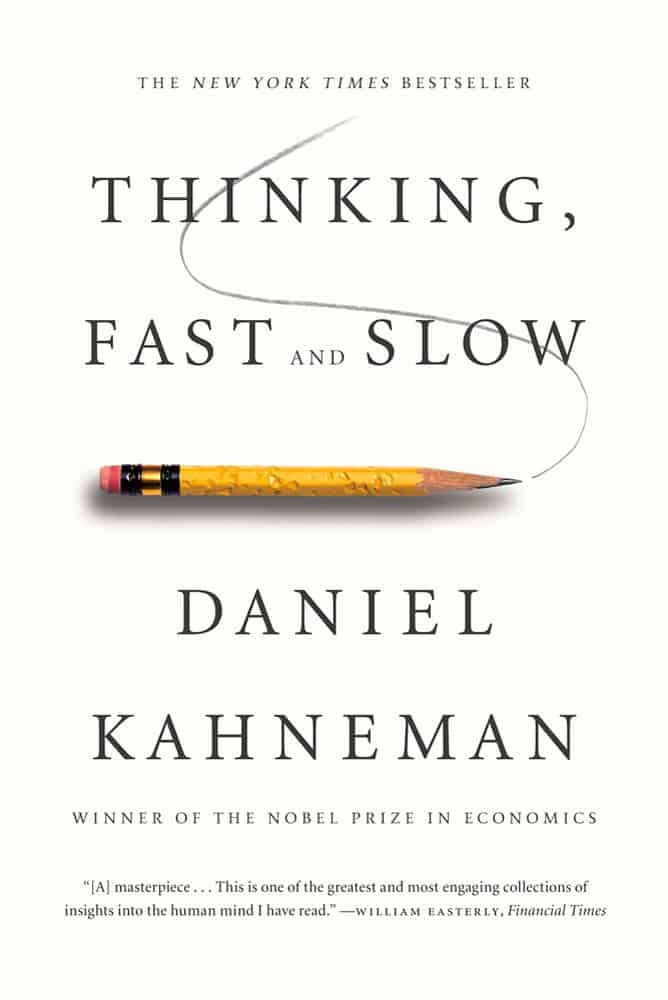
Thinking, Fast and Slow by Daniel Kahneman
In the international bestseller, Thinking, Fast and Slow, Daniel Kahneman, the renowned psychologist and winner of the Nobel Prize in Economics, takes us on a groundbreaking tour of the mind and explains the two systems that drive the way we think. System 1 is fast, intuitive, and emotional; System 2 is slower, more deliberative, and more logical. The impact of overconfidence on corporate strategies, the difficulties of predicting what will make us happy in the future, the profound effect of cognitive biases on everything from playing the stock market to planning our next vacation―each of these can be understood only by knowing how the two systems shape our judgments and decisions.
Engaging the reader in a lively conversation about how we think, Kahneman reveals where we can and cannot trust our intuitions and how we can tap into the benefits of slow thinking. He offers practical and enlightening insights into how choices are made in both our business and our personal lives―and how we can use different techniques to guard against the mental glitches that often get us into trouble. Winner of the National Academy of Sciences Best Book Award and the Los Angeles Times Book Prize and selected by The New York Times Book Review as one of the ten best books of 2011, Thinking, Fast and Slow is destined to be a classic.
Major New York Times bestseller
Winner of the National Academy of Sciences Best Book Award in 2012
Selected by the New York Times Book Review as one of the ten best books of 2011
A Globe and Mail Best Books of the Year 2011 Title
One of The Economist's 2011 Books of the Year
One of The Wall Street Journal's Best Nonfiction Books of the Year 2011
2013 Presidential Medal of Freedom Recipient
Kahneman's work with Amos Tversky is the subject of Michael Lewis's The Undoing Project: A Friendship That Changed Our Minds
Episode Transcriptions
Tyson: 00:13 Welcome to the social chameleon show where it's our goal to help you learn, grow, and transform, into the person you want to become. Today, What you should know about your mind will be referencing Nobel Prize winner, Daniel Kahneman's book thinking fast and slow, if you haven't read it. It's a great book. I recommend it highly.
Ransom: 00:32 Not necessarily a book review, but just the things we will be talking about are from that book. So
Tyson: 00:38 A quick overview for those who haven't read it or maybe a little quick refresher, the main theme of the book is the two systems of the brain as he calls it, a system one and system two, system one operates automatically and quickly with little or no effort and no sense of voluntary control. I like to think of it as like your intuition, that kind of those quick things that just you just saying sometimes you don't realize you're saying you're doing it or whatever it be. System two allocates attention to the, um, effortful, affordable mental activities that demand in including complex computations, the operations assistants who are often associated with the subjective experience of agency choice and concentration. So that more deeper thought where you got to take a second to think about something that's usually, you know, I like to think about system to another overarching theme of the book is what you see is all there is. So all the information that you're presented with whatever is in front of you, the moment that's when we'll make those, those decisions, we know those, that uh, that first impression kind of thing and, and those types, things like that.
Ransom: 01:52 And it just kind of, Idk, I tend to think of this system is like people operate kind of like the way energy moves, energy moves with the least amount of resistance. So majority of the time your brain is on system one because it's trying to overcome these obstacles or thought processes or patterns without much effort. Right? Versus system two, you know, as humans we are complex individuals or we can kind of focus down and fine tune and um, you know, do complex camp computation. So you know, there are times when our system kicks in, especially if we're paid to do it or if we enjoy that activity will break down and get into the further complexity of things. So it's a, it's an interesting book and we brought about some of these themes for the book to educate you about your mind and maybe you can kind of see what's going on in which system you're using and you know, what you're doing with these tasks. But anyway, so I said, give us an example of a system one and system two, break it down for us. And this is
Tyson: 03:00 my absolute favorite thing in the entire book. It really illustrates the quick reaction that we have. That's absolutely wrong. Um, so here's, here's the question and I'd like you guys do leave a comment at your, at your answer and down below. So here it is, a bat and ball cost, $1 and ten cents. The bat costs a $1 more than the ball. How much does the ball cost?
Ransom: 03:32 Right dollar, uh, the, the ball costs ten cents, the bat costs a dollar, right? It's like, wait, what
Tyson: 03:44 wrong?
Ransom: 03:46 Most people say the bat costs a dollar a day.
Tyson: 03:49 The ball ball's ten cents. That would be your initial gut reaction. When I first read the book, I'm like, listen, dumb dumb. It's ten cents. Like that was what are you doing? And then he's like, ah, wrong. I'm like, don't be, don't, don't be mad. He does go on to say that. Um, when he asked people at Harvard, Mit and Princeton, more than 50 percent of them got this wrong on their intuition and about 80 percent people get this wrong from all walks of life. So don't feel bad. You thought ten cents, that's just a show you that intuition, your brain's like 10 sentences, simple thing. We don't want to expend energy and time thinking about this. Answer it maybe it's not a critical thing or we feel like we got it off the top. The answer is five cents. If you guys are, um, you don't believe me, go through the thing is can comment on what your thoughts are.
Ransom: 04:40 If the bat costs a dollar more constant dollar and five cents to bring your to, they total a dollar 10. Again, this is just a good way of examining how your mind works. He gets questions like that run of the mill real quick. You know, your system one tends to just jump in and, and take, take hold of things. The bats have dollar and the ball's ten cents because that's you. That's your system. One activating versus if you actually took the time to sit down, it's, it's a, it's a more complex problem. Uh, you know, unless you're at mit and then
Tyson: 05:16 no more than 50 percent of the people got that wrong.
Ransom: 05:18 But I'm just saying they had the chance to get it right. But anyway, so, you know, those are kind of the systems behind the book and as we talk about different things in this section. So one of the other sections that I like in the book is actually a, the law of small numbers. And this is a good example. You know, in this book they talk about numbers and in general, you know, just kind of keep in mind like, right system one versus system two. Uh, one of the things that I like about them is they talk about randomness.
Ransom: 05:53 The example that a babies being born at a, like three examples. So if everybody knows, right of a baby being born right, it's completely random. It's going to be a boy or a girl. Um, sometimes occasionally you doctors out there like a, occasionally sometimes you do have a transitions or whatever birth defects. But I digress generally is going to be a boy or a girl like gives the results. So if, if these results are truly random through a boy, a boy, a boy than a girl, a girl, a girl, I said, are those truly random? Most people think, ah, maybe not or six girls in a row. It's like girl, girl, girl, girl, girl is like, is that truly a random number? Is that really randomly being generated? And that's again, your mind is kind of taking over things thinking. Uh, no. If it were random, it should be a boy or a girl or boy, boy or a girl and a boy like, you know, they should be alternating. But in reality that's not true. If it's 50 percent chance, then it could be all boys or all girls six in a row because that's, that's a random outcome is actually possible. Just our system one kind of kicks in and think if it's random, it shouldn't be boy, girl, boy, girl, girl, girl or something like that. I don't know.
Tyson: 07:23 That's the deception of a small sample size and like being fooled by randomness. We think that if, um, we're, we're pattern seeker and seekers. That's how our brains work. And at the pattern doesn't make sense or it doesn't seem likely. Um, and that's where you're going to find that in. Like you're talking about in these small numbers that can be talking about marbles. You get seven marbles. The odds of getting all seven of one color or are astronomically low when she had four marbles, the odds of getting all the same color astronomically high. And that's just. And if you want to learn more about this, um, the scene tolley has a great book fooled by randomness. It does, it gets down into this a lot, but it's interesting, you know, how we believe things to be true or not true because they don't feel like that's possible. You know, wait, three boys in a row and then three girls, that's not possible. That's not random enough. But that's exactly the problem. It is random because it's up to nobody. But the six people that walked into the hospital today. Yeah. It's not like they plan. They like to have a schedule and go. Hi. Oh, you want to come from Brittany? Oh, we're all full up on boys. Sorry. Here we go somewhere else today.
Tyson: 08:32 Not gonna. Not gonna happen. I'm sorry.
Tyson: 08:37 We meet girls slots filled up here in the hospital today. So I'm sorry about that. Uh, you can find someone else to dump boy openings. We don't know. That's just not really realistic. But these are the things that were fooled by a girl. Good thing. I don't remember him talking about what I thought of when I heard this. Like these poles and these, these, these graphics we see on TV and stuff on the news or social media and say, you know, 47 percent of people dislike bucking pot pies. And it's like, Oh wow, damn no, I don't really pop out as either. And it's like, well, how many people were surveyed? 17. That's not a representative sample size of, of, of you know, human and to this person or company or whatever. Do they specifically find 17 people that are most likely not to, like potpies is do these results is not the greatest thing in the world, but I don't want to give you a political example or something like that. But think about when you see these charts and graphs in these things and you're like, oh my God, I am so appalled at this thing. You look at this, 47 percent of people get robbed. Yeah, that's on that block. But that's under represented sample size of the city or the whatever. Like you're being fooled by these small numbers.
Ransom: 09:46 Just kinda the same thing. It's like a when, I don't know, for me, I kind of look at financials and stuff like that. If you're getting this sample right, that pot pie a sells for 50 percent more than pot pie be right. It's like 50 percent sounds like a lot. But in actuality if you're talking about if Popeye B is $1 and Potpie a is a dollar and fifty cents, guess what percent increase? It's only fifty cents. It's like, oh, 50 percent. Like, that's so much better yet it's like fifty cents when you kinda gotta look sometimes you know, just dodge system one real quick and look like what is that? You know, how many people were interviewed for that? Forty seven percent or you know, when somebody says 50 percent increase, you're like, what is the actual price and how much. You know what I mean was like fifty cents is not much. But 50 percent increases. Like, oh, it sounds so. It sounds so glorify. Yeah.
Tyson: 10:52 Even like, um, it Tony Robbins was talking about in his book, um, I don't know if it was money master the game or, or, or, um, the, uh, the um, unshakable one of those two, maybe both. We talked about like when you lose 50 percent of your portfolio, your, your system one says, well, I've got to get 50 percent to get back to 100. No, you've got to gain 100 percent to get back to where you started. You know, so like, it's so easy to be fooled by these. These things need these numbers and these different things. If we let our system one just go with intuition and knock these off and um, just be aware of, be aware of that, you know, like how many things like, you know, you're looking at a course or class and I've got people 10,000 percent gains. Like you go from one to two, a hundred.
Tyson: 11:36 Like, there you go, there's 10,000 percent gain. But that's not representative of Mit. Really anything, you know, zero to 100 real quick, I got 10,000 percent gains. Look at me, I'm awesome. Buy My course or buy my book or whatever it is, you know, be careful with that. That's been something. And the other thing that I really loved it is the hot hand. If you're a sports fan, you know what I'm talking about. You know, Lebron's having a night easy, passing the bar hot hangs me three or four in a row and it's like, Oh man, this guy's got a hot hand that's throwing out some money. I'm like, is it, I know everyone's gonna disagree with me because I, I even knowing this, I still disagree too. I feel like the hot hand is the thing, but the numbers don't lie, you know, but think about what happens is, you know, you're 80 percent shooter, you know what you're gonna see is you're not going to see this nice random line of, of three misses for makes to misses for me.
Tyson: 12:31 Amazing. Like, you're not going to see that, but it's that kind of thing. You know, you're going to have a streak of, you know, to get to my 80 percent, I'm going to have to make 17 in a row and then I'm going to miss the next 27. Like, you know, that's reality. That's think things that are going to happen. But what we look at that and we as a pattern seekers, we're like, oh look, he's got a hot hand passing the ball more. Well guess what's going to happen when I'm passing you the ball more, you're going to shoot more, you're going to make more of that 80 percent that you're, that you normally shoot, you know,
Ransom: 12:57 but I mean in sports, um, I definitely think that if you make consistent shots in a row, it was definitely builds your confidence. Not trying to say that the hot hand thing exists, but I mean definitely as a player when you were making shot after shot, like it definitely boosts your confidence, makes you feel better. It makes you perform to a higher state. Right? Versus you miss three in a row. You mentioned you kind of get into that funk and you got to shake that off and get back to your optimum, but that being said like that's just a physiological patterning in the human. When you play sports, it's not necessarily a pattern or a statistic that, you know what I mean is going to make sense or I mean, it seems like it makes sense, but in actuality it's. Again, these events are completely random. There's nothing, nothing set in stone saying that the next one is going to be a hit or miss.
Tyson: 13:56 It reminds me like a placebo because pupils are very, very powerful. You know? So if, if you feel like, Hey, I'm competent right now and I got the, I got the hot hand and you're gonna, you're gonna perform better because you've tricked yourself into that.
Ransom: 14:10 That kind of gets us to our next point, which is like anchoring. Right now we're talking about anchoring emotions on or anchoring confidence. But, uh, when we actually think about anchoring can be a lot of things. Like if we go back to the first question that Tyson asked this about this book, the bat costs a dollar more than the ball. Like technically that's kind of anchoring. We're trying to anchor you in suggest, right? The power of suggestion that costs a dollar. Yet if you pay attention it's a dollar more. So yeah, you got to be aware of things that are going on, especially with anchors where some of the anchor. What are some of the other anchoring questions they had in here? Was it the one about like Gandhi or something?
Tyson: 14:58 Yeah, what was, it was gone be more or less than 144 years old when he died. Yeah. And then. And then how old is gone to when he died now by anchoring such a height, age or your. Your first thought is. Well I don't think he was 144 when he died. I don't know if anybody's lived that long, but it's got, it must be somewhere close to that because I would use such a high number. So it's like. So then therefore your mind is like, well he must have been like 106 maybe. There you go. You've been led down this path. You've been, like you said, the power of suggestion. So there's got to be something to this. Like the other one was how tall is the tallest redwood more or less than 1200 feet. Somebody smartest guy to come up with this must be somewhere close to 1200 feet, you know. And, and then the asked another group of people, I think it was like how tall was the redwoods, you know, more or less than 500 feet. It's and it's like, or 200 feet, something like that. It. And everybody's guesses was right around that block. And in everybody's guesses was right around the time when block. None of them are true, but your, your anchor to this number. Even if you think that, oh, I'm not using that as my basis. You are, that's the thing. These,
Ransom: 16:15 that's the human mind, right? Your system of takes over and he grabbed that piece of information and then it just Kinda, it's over. There is like, you know, unless you're, I guess knowledgeable about the subject, I guess maybe. Well I mean for me like when I take a look at those questions like, you know, um, when did, how old was Connie when he died? Like I kind of take a step back and I know that I absolutely have no idea what it is. Right? So for me it's like, okay, I'm, I'm either going to play the game and I'm going to make my best guess. Right? Or I'm not going to play the game and just admit that I don't know. I don't know how in a, what about you as I do you? Do you sit there and take a guess? Are you just like, I don't know, like box to those questions.
Tyson: 17:07 This is funny. I don't know if this is from learning this stuff or whatever. My Gut reaction when I very first read this book some years ago was how the fuck do I know I was gone? Lee died. How the fuck do I know? One hundred 44, but I have no fucking clue. I'm like, how old is gone? And he like, he was 78 when he died. There's your answer. I don't understand like that. Even here. Something about George Washington. I'm not kind of fucked up. I know I have no idea what's a boiling point of water on top of my numbers. Fucked. No idea. Like 100 degree Celsius even means.
Ransom: 17:44 But yeah. See for that bad question though, I guess because me when I went through school, um, you know, they talked about the partial pressure of oxygen at different schools and then they talk about, you know, I took chemistry so I understand pressured those actually play a point, a point, play a role in either boiling point or the melting point of options. Like I kind of have some understanding of those questions. You asked that specific question. I'll start to think back to my chemistry class and you know how we actually answered that question and it's like there's a formula to do it. So for me when I see that type of question or question that I know something about, I will actually like take the time to like break it down. It's like, hey wait. I remember hearing about this from the past, let me see if I can recall the formula and try to work it versus other blanket answers of like Gandhi and I was like, I was like, dude, I don't know if you're saying people are saying it's 115. And I was like, maybe. Yeah, you're right. Maybe he did live to Andrea. Then I start thinking about other things too. Like he, you know, he was famous. He did all these things. He has all this, you know, all these quotes were amendment. Everything that keep must've lived for a really long time. Been a really smart person. But you're right though, like how the fuck do I know?
Tyson: 19:06 I just wonder why is my gut reaction just how the fuck do I know I started thinking like, is it because I'm a question or like, do these things play into to it? Like I wonder like, you know what I mean as an upholder like I'm going to answer this question. I don't understand.
Ransom: 19:22 Maybe that's just your system one. Your system one is just kicking and look, I don't know this answer. I'm not going to waste time with it.
Tyson: 19:28 That's the thing too, like me. Why would I waste any energy on this? I have no clue. I have. I couldn't even come up with an educated guess because I have no baseline knowledge. I know Gandhi was around for a long time sometime ago. Um, but how old is he? Fuck, first of all, I don't give a flying fuck. Secondly, why the fuck should I care? You'd think he was a great guy. That was a lot of great things I learned from him was how old was he dies. I have no bearing on what the fuck I was doing. My life part of me and how I think about things like I do all the time. I'm like, people will ask me things. I'm like, fuck, do I care? I don't give a shit. There's nothing to do with my life. I ended up, I don't know what that is about or whatever. Maybe my me and my sister one. It's like, listen, dumb, dumb. Like, just, just let the shit go. Like we got other things to worry about it.
Ransom: 20:14 Right? I mean, you gotTa Kinda like take into fact like what's effective for you and what's gonna work, you know, but um, you know, just just keep in mind bear things in mind, like anchoring for sure is one of those things like when people either asking questions or how they asked you questions,
Tyson: 20:33 other marketing products to you and all these different types of things, um, they talked about the real estate. If the listing price is high enough property, you're going to, your perceived value of that is higher. You know, even when they interviewed professional risk, there's like, I'm not going to use this a basis. You absolutely will because all you see is all there is. So here's all the information for you. You must make a decision based on all there is and you see and you're going to do that no matter what you think, you're not, you know, um, those things are hard to overcome. No matter how much you know this stuff, a lot of these things, you will absolutely be full by every single time because you can't help it. Even even these guys are professionals like Daniel Conaman, all these different types of people they've admitted. I, um, um, several interviews if I've watched like I get to the Welsh all time, I'm an expert in this subject matter. Why do you think you're going to fair? You know,
Ransom: 21:19 and that brings us to our next point, which is the illusion of understanding. Do you really understand something? Is it you, you were trying to make some type of prediction and somehow that prediction came true. So now you're an expert
Tyson: 21:43 and he references and rated the beginning of this section. I'm missing Talley's book. Again, a Black Swan I tell you about all his books are absolutely great, I think. But the Black Swan is these, these, these, these, these very rare random maybe never happened again, events that we, all that are so, so my newly possible to happen, but we spent so much effort and energy around like yourself against this thing that will never happen. There's never likely to happen. It never happened again trying to find the Unicorn leprechauns.
Ransom: 22:16 But you know, and again, it's like I'm even going to the back to the whole black swan thing, it's like, oh, so and so got in a plane crash or whatever, sorry, if that, you know, event or whatever, and it's like, oh, I'm never going to go on a plane again. It's like you're basing your knowledge of. I mean obviously the consequences of dying are our real, yet the chances of it actually happening in an airplane are very slim. Right. Versus getting in a car, you're like, you're not going to write an airplane, but you'll get in a car
Tyson: 22:50 which are 50 percent more likely to die in a car than a plane.
Ransom: 22:54 Yeah. Which is like, you know, it's Kinda, it's Kinda strange.
Tyson: 22:59 Can you say you're more likely to die on the way to the airport then on the airplane
Ransom: 23:02 airplane itself. Right. But then again, like you're saying, the Black Swan, it's like people are fixated on that fallacy or whatever the case is going to be in that uniform. Right.
Tyson: 23:14 When it goes back to what you see is all there is and says, here's all the information I have, therefore, if I've made a decision on, a lot of times you don't even want to look for, you know, forward or look into it anymore. And like, this is, here's the information. I've already made a decision I've already made my, my, uh, my first impression, my gut reaction. There's been a problem like you not, um, I know a few people in my life where they take these singular events and they make them into like the north cascade of stuff that happened. That's not the norm. That was a singular event that you can't make that the norm for life. Like, that's not real. Like yes it happened. Could it happen again? Absolutely. Is it likely? Absolutely not. Like you got to distinguish that you can't base your life around a singular event that's very unlikely to happen.
Ransom: 23:59 Right. And then you also have the reverse side of that, right? Which is your outcome bias where you traditionally or however you come up with, you try to predict what the future event is going to be. And then when it actually happens, now you're fooled, right? Like you have this illusion that you can make predictions whether it'd be the stock market or a, whether it be how people are going to react or you know, these kinds of things. And then now you have a bias. You have an outcome bias because you, we predicted the outcome before it happened and for some reason, whether you, and the longer it goes on, right, the second time, the third time, the fourth time you make these predictions, you now just have this bias that you can make these predictions when in actuality it's not that simple,
Tyson: 24:50 you know, um, what, what do you want to call it? Luck or you want to call it or whatever. And even looking back at things you're like, I knew that was going to happen. And it's like, but if you were to write these things down in the moment, you're just having what they call hindsight bias. Like everything, everybody, we all know everything and I say, we all know the history. Like we all, we, all, we all, like, I could have predicted that what happened yesterday. But in reality, we can't because we have all these bicycle, I knew this was going to happen or I should've, I should've made that bet. I should've bought that stock or you know, I knew this market was gonna crash or whatever your thing is, you know, we have that looking back, you know, the hindsight bias. I'll come by us and we base a lot of our decisions and stuff on this. Like I've got the hand look what happened last week, you know, look at me like no.
Ransom: 25:33 So anyway, um, but those are just a few things at Tyson. And I went over and we wanted to be reading this book and we wanted to share some of these things with you. So, um, hopefully you, you liked these and uh, hopefully if, if you leave a comment in the section, if you liked it, you want to see more of this kind of stuff. I'm definitely agree. Anything else you got to add there?
Tyson: 25:58 No, I think that's always wanted to touch on those few things that are common things that trip you up during the day and trip you up in life. Um, even if you know him, uh, it's hard. Um, you know, and I talked about the holiday helper real quick. It's going on. I'm like to see coming up here on Thanksgiving. I think a lot of you guys were actually here this on Thanksgiving or just after Thanksgiving I will have donated a bunch of food and stuff that you'd like to contribute to that can head over to the facebook and search for holiday helper and you'll find my fundraiser. The next, um, the next traunch or phase of this is going to be donating gifts and toys to the children's home. And also I'd like to try. I'm still looking for a family two or whatever to help them with the holiday with their rent.
Tyson: 26:46 You'd be interested in helping me out or knowing more about what I'm up to for this holiday helper. Like I said, head over to facebook and search for holiday helper and you'll find my fundraiser. You have any questions or you'd like to donate or whatever. Do I didn't do that? Every little bit helps. And if it's not what I'm up to, I'm sharing to me with what you're up to for the holiday season. We shouldn't just only spend the holiday giving. We should do a lot. I'm all year long, but here's the time where it's very front front of mine, um, and, and, and out there and in front of you. Uh, so do it now. I'll link to the book here on thinking fast and slow if you're interested in, in reading it and learning more about this stuff. I'm absolutely fascinated about stuff in the mind.
Tyson: 27:25 I'm always wanting to know why are why we do the things we do. And then this week's challenge. I challenge you folks too, to recognize these things that we have these, these outcome biases. These are more numbers and all these things we've talked about here. And, and understand like when you're making a decision or you have a gut reaction, you're mad at something. You're trying to make a decision about something like understanding where is this coming from? It. Is this a little also a numbers? Do I have a very small sample size to go from? Is An outcome bias that I'm, whether positive or negative, why am I making this decision? Stop for a second, let your system to jump in and start to mill over these things a little bit and get familiar with these things. It's gonna be it's gonna. Be Hard to stop in a moment, but if you're taking the opportunity and you're taking a minute to say, wait a minute, am I being fooled? Am I fooling myself here? Um, is this a random event that I'm not seeing a pattern in? Therefore, I don't think it's random, you know, all these different things we talked about. Learn them, go through them, go over them and stop and tell yourself, am I being fooled by one of these things? And then make your decision.
Ransom: 28:31 And then just final thoughts for today is just to show his art. It's about awareness. Again, as the book states, you know, we do have two systems. We have our system, one thinking ever system two thinking. So again, again, just be aware of which system is taking over and take a minute to be in control of that. And like, do I really want system one in control right now, or is this something that I actually need system to, to take over and take a deeper look into? And the more you utilize system too, and the more you're aware of which system you're using, know that information would be very beneficial to you in the future. I think instead of letting somebody else try to fool you with some of this stuff, you can definitely be a no, no, no, no, no, not going to use system one today. And we use a system to one this and this not going fool me.
Tyson: 29:19 You're not going to attribute to this high price no, not happening.
Ransom: 29:22 And that's what this show is all about. What? Thank you so much for listening. And as always, uh, you know, anyone that this information will be useful, hit it up, share it and link it. Do whatever you gotta do. Keep growing and transforming and becoming a person you wanted to come.
This podcast is available on…