
Mindset Transformation:Why Easy Roads Threaten Your Growth (with Tony Ventimiglio)
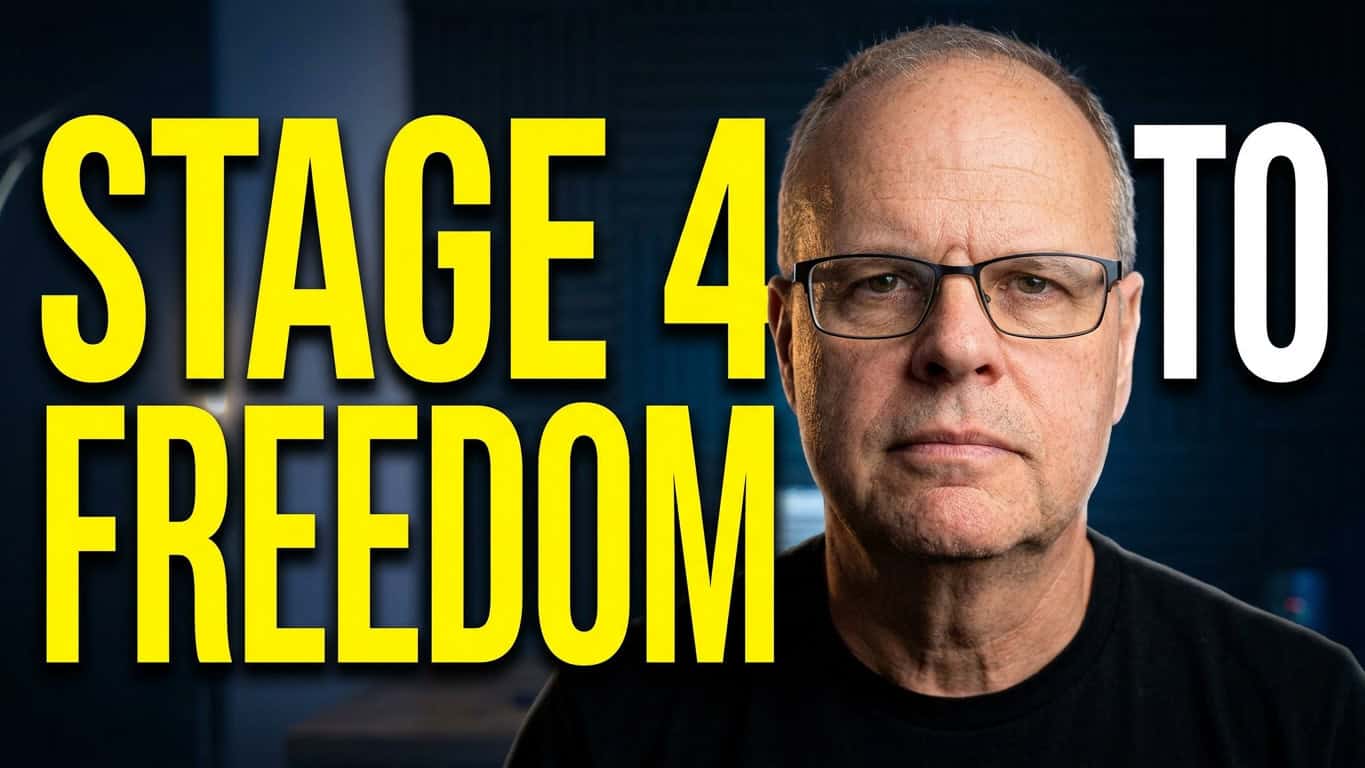
How Cancer, Crisis, and Setbacks Fueled Tony Ventimiglio’s Growth and Giving
Growth doesn’t always happen on smooth roads. Sometimes, life shoves us onto rough terrain that tests our character, our attitude, and our willingness to rebuild. On today’s Social Chameleon Show, we sit down with Tony Ventimiglio, a man who turned adversity into purpose more than once.
Tony’s journey started in a working-class neighborhood in Pennsylvania, watching his dad weather layoffs and hard times. He rose through the ranks in finance, rode the mortgage boom, and lost it all in the 2007 crash. When cancer struck in his late 60s, instead of retreating, Tony wrote not one but two books, built a business, and found new meaning in service while enduring treatment.
This episode is about navigating the roads we don’t choose. You’ll hear how Tony found gratitude in small moments, learned to define his own success, and rebuilt after massive setbacks. Whether you’re facing your own dirt road or supporting someone on theirs, Tony’s honest approach to resilience, mindset, and giving back delivers tools and perspective for anyone looking to grow through hardship and come out stronger.
Enjoy the episode!
Episode Highlights
- Tony Ventimiglio shares how his experience with stage 4 prostate cancer changed his appreciation for everyday moments, emphasizing the value of gratitude and noticing small joys that many often overlook.
- He discusses the importance of defining personal success, reflecting on his father’s humble approach to life and how resisting constant pursuit of “more” can lead to genuine satisfaction.
- Tony explains his method for building resilience after setbacks, focusing on the power of taking the first step, however small, to move forward rather than staying stuck in disappointment or adversity.
- He offers practical financial advice, including tools he developed, like the “budget buster,” and tips on auditing subscriptions, to help people regain control of their finances and avoid wasteful spending.
- Tony opens up about navigating a cancer diagnosis, the mental health challenges that followed, and the vital role of self-advocacy in medical care, encouraging listeners to take charge and seek support.
- He highlights the impact of quiet leadership and mentorship: showing up for others through action rather than titles, and investing in one’s community to create lasting, meaningful change.
Lessons Learned
1. Value Small Everyday Moments
Appreciate the beauty in ordinary things, like clouds or trees, before hardship forces you to notice what you’ve missed.
2. Start a Gratitude List
Keeping track of things you’re grateful for helps maintain perspective during tough times and supports a positive outlook.
3. Reflect, Then Learn
Reviewing journals after some time lets you see patterns, find growth, and discover lessons from emotional experiences.
4. Define Your Own Success
Avoid overcomplicating life by creating personal definitions of success rather than chasing what society says you should value.
5. Build with What You Have
Start rebuilding after setbacks by taking the first small action, even if that just means buying yourself new silverware.
6. Audit Subscriptions and Spending
Regularly review subscriptions, bills, and purchases to eliminate hidden leaks in your budget and free up resources.
7. Follow Up Matters Most
In business and relationships, consistent follow-up separates true results from missed opportunities and forgotten connections.
8. Overcome with Small Steps
Get out of a rough spot by taking one manageable action instead of waiting for the whole solution to appear.
9. Ask for Help and Support
Rely on faith, journaling, and your community instead of believing you must face every challenge alone.
10. Giving Back Multiplies Impact
Find meaningful ways to support your community; helping others often brings more growth and fulfillment than personal gain.
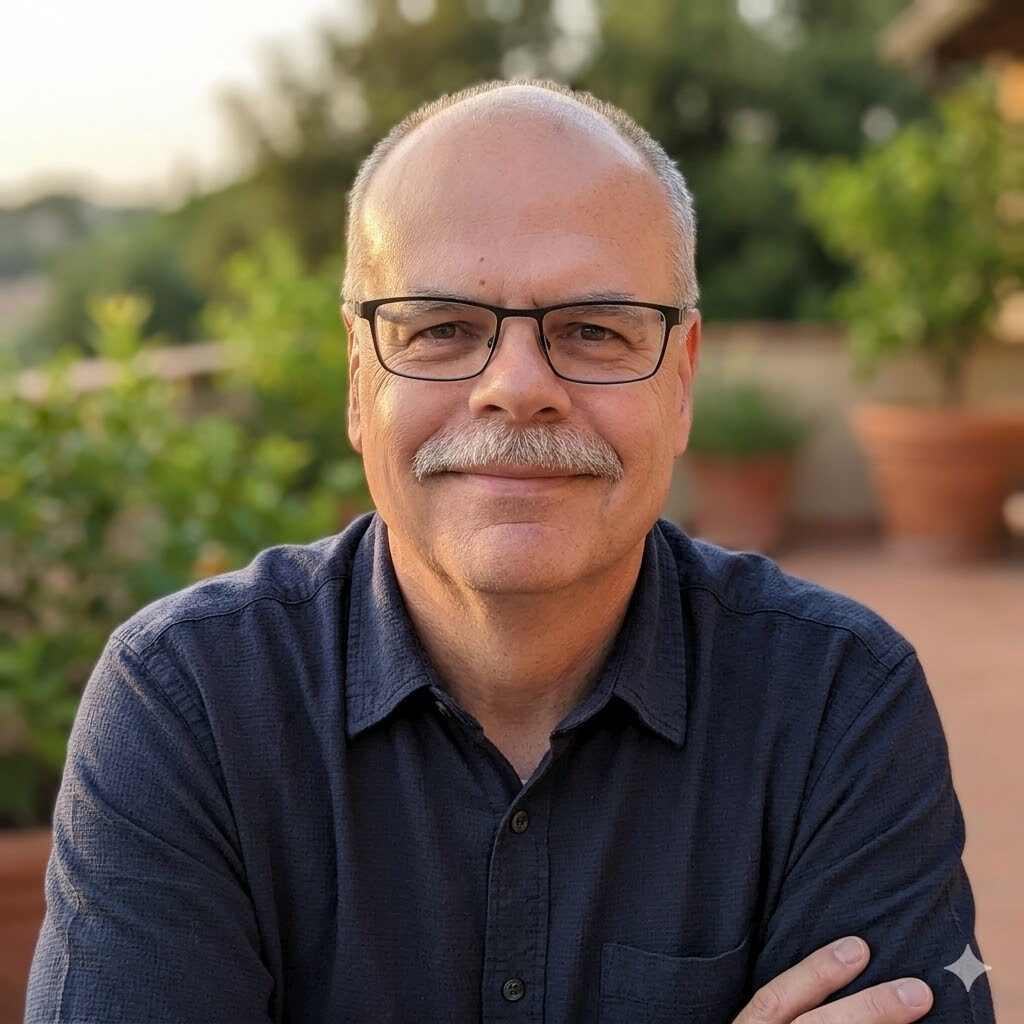
Glorious Days on the Dirt Road: Reflections Along the Way
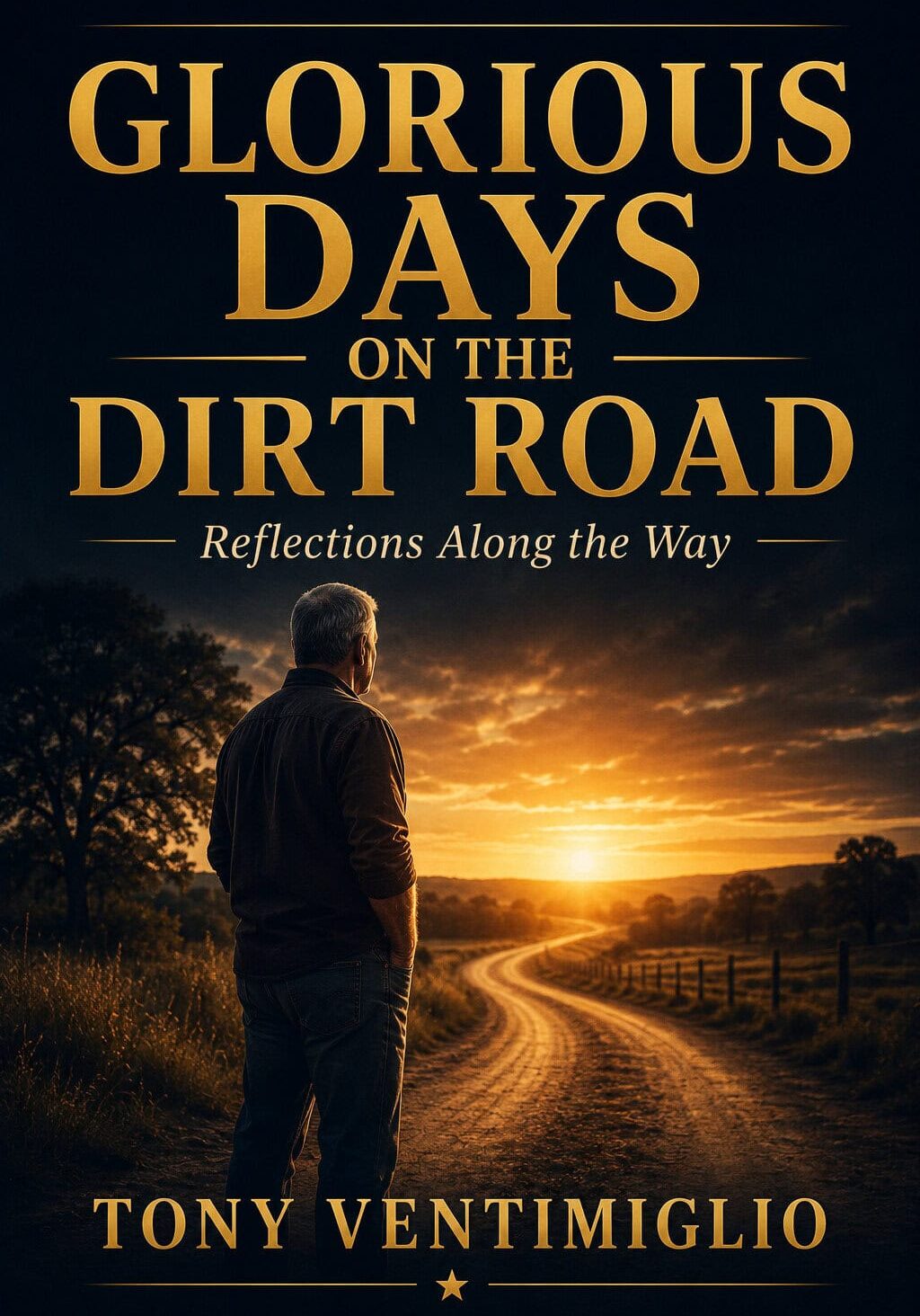
The book is called It's A Glorious Day. Six decades of gut punches and mornings that somehow still felt like gifts. Real stories from a real life. Nothing polished up to sound better than it was.
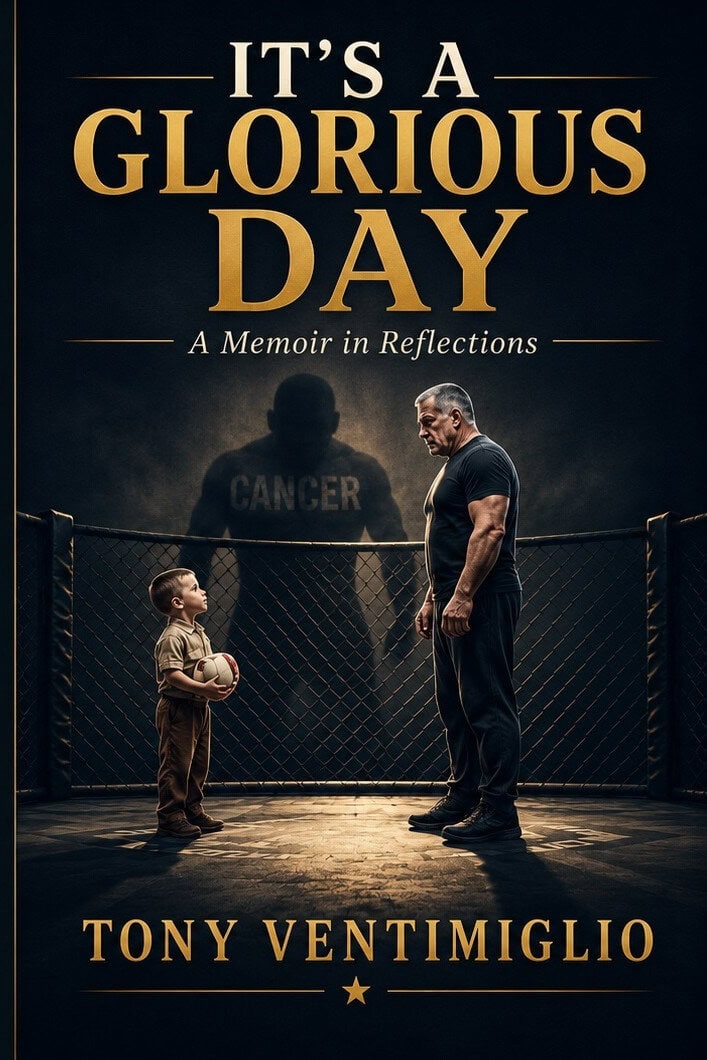
He is the author of It’s A Glorious Day: A Memoir in Reflections and Glorious Days on the Dirt Road: Reflections Along the Way, as well as the voice behind the Substack publication The Dirt Road with Tony V. Rooted in the practical philosophy of “Hard roads. Useful lessons. Keep moving,” Tony pairs blue-collar grit with deep perspective, teaching audiences how to maintain ownership of their mindset and move forward when life hands them a burden they did not ask for.
Weekly Challenge Trophy Legendary Weekly Challenge
The weekly challenge from this episode is to consider supporting Tony’s Community Support Program. If you’re not personally involved in a charitable organization, think about someone you know who is: maybe a friend, family member, or connection in your community.
Make a referral: reach out, prep them for an introduction, and connect them with Tony so he can explain the program and how it works. The goal is to get at least five listeners to help make these introductions and expand the program’s impact.
For anyone listening, it’s also a prompt to reflect: what more can you do in your neighborhood or community? Supporting causes like this, or finding ways to lend a hand locally, can make a lasting difference.
SELECTED LINKS FROM THE EPISODE
Resources Mentioned
Here’s a detailed rundown from the episode:
Beat Cancer Daily: 365 Days of Inspiration, Encouragement, and Action Steps to Survive and Thrive (Book)
A healing mindset takes fortitude, faith, and courage -- and acceptance of support when you need it most. As a survivor of cancer for more than 15 years, Chris Wark, best-selling author of Chris Beat Cancer and Beat Cancer Kitchen, knows the daily struggles involved in healing from cancer and wants to support you as you walk this path with God. This daily devotional offers nuggets of scripture, inspiration, encouragement, and actions for surviving life's difficult storms. No matter the challenges you face, your soul is naturally resilient and can prosper mentally, physically, emotionally, and spiritually.(opens in new tab)
The Big Short (Movie about the 2007-08 financial crisis)
Based on the true story of four outsiders who saw what the big banks, media, and government refused to see: the global collapse of the economy. A bold investment leads them into the dark underbelly of banking, where everyone and everything is in question.
The Algorithm (Book)
In The Algorithm, former Tesla President Jon McNeill details the exact five-step protocol that saved Elon Musk’s companies from operational ruin. Most businesses fail because they rush to automate broken, bloated requirements instead of first aggressively deleting unnecessary work. If you lead operations or build systems, this framework will force you to cut the fat and accelerate cycle times.
Starting with No (Book)
Start with No rejects traditional "win-win" negotiation as an emotional trap that forces unnecessary compromises, offering instead a contrarian framework centered on emotional control and disciplined decision-making. Rather than chasing a rushed close or seeking premature agreement, effective negotiators eliminate neediness, cultivate a "blank slate" approach driven by deliberate questions, and manage distinct budgets of time, energy, money, and emotion to maintain leverage.
Risa’s Podcast Episode (Social Chameleon Show)
Risa August, an award-winning author, speaker, and patient advocate with a rare pituitary disease. We explore themes of personal growth, resilience, and the power of self-belief.
More Interviews With Outstanding Guest's


Interactive Transcript
Episode Transcripts
Show notes and transcripts powered with the help of Castmagic. Episode Transcriptions Unedited, Auto-Generated.
Tyson Gaylord:
Some people face one hard road. Growth, clarity, and deep character are forged exclusively on unpaved, high-friction terrain. Tony Ventimiglio has faced several. He says some roads you don't choose, you just decide on how you're going to walk them. Welcome to the Social Chameleon Show, where our mission is to help you learn, grow, and transform on your path to become legendary. Tony grew up in McKees Rocks, Pennsylvania, watching his auto father work His auto worker father endured strikes, layoffs, and even a Christmas with nothing under the tree. Tony built a career in lending, rode the mortgage boom to a level of success he never expected, and then he watched it all collapse in 2007 with the Washington Post documenting the fall. Tony rebuilt as an executive recruiter, helping hundreds of people find their next opportunity.
Tyson Gaylord:
Then in 2020, prostate cancer arrived. 2 years later, that unexpected health crisis became stage— a stage 4 diagnosis, the kind that never goes away, only waits. At 67, Tony did not retreat or wait for easy answers. During 25 radiation treatments, he did something no one expected. He wrote a book. Then he wrote another. And then he built a business. Now, at 68, Tony is still building.
Tyson Gaylord:
This is a conversation about what we can do with the road we did not choose. Tony, welcome to the Social Chameleon Show.
Tony Ventimiglio:
Well, thank you. I'm very grateful to be here.
Tyson Gaylord:
Not a problem. So you've written several books. You, you wrote Glorious Days on the Dirt Road and your newest book, It's a Glorious Day. What's—
Tony Ventimiglio:
Actually kind of reversed a bit, but—
Tyson Gaylord:
Oh, I'm— oh, the newest book is Glorious Days on the Dirt Road?
Tony Ventimiglio:
Yes, yes.
Tyson Gaylord:
Oh, my apologies. Okay, so So I was trying to double-check the publication dates and somehow I guess I got that mixed around. Okay, so you have these 2 books that you publish, um, and then if you guys are interested in reading the whole book and getting the whole lessons, check the show notes. We're gonna have all the links out there. But what is one story from either one of those books, maybe both, that you'd like to highlight?
Tony Ventimiglio:
Well, you know, the, the first one I'd probably want to talk about, and it might sound a bit depressing, but it's a friend's passing. I had a friend that I was a neighbor with for a number of years. We both moved again and we were local to each other, and he had had lung transplants at one point, and he struggled with those over years. And with the anti-rejection medication, there were— side effects were awful. Then he deteriorated and he didn't really say what was happening. So Our visits became a little bit less. And honestly, he was able to only go out about once a month. He was pretty weak.
Tony Ventimiglio:
And that went on for about a year. And so one day—
Tyson Gaylord:
Yeah.
Tony Ventimiglio:
And I could see him deteriorating. So we went to lunch one day and it was in the spring and I hadn't seen him for a month. And boy, it was a shock. So we went to the restaurant. And as always, he brought his iPad to show me pictures of his family and his grandson, who he was so, so proud of. So after lunch, we drive back. I'm taking him home, and there's a tree. And you always see trees around, but this is one that's probably pretty much native to California, but it has a lot of flowers.
Tony Ventimiglio:
And he just couldn't get over the beauty of the tree. And that was the last time I actually had gone to lunch with him that he was able to. He had passed a few months later. But what sticks me— sticks with me is the fact that he was able to appreciate small things that most of us miss.
Tyson Gaylord:
That's a good story. Yeah, you gotta think. I read something somewhere, reminds me of something I read. It was saying something like, most people don't notice the clouds.
Tony Ventimiglio:
And I was like, exactly.
Tyson Gaylord:
I was like, you don't notice the clouds? They're every day, they're so beautiful. My wife just absolutely loves clouds. She tells me every day about all the kind of clouds that there are, and she just loves all different types of clouds. That's— that's— yeah. And is that something— I mean, I think you kind of— I feel like you're kind of maybe sort of experiencing this with some of your health problems, your challenges and stuff you're, you're dealing with, where maybe because we, we don't feel like life's towards the end or we're not We're not sick or we're in good health. We just miss those just because we're just, you know, life is just going well and we're just not appreciating that. How do you see that?
Tony Ventimiglio:
Like, you know, I guess you're probably right. I certainly didn't appreciate it before cancer like I do now, and even more so since I was diagnosed with it being metastatic. And, you know, that was a real shocker. And it was a long time— well, not a long time, a few months for me to appreciate anything when I got that news. But You know, I'm so grateful for every day and everything around me, and, uh, I, I really make it a point to pay attention and, and take note.
Tyson Gaylord:
Is there something you can let us, us know out here, myself and everybody listening, watching, to that? All of us, let's say, let's just say just for sake of the conversation, we're all in great health. Everybody's, everybody's listening right now, we're all in good health. Is there something you can let us know Or maybe something to prompt us to think about how we can start now appreciating these things instead of when something bad happens, only then do we start to appreciate things.
Tony Ventimiglio:
Sure, I can do that. Um, you know, I was in a sales training class back in the late '90s, and one of the things that they trained us on is that sales is tough and you need to be able to keep a good attitude. So, the teacher suggested that we keep a list of affirmations. And so, every time that something happened that was good, exciting, things that you were grateful for, you wrote all that down. So, I've been writing things down for close to 20 years. And then, when things would get out of hand, and they always do whether we're healthy or not—
Tyson Gaylord:
Sure.
Tony Ventimiglio:
You could always revert to that. And mine's handy on my phone. And when I'm having a bad time, it's a good place to go for a couple minutes.
Tyson Gaylord:
How did you, I guess, cultivate that habit and then keep that habit going? I'm sure there's times where you let it slip a little and you brought it back. I like to write things down, but only to remember, but I don't— journaling and whatnot has never stuck with me.
Tony Ventimiglio:
You know, I've journaled off and on for probably the last 20 years, but most of it has been since the cancer diagnosis. And I needed a place to kind of decompress. It's where I could express my emotions, talk about, you know, what was bothering me. And then later, I'd go back and reread it and try to figure out, well, what did I learn from that? So that's been the basis for the stories in my book, or both of my books. You know, those stories are retold, and then they're looked at from— A few years later, maybe when I have time to reflect on what happened and what I was able to take away and how impactful those things had actually been on my life. I look at cancer as something that's helped me grow. There's a lot of downsides to cancer, but it's pretty much done some wonderful things for me. And I probably wouldn't have seen that without trying to find it and with God's influence.
Tyson Gaylord:
You know, I've heard that a lot. Like, people, uh, say something similar, you know, kind of along the lines of, you know, cancer is the best thing that happened to me. I don't wish it on anybody. It was one of the best things that's ever happened to me. Sounds like you're saying something similar.
Tony Ventimiglio:
Yeah, I wouldn't say it's the best thing that's ever happened to me, but I try to find the good in anything that happens. So that's what I'd have to say it is.
Tyson Gaylord:
Right, right. And then when you're looking back on, on, on the journaling and whatnot, Um, it— I'm trying to think about what I'm trying to get after here. It's like you're— it sounds like what you're saying is you just kind of raw— you just kind of wrote things down, and then whatever, let's say a month later you look back and you're like, man, on Tuesday I was having a rough day. Is it something like that? And then like, how do you process through that? How do you say, you know what, I shouldn't have been so down on myself, or, or something like that? How are you processing through those old thoughts when there was a lot of raw emotion happening at the time?
Tony Ventimiglio:
Sure. Well, you know, I didn't necessarily go back and look at them a week or even a month later. I needed some distance from when it first happened. And so, it may have been a year before the first time. And after it reoccurred, it was a little bit longer than that because it was something that I didn't want to relive the emotions at that time. But I try to go through and reread things hopefully every year, but sometimes I hit that, sometimes I don't. And so when I'm doing that, that I decide to try to find the lessons. And what got me really started on this thinking about, should I publish this? Should I not publish it? I read a book and I don't remember the author's name, but it was Beat Cancer Now.
Tony Ventimiglio:
And the gentleman, uh, wrote his book based on his observations of fighting back against cancer. And he didn't necessarily include some of the humorous things that I do. He didn't necessarily include some of the background stories of his life before that. But when I read that, it helped me tremendously. And that really helped me decide that I had something to say. that somebody might find helpful.
Tyson Gaylord:
What was the biggest lesson you took from that book? What was it that really helped you?
Tony Ventimiglio:
You can't control anything and you just take care of what you can one day at a time.
Tyson Gaylord:
Absolutely. That's a great mantra for everything in life. So, you do talk about some roads you don't choose, you just decide how you're going to walk them. So, society spends billions of dollars engineering ways to remove friction and make life smooth. Why do you believe a paved road is often the most dangerous thing for a person's character?
Tony Ventimiglio:
Well, I think that you miss too much going too fast, you know, and I did that for a long time. But sometimes I got knocked off of that paved road and ended up off-roading because I didn't have a different way to go. Sure. So it's, you know, I consider the dirt road Living by your beliefs and not necessarily being in a rush to get somewhere and making sure that you're navigating the way you need to, even though if it seems tougher and it might take you a little bit more time to get where you want to go.
Tyson Gaylord:
How do you— to kind of continue that metaphor a little bit, so you go off the road and you're trying to steer and you're trying to hold everything together. How, how do you not wind up in the ditch? You know, how do you kind of steady the ship a little bit? How do you, how do you right the car and not, you know, skid out?
Tony Ventimiglio:
There's been plenty of ditches.
Tyson Gaylord:
Okay, we get in it, we get in the ditch, we got a flat tire. I mean, how do we pick ourselves up? How do we just not sit in the ditch and go, oh, it's me, oh well, I always wind up in the ditch, here we go again, I'm in another ditch?
Tony Ventimiglio:
Well, you call AAA to get your tires fixed and back up on the road, and you take the next step and go. Yeah.
Tyson Gaylord:
Yeah, yeah. Who's the proverbial AAA?
Tony Ventimiglio:
What are—
Tyson Gaylord:
like, what are we— what are we talking about?
Tony Ventimiglio:
Well, AAA is the, uh, uh, insurance company that does the free towing, right?
Tyson Gaylord:
In the real world, who's your AAA? Is it a guy? Is it a person? Is it like— what is the thing? You know, like, if I'm, you know, I'm in a proverbial ditch right now, let's just say, who, who's the AAA I'm calling? Who's the person? Or what's the thing? Are we doing journaling? Like, how, how do you think about that?
Tony Ventimiglio:
Well, it's a few things. You know, it's God, first of all.
Tyson Gaylord:
Okay.
Tony Ventimiglio:
It's journaling and it's recognizing the value of my sphere of influence. You know, I've always been a mentor for people, but I've never looked at it as a mentor as being somebody that's a teacher. I look at it as somebody that's investing in people. And when you do that, people in turn will Uh, invest in you, right?
Tyson Gaylord:
That, that reciprocation kind of thing. That's interesting. Um, what's your, your number one go-to thing to help you get out of the ditch when you're, you're kind of feeling down? Like, what's the self-talk like? What, you know, what is the tools that, that really over the test of time have really kind of helped you get out of the ditch?
Tony Ventimiglio:
Well, first of all, it depends on how deep the ditch is, okay? Because there's times when you're so overwhelmed, you don't know what you want to do, who you need to talk to, to. Your, your faith is tested a bit. And sometimes that just means you lay down and take a nap, you know, get some rest, and, you know, you'll feel better when you wake up and you bounce back, you know. And then a lot of times it's, you know, spending the evening with my wife. I have 2 dogs that always put a smile on my face no matter what happens. Calling my daughter. I'd say that those are probably the steps that get me on track more than anything.
Tyson Gaylord:
If I'm— what I'm— I think I hear you saying is the things that ground you. Is that accurate?
Tony Ventimiglio:
Right. Yeah, exactly.
Tyson Gaylord:
Okay. And then I guess whatever it is for each and every one of us, right? I mean, animals are great, right? They're always in a good mood no matter what happened. So that's a great, great thing. And then you were talking about being a mentor and whatnot. So from what I understand, you've, you know, hired, mentored, and trained hundreds of people What's the low-hanging fruit people are walking right by or overcomplicating?
Tony Ventimiglio:
People have a tendency to overcomplicate a lot of things.
Tyson Gaylord:
Yeah, we do.
Tony Ventimiglio:
You know, I think what success looks like.
Tyson Gaylord:
Okay.
Tony Ventimiglio:
You know, we're all under pressure financially. We're building families. We want to take nice vacations like everybody. We want to have the nicest house on the block. And there comes times that we're not satisfied with that. So we, we need to find a bigger house. And I did all those things, unfortunately, you know, but it's, I can look to my dad as an example. You know, he made pretty good money.
Tony Ventimiglio:
He worked 2 full-time jobs because he was driven, but he made good money working for General Motors, uh, as a crane man. But we bought a house, or he bought a house when I was just a couple years old, and it was an 1,100-square-foot brand new working-class home. And he lived in that until he passed away. And even though he probably could have done things more, he didn't. He was happy with the house. He worked on it all the time. Very rarely did he take vacations. I think we had 2 family vacations until I was about 13 years old.
Tony Ventimiglio:
And then even at that point, family vacations weren't vacations. They would be, you know, the 3-day weekends, right? And so, right, right.
Tyson Gaylord:
That's interesting. Um, I think the one thing I caught— that really caught my attention with what you're saying was defining success. I think that's something we all need to do. We need to have our own kind of definition of what we want our life to be like. And that's the thing, if you're— if you don't have a definition of success you're working from, then you could be, uh, like someone like your dad that could have had his chill life. But if he didn't define what success was like to him, he could have been out there chasing lots of things and not been home and not been around for us. Not, you know, hey, it's a 3-day weekend, but I gotta work these days because I'm chasing something that I never really defined.
Tony Ventimiglio:
Well, you know, I think it had to do with his upbringing, uh, especially during the Depression. His mom died while he was a child. Before he got out of high school, my grandfather had a leg crushed in a factory or a mill accident. And my dad was the oldest boy, so things kind of fell on him. And so he didn't know what to do. He was 17, but somehow he got in the military. I think maybe it was the fact that during World War II, they probably let you— join at a little bit younger age. And he did that to be able to send money back to the family.
Tony Ventimiglio:
So I don't think he ever took anything for granted. You know, his mom wasn't around from the time he was 9. His dad lived to be in his 80s, but there was a lot he couldn't do. And my dad took it upon himself to also ensure that both he and I were someone that would make sure that my grandfather was okay. work on the house. We replaced his roof. I dug his garden for him every summer once I got old enough to do it. Before that, it was my dad and, uh, one of my uncles.
Tony Ventimiglio:
So I just think he never took anything for granted, and, and that little house was more than he probably imagined he'd ever have the way he had to grow up.
Tyson Gaylord:
Right. I, you know, I remember doing a lot too for my— with my grandparents every weekend. It felt like We were over there doing some project, building a sidewalk, fixing a driveway, repairing the house. Yeah, we did a lot of that. My kids don't do none of that. And no, they help me with things, I guess, you know. But— and I do want to make sure, like, my kids aren't part of the generation where they don't know how to do anything and they don't do anything. But it does seem like—
Tony Ventimiglio:
Right.
Tyson Gaylord:
As things get easier in life, like you're saying, your dad and stuff, the war was going on.
Tony Ventimiglio:
There was a lot of things going on.
Tyson Gaylord:
the depression and things. But now that we really— we kind of haven't had those things to the level that they had then, so things are a little easier now. And that seems like, you know, part of kind of how things are. And I think to me, some of the— I don't want to say problems, but because every generation says that about the generation before, right? So, but I think some of the things are because things are so easy now, we don't have to really be kind of doing some of these things, and they kind of get lost. And you Maybe lose a sense of, uh, of working with your hands or getting things done, you know, if this makes any sense.
Tony Ventimiglio:
No, you know, it does. And, you know, my daughter didn't help me as much as I helped my dad or my grandfather. And, uh, unfortunately, I think it was because her mother and I were divorced. And, you know, so the time that I did have with her was a little more limited. But, you know, one of the things that I had learned from spending so much time working with my dad was years later, I began to appreciate it. Boy, I had a confidence that I could do anything. You know, we, we, we put a room on our house. We put a roof on our house.
Tony Ventimiglio:
In my grandfather's house, we had gardens. Uh, you know, I climbed up on an extension ladder to paint the eaves. We worked on cars together. I, you know, on the older cars, I could do just about anything. Today, I'm probably useless.
Tyson Gaylord:
I'm useless too.
Tony Ventimiglio:
You know, but it always gave me a confidence that I could do anything. And if I didn't know how to do it, I could probably figure it out. So, I guess my dad was probably the YouTube of my youth.
Tyson Gaylord:
Yeah. I never put that together, but I feel exactly like you. My kids and my wife are like, How do you know how to do this? I'm like, I have no idea. Just figure it out, you know? And I try to pass it on to my son and teach him stuff. But I do notice, like, we were— he bought an e-bike. He saved up his money. He worked hard. He bought an e-bike.
Tyson Gaylord:
And it came in a little bit of pieces. And I just start putting it together. And it—
Tony Ventimiglio:
Right.
Tyson Gaylord:
But when we got it, I was like, son, you're going to put this together. I'm just going to watch. I'm going to help you. But I just couldn't help just start grabbing things and putting it together. And the next thing you know, he's like, Dad, I really didn't do anything. I was like, yeah, sorry about that. Uh, I just, you know, I was like, I just know I'm just gonna get it done. And, and I— but I know what you're saying.
Tyson Gaylord:
I do have that confidence that I can figure anything out. I, I can take anything apart. I can put it all back together. And I— but I, I never thought about that's something like my dad and my grandpa and what these people, uh— I remember, um, you know, the, the, the, the other fathers in the neighborhood, you know, like know, one of my, my friend's dads, he was like a kind of a handyman. I learned plumbing from him. I learned electrical from him.
Tony Ventimiglio:
Wow.
Tyson Gaylord:
One of my other neighborhood fathers, he worked for the city, um, buses. So he was like a big— he was a diesel mechanic. So I learned mechanical stuff from him. And, you know, we'd just all go outside and, you know, like, hey, uh, your uncle's fixing this car. Like, what are you doing? I'll do the brakes. It's okay, cool. Show me how to do the brakes. You know, like, I'm changing the alternator.
Tyson Gaylord:
Show me how to change an alternator. You know, so there was so much of that when I was growing up. I Kind of relate to your story there.
Tony Ventimiglio:
Right. And my neighborhood was the same way. Everybody helped each other. You know, my dad had a huge garden. We fed the neighbors all summer with tomatoes and squash and cucumbers. But, you know, it was part of my upbringing as well. If you saw somebody doing something, and especially if it was an older person, you know, you didn't let them struggle with it. You know, you'd go over and help.
Tony Ventimiglio:
It was We had some neighbors each side of the house that were retired. And, you know, my dad always taught me, and it was first by example. When he'd see them out there, he'd walk over and start talking to them, ask them what they were doing, and he'd pitch in and start helping. And then that was the way he trained me to do as well.
Tyson Gaylord:
Yeah, I try to pass it on with my son. And it's funny, the other day, We were— we were— I think we were at Costco or something. Every time I'm at Costco, there's always like the empty boxes just cluttering everything up. So I'll grab some of those boxes and I'll put them on the side. And then— and he's like, what are you doing? I was like, the next person's gonna come by and it's just gonna be a shit show here. I can take 4 seconds and take 3 boxes out of the way, and then maybe somebody else will see that and go, you know what, I can also take a box that's empty and put it on the side so that when the next person walks over, they can just grab their stuff and they're not digging through and throwing boxes everywhere and all this stuff. And And so then he was funny, he's like— so then he starts kind of doing this, and then he was telling— and then, and one day he was— he starts rearranging the whole pallet. I was like, okay, that's enough.
Tyson Gaylord:
He's like, he's like, well, where do you differentiate, Dad? You tell me to do this one thing. I was like, son, you gotta, you gotta use some discernment a little bit. Like, you gotta know, like, I don't work here, but I can help out because this is my neighborhood.
Tony Ventimiglio:
Right, right. That's actually a cute story with your son rearranging everything.
Tyson Gaylord:
That's right. But, and one day when we were doing it Uh, there was a— oh, the guy was maybe around my age, probably in his, uh, maybe late, late, late 40s, early 50s. And he was like, he just looked at us and he's like, dang, he's like, that's a good idea. He's like, I'm glad you're showing your kid that. And then I saw— I started seeing him walking around Costco taking the empty boxes. And I told my sons, this is exactly why we do this. We will never probably see this happen again, but this is the example I'm— we're here to set for everybody else around us. I don't care what everybody else is doing.
Tyson Gaylord:
We're going to set the example and we're going to let everybody know how things go around here.
Tony Ventimiglio:
Right. And that's the best way to lead. You know, you don't have to tag yourself as a leader. You do quiet things that people pick up on.
Tyson Gaylord:
Yeah, absolutely. That's the thing. When he plays football and stuff, I was like, yeah, you know, maybe you're not the team captain, you may have the quarterback, but does it matter? You can be a leader out there. You can be the guy out of practice. You can be the first guy out there. You can be the guy that's at the front of the line leading the drills. You don't have to be one of these people. You can just show everybody.
Tyson Gaylord:
And I said, not only is it going to show your teammates, your coach is going to see that. You may not think your coach is watching, but he's going to see. He's like, man, this kid is always leading this stuff. He's always getting us on track. He's always, you know, helping out his teammates with the plays and whatever it is.
Tony Ventimiglio:
Certainly.
Tyson Gaylord:
See, speaking of kind of on this thread, you had something that says goals are dreams without actions. I believe that but only if the plan includes checkpoints. Could you walk us through, you know, the goal and then how you think about checkpoints?
Tony Ventimiglio:
Well, you know, actually, when I plan something like that, you know, when I have a goal, I build the checkpoints in. So I, you know, I pencil it out. If I create a goal, and this has been my whole career, you know, I list out, I start with the goal and then I work backwards. And what am I going to do here? What am I going to do here? And I break it down to the beginning. So, I never really thought of it as having checkpoints. I thought of it as having a plan. And one of my mentors taught me very early on, if you fail to play, if you fail to plan, you plan to fail.
Tyson Gaylord:
Right. How, what's your methodology? Like, Um, so let's just say like, okay, let's just, let's take your book, your first book. You're like, hey, I'm gonna write my first book. That's, that's the, the overarching goal, I'm assuming, right? And then what, how do you start thinking about like the next steps, the milestones, something, especially something you've never done? You don't necessarily know all the ins and outs about what's gonna happen.
Tony Ventimiglio:
Well, really the first book was, uh, uh, pretty much trial and error because I didn't necessarily know the steps. I thought I did.
Tyson Gaylord:
Right.
Tony Ventimiglio:
But, you know, working through editing was a lot more difficult. I tried it myself and I found I was missing things. I started to rely on some of the AI services to do the review and editing. Some of them did okay, some of them didn't. And I used them also to try to do the formatting. to get it to Amazon standards. Never thought about that. So, you know, it was something I couldn't plan on.
Tony Ventimiglio:
But boy, it was, it was tough to get the first one accepted on Amazon. You know, the size requirements, the, the cushioning at the gutter of the book, the, you know, it was a real problem. And even though every AI system, and I moved a couple times, And I always would, I interview AI, but they, they all claimed, yeah, we'll do it. You know, we'll, we'll take it there. Well, it, it didn't happen that way.
Tyson Gaylord:
Yeah.
Tony Ventimiglio:
Yeah. And the, and the other challenge that I ran into is during the marketing of the books, you know, I, I'm doing almost all of my marketing, uh, but the, uh, uh, uh, I'll call it software. It's probably an online app is what people call it today. The user interfaces are tough. They're tough to learn and unfortunately they're not consistent. So once you figure one out, you think you're going to adopt it into another platform. Well, you're totally wrong. And their online resources aren't accurate with what you're seeing on the webpage.
Tony Ventimiglio:
So that's been a struggle for me.
Tyson Gaylord:
I hear— I published a few children's books for a friend of mine and I severely underestimated, uh, what that entailed. But like we talked about earlier, my friend's like, I wrote some children's books. I was like, oh yeah, I can publish that. Yeah, yeah, yeah. And he's like, you're a publisher?
Tony Ventimiglio:
Yeah.
Tyson Gaylord:
I was like, no. He's like, what are you gonna do? I'm gonna figure it out like everything else I do. And but that's that mentality I think we were talking about earlier, right? Where I don't have no idea, but I'm gonna figure it out. And I did. We, we wind up publishing, and we published like 3 or 4 children's books, and I got— I found an illustrator And, but that first one, like you're saying, boy, that was hard. So, you know, what was your checklist like in the beginning when you were trying to go through the book? Because there's so many unknown unknowns, right? How do you, I guess, try to set out your checkpoints or your milestones? And then what is it like when something comes up that you didn't think of or you start to get derailed? How do you, you know, that's when a lot of people give up, right? When things get hard. People give up. They got to say, I've had enough of this.
Tyson Gaylord:
How did you plan through that and how did you kind of figure out those milestones and work through all those?
Tony Ventimiglio:
Well, you know, my first set of milestones was pretty much an outline. You know, I, I had the end goal of publishing the book and I made it pretty broad because I knew I didn't know what I was doing. And so I started there. I backed it down. You know, I had to select the stories. I had to rewrite the stories to improve upon just my random thoughts, make them flow better. The stories had to be edited. And at that point, I hadn't even thought about that.
Tony Ventimiglio:
But, you know, that I'd learned that pretty quick. And then, you know, I needed photographs that I wanted to use.
Tyson Gaylord:
Mm-hmm.
Tony Ventimiglio:
And so I, you know, I, and I knew I wanted to include some illustrations, whether it was family photos or, things to help me make a point about the story. And I'm a big believer in using graphics as a scroll stopper, I'll call it. But yeah, it's not necessarily that in a book, but I want something to catch people's attention. I don't want them to just page through it. So, you know, I had to create those. And so I just backed it all down. I start—
Tyson Gaylord:
Yeah.
Tony Ventimiglio:
I kind of built the book in reverse. I started with the book, Uh, you know, that became next, I gotta build the stories. That became, well, now I need graphics. And so I almost went in reverse, if that makes sense.
Tyson Gaylord:
Yeah, sure. Because you don't know what you're doing, right? So you've gotta kind of, uh, fumble along a little bit until you kind of figure it out.
Tony Ventimiglio:
Right. And then, you know, decide what tools you're going to use and, uh, your audition tools. I've been through so many tools over this journey. It's, you know, so that was always each new thing that you wanted to do created a new tool, and you probably went through 3 before you found one that suited you.
Tyson Gaylord:
Did you self-publish or did you wind up getting a publisher at some point?
Tony Ventimiglio:
No, I self-published. I did it all and I put it up on Amazon.
Tyson Gaylord:
Okay, that's cool. Congratulations on that. That's— I know that's a lot of work.
Tony Ventimiglio:
Thank you. Thank you so much.
Tyson Gaylord:
And so, and it's just so much things here. Um, you, you were pretty kind of at the forefront of the subprime mortgage collapse. You know, there was an article, um, shoot, I forget, the Wall Street— no, the Washington Post— that kind of interviewed you.
Tony Ventimiglio:
Yeah, right.
Tyson Gaylord:
And I'll link to that for you guys if you guys want to check that out. Um, and then you, I mean, you were in the thick of that. You were Sounds like from what I read about you, you were making money hand over fist and whatnot. Um, and then all of that kind of collapsed. What it— what, you know, looking back on that, like, what were some of the telltale signs of things not going right that you missed at the time, but now looking back you can kind of let us all know maybe what, what a, a tragedy kind of thing, or like a black swan event, like you could kind of see it coming? Is there something like that that you can kind of look back now and talk about?
Tony Ventimiglio:
Yeah, I think so. And I think my trigger point was the consumer finance business that I was in before I got into the mortgage business. And I did that for 10, 12 years early in my career. And I watched that business fade away. We were replaced by credit cards, actually.
Tyson Gaylord:
Oh, wow.
Tony Ventimiglio:
So, you know, so, and the signs were there, but I worked for a large company. We were the biggest consumer finance company in the country at the time. And same thing kind of happened. You know, there were some signs, but I held on because I was making good money. Uh, I had risen to a level, uh, within the company that I was proud of what I had accomplished. And, you know, always thought that, well, I can take these skills and move them to another industry.
Tyson Gaylord:
Mm-hmm.
Tony Ventimiglio:
Which I did into the mortgage industry. But when the crash happened in 2006 and 2007, the business was so much different than it was when I was a consumer finance lender. The risks were building for years and they were building because nobody owned the loans that you dealt with. We funded our own loans and I worked for a company. It wasn't my company, but I had a pretty high level of responsibility. I oversaw an office that we produced billions of dollars in, and I had a couple hundred employees between sales staff and clerical staff. So, but, you know, and there were people that were responsible for selling the loans on what they call the secondary market, that would be the people that would buy it, and then repackage them as a securitized bond. So, you never had to sit and make a collection call like we did in the consumer finance business.
Tony Ventimiglio:
And there's nothing that teaches you more about making better credit decisions than when you first start in that business. And they start you by going out in the field, knocking on doors, collecting money. And for me, out of curiosity, that led me, once I got to know a little bit, to look at the original file and say, well, what went wrong here?
Tyson Gaylord:
Mm-hmm.
Tony Ventimiglio:
But in the, you know, in the mortgage business in the 2000s, there was nobody doing that. There was very little quality control other than, did I do enough to get Countrywide to buy the loan? And nobody at Countrywide really looked either. It was a checklist, but there was nobody sitting and discerning the red flags throughout the file. Did they not have a big enough down payment? Were they stretching too much on income? Because anything went at that time, right? So, I saw the red flags, but at the time, I guess it was, I guess I'll call it greed, call it what it is.
Tyson Gaylord:
Sure.
Tony Ventimiglio:
You know, I was doing pretty well. The whole industry was running at that, you know, at top speed. And I didn't know much other than lending, and I wasn't going to be able to go to a bank and make what I was making.
Tyson Gaylord:
Yeah.
Tony Ventimiglio:
So, I stayed with what I knew. But I had bounced back a few times too, so I knew it would end. It just ended much worse than it did. When I was early on in making the big money, I bought a house and it ends up I overspent, meaning it was a wonderful house. I loved it. I enjoyed living there. And there was No problem being able to afford it at the time. But later on, it became a problem.
Tony Ventimiglio:
And, you know, when 2006, 2007 happened, and the problem wasn't even that I didn't plan when I bought the house, I planned for making half the money that I was making.
Tyson Gaylord:
Oh, good.
Tony Ventimiglio:
But I went from a couple hundred thousand a year to broke, zero. I mean, just There weren't many loans being done. Uh, not that I didn't do any, not that my company didn't do any, but I certainly couldn't support that lifestyle. I couldn't support my key people that I hired, uh, that had all ended up employed when the company collapsed that I worked for. Couldn't support them, but I tried that too long too. And, you know, pretty soon I was out of money.
Tyson Gaylord:
How do you, how do you, I guess, stop this from happening? And how, how does somebody see this kind of coming in? And like you're saying, there's a— it sounds like— and I, I don't blame you because, um, I had a friend, uh, he was in the real estate business at the time, and, and I don't know how many times I was asked by colleagues of his and mortgage people like, Tyson, just go get some more. I can get you like 3 mortgages right now. I was like, I don't— and I lived in Hawaii at the time, and you gotta understand, a shit cheap house in Hawaii is over half a million dollars. A decent house at the time was 3 quarters plus a million dollars. Talk about jumbo loans.
Tony Ventimiglio:
Right.
Tyson Gaylord:
And I was like, I don't qualify for a jumbo loan, not alone 2 or 3. But they're like, you have a heartbeat, you can sign your name, I can give you like millions of dollars. And I was like, this makes no sense. I didn't understand quite what was going on at the time. But I understood what was happening in some sense. And I was like, something's wrong here. And, you know, but how, you know, looking back now, is there a way we can say like, something's happening and I've got to not be greedy? I've got to, you know, I think of what like Warren Buffett says, you know, like when people are greedy, you need to kind of pull back and people are kind of pulling back, you need to get in there. And, you know, how do we in the moment do we stop that and look back, look and say, okay, something's not right? I think things are going too well.
Tyson Gaylord:
I should look, I should listen to myself, or I should look at the red flags, I should listen to them.
Tony Ventimiglio:
Well, you know, for me, um, I didn't need that house that I bought. That was more of an ego thing. And I needed to check my ego, which I didn't do. But, you know, it was, uh, I moved from, uh, 1,400-square-foot home to a 3,000-square-foot home in Orange County, California. I had been in Riverside. So, and this is back in 2004, that home was 3 quarters of a million dollars. And, you know, I could have stayed in my house in Riverside and it would have been paid off in about 10 years.
Tyson Gaylord:
Oh, wow.
Tony Ventimiglio:
So, yeah. And, you know, I didn't do that and it was a perfectly good house. My excuse for moving was, it was a 35-mile drive through Orange County and Riverside County traffic. And that was a 90-minute drive unless I went at 5 o'clock or 6 o'clock in the morning.
Tyson Gaylord:
Wow.
Tony Ventimiglio:
And then, I stayed till 7 o'clock at night. And so, I did that for 6, 8 months and then I talked myself into buying. And I had my sights set on home similar to what I had. But boy, the expectations of what I could get at the money I wanted to spend at the time, moving to Orange County from Riverside County, I was shell-shocked. And I shouldn't have been. I was only 30 miles away and I was making loans there. But I always thought, yeah, you've got an eye for this. You know what's going on.
Tony Ventimiglio:
You'll find something. And as I kept looking, I kept my price point kept creeping up. And then I looked at this house. And I convinced myself that $100,000 more for what I was getting wasn't that much more. Boy, how do you ever say $100,000 is not that much?
Tyson Gaylord:
Yeah.
Tony Ventimiglio:
So, I should have followed my dad's lead and kept my nose to the grindstone and stayed in the house that I had.
Tyson Gaylord:
Yeah, but that's— we all can say that in hindsight, you know, I should have poured more money into the stock market then. And, you know, I poured a lot in, but I got scared at one point. I was like, okay, uh, I'm a little low on cash, but boy, these— this is a good time. But I mean, it's easy to say that in hindsight. How do we— how do we try not to, you know, let that pass? How do we try to stay in the— in the moment now and say, okay, I'm being— I'm being greedy, I'm ignoring the red flags on purpose? How do we stay more present?
Tony Ventimiglio:
I think it has to go to trusting somebody other than yourself. Being that I had been in the consumer finance business and I knew a lot about managing money, in the mortgage business, I knew a lot about managing money because early on in that business, I sold the loans to people. So, I would help them recreate budgets and you know, find ways to buy a house or refinance, maybe to get out of a little bit of debt. So I understand money management, but as much as I understand it, I didn't check myself. And the big mistake for me was that house. I'll say that forever.
Tyson Gaylord:
Sure.
Tony Ventimiglio:
And that was ego more than anything else. But at that point, I also, my ego was such that I didn't think many people could tell me much. And, and that's a real character flaw.
Tyson Gaylord:
Oh yeah, I know, I've been there. Um, and if you guys are interested in, in learning more about this subprime thing, the movie The Big Short, I'll link it for you guys. This is a great kind of explanation on this whole picture and how this all went down. Um, so you, you know, through this and, and coaching people and whatnot What separates somebody that gets back up from a setback and rebuilds versus somebody that just, you know, just kind of talks about it and never does anything?
Tony Ventimiglio:
You know, I think the difference is the first step. You know, it's easy when you get hit or when you run into the wall to just stop. And I'm not going to say that I didn't, but you also have to do the first step. And that first step, you may never know what it is. Or where it's going to lead, I should say, but you have to take it. And I'll give you an example, and it's unrelated to finances, but it kind of is too. So, when I got divorced, I got served with divorce papers and I found myself immediately out of my home. My wife kept the home, which I agreed to, and we did that so that she could raise my child.
Tony Ventimiglio:
in the home. But I— the day I got served, I was blindsided. And I decided I wasn't going to go home that night because I was pretty furious. So I decided that wasn't really a reason to go home. So I went to a friend's house, and I decided I was gonna— I asked if I could stay with him. I decided I wanted to stay somewhere. And he was gracious enough to say yes. And You know, that night I looked at it and I says, I don't even have my clothes.
Tony Ventimiglio:
And, you know, so the first step was getting clothes. And the second step was finding a place to live, which, which I did inside of a week. And then the third step was, I need some stuff, you know.
Tyson Gaylord:
Mm-hmm.
Tony Ventimiglio:
I— we agreed that I'd take an old broken-down sleeper sofa. And I had a 13-inch color TV and I had a cooler. I didn't even have a refrigerator.
Tyson Gaylord:
Oh, wow.
Tony Ventimiglio:
But the cooler was great. It was the stand for the 13-inch TV, so it wasn't on the floor. So I was kind of spoiled. But, you know, and from there, you know, I went out right away and bought some cheap silverware. And my friend that I stayed with was somewhat older. He was probably close to 70. And he loved yard sales. So, whether I wanted to go or not, Saturday morning, he was at my door at about 6:30 saying, come on, you need stuff.
Tony Ventimiglio:
And so, we went out to the early yard sales. He said the best deals were then. So, that's how I started to rebuild. So, I didn't have a plan at that point. You know, one of the good things was I own— I was a partner in a mortgage company with a friend. And so even though I didn't have any money, my, uh, well, I won't even get into it. We'll just say that I didn't have any money, but I had the money in the company that my, uh, partner let me borrow against so that I could function. So, you know, that's how I, I was able to make the movements.
Tyson Gaylord:
And so also, um, if I read correctly, you, do you sell like budget tools and, uh, fraud recovery things now? Is that something you still do or no?
Tony Ventimiglio:
Yeah, I, yeah, I do do that. And it's not really fraud recovery. It is more how to, how to stop spending money that you don't need to.
Tyson Gaylord:
So, classic American problem.
Tony Ventimiglio:
Yeah, yeah. So, you know, I decided, and I, and I built these through things I knew that I didn't realize other people didn't know. So the first thing I built was What I call my budget buster. And it's a pretty sophisticated tool that I used Excel to build, that you put in your bills and your monthly payments in one area, and you put your upcoming income in another area, and, you know, what you have in the bank. And so, it tracks you every day, you know, if you, if you stay current with it. So, you always know the state of your money. You know, you can put your other— you can put your major bank account. I just really keep my operating bank account in there because I don't want to look at the other money and think that I have it, you know.
Tyson Gaylord:
Right.
Tony Ventimiglio:
I think we all look at it as a fallback place. So, and the genesis of this for me, and I built this for myself to start with, I can remember 20 years ago, sitting at my desk at home with a legal pad and doing the same exercise. And, but I never knew where I was at from day to day because, you know, it's, you know, you had to keep your checkbook register current, which I did, but my checkbook register wasn't always with me when I was out and about.
Tyson Gaylord:
Right.
Tony Ventimiglio:
So, you know, I knew where I was, what I needed to be. Now today I can open this on my phone and even update it or see where I am before I start to spend. So I think it helps you stop a lot of the leak. The next thing, and this is the one that a friend kind of gave me an idea for, because I had no idea that people didn't recognize this. He was spending a lot of money on subscriptions.
Tyson Gaylord:
Oh yeah, that's a big thing.
Tony Ventimiglio:
Yeah, and so we started talking about that, and it wasn't just subscriptions. I mean, you know, telephone bills and subscriptions and the cable company or DirecTV if you have that instead of cable. And, you know, even the phone company, you know, do you need this plan? So this talks about the knowledge loophole, talks about how to identify those things.
Tyson Gaylord:
Mm-hmm.
Tony Ventimiglio:
And, you know, and so your probably next question is going to be, okay, so we identify it, what do we do? And that's the next tool that I have. It's called the Auditor's Action Pack. And the purpose behind that is, is so that you know what to do. It gives you scripting ideas, how to approach customer service, how to get them to maybe give you a break where they can, you know, how to ask for a lower plan. A lot of it has to do with cancel. You know, there's always another service provider that'll give you another deal. But the thing to know is that the customer service rep doesn't have any authority to lower your price. But they do have authority to transfer you to somebody else that does.
Tony Ventimiglio:
Because your quality response guide says, if they say stop, I'm canceling, hand it off to Joe or whoever. So, right, so, you know, it works you through that. It gives you places to make notes. You know, some of the other things that I talk about in the knowledge loophole, you really need Spotify's paid version.
Tyson Gaylord:
Right.
Tony Ventimiglio:
It's, you know, so people just don't think of those things. And so, you know, it's pretty easy If you're lost in the subscriptions and even just not auditing your bills, you get lost. And, you know, medical bills are the same way. You need to audit your medical bills.
Tyson Gaylord:
And you can also negotiate, people. That's something people don't understand.
Tony Ventimiglio:
Right, right, right. Yeah. And, and that's really what the knowledge DuPoul talks about too, is that you can negotiate. You know, nothing's set in stone. And if you can't negotiate to your standards, walk away. And somebody else will let you be their customer. It's something closer to what you want to do. Right.
Tyson Gaylord:
And this is all in your Gumroad?
Tony Ventimiglio:
Yeah, it's on the Gumroad page.
Tyson Gaylord:
I'll link that for all you folks if you're interested in any of these.
Tony Ventimiglio:
Okay, I appreciate that. And I think folks will enjoy seeing it too. And, you know, one of the things I always tell people, I'm not one that preaches. I'm not one that tells you you should do something or you shouldn't do something. I have knowledge. Uh, if you think my knowledge is worth anything, that's great. Um, I love sharing it. Uh, if you think it's worth looking at, just do that.
Tony Ventimiglio:
And if not, that's okay. Uh, you know, I'm not gonna— I'm not a high-pressure salesperson.
Tyson Gaylord:
Yeah. Um, I don't understand how people do it. I look at uh, all my credit card statements every week. Um, you know, just because there could be fraud and you don't know, right? Um, right. Transactions pop up. Um, I mean, just so many things. I'm— I don't know, nobody looks at their credit card statement. I don't understand that.
Tyson Gaylord:
Um, but like you're saying, I've heard of people having like several Netflix subscriptions and all the, you know, stuff. And then, you know, and also, uh, something I learned a few years back was, you know, we kind of get into the mode of like default purchasing. Like I always buy this one thing. And, you know, at the time we started buying, let's just say Charmin toilet paper, I'm just gonna make this up. It was a good deal. You thought it was fine. And you never thought about it again. It's been a couple of years.
Tyson Gaylord:
And maybe now it's double the price to, you know, whatever, the other brand. And you never really noticed. And so, you know, every once in a while I like to, you know, say, is this still a good purchase? Have they changed the ingredients in here? I noticed lately some companies I would buy the same product all the time, and then I'd grab it, my son usually points it out. He goes, hey, Dad, the ingredients are different in this now. And I'm like, well, I can't buy this anymore. So I like to every once in a while go through all the kind of default products I buy, see if it's still the best bargain, see if it's still the thing that's right for me. And I also noticed every Sunday I would go over to a coffee shop and I'd get a coffee, you know, a little fun little thing. And then one day, you know, and I don't think about it, I just tap my phone, it's not gonna change my lifestyle, whatever it costed me.
Tyson Gaylord:
And then one day they were like, it's $9. And I was like, oh, what? I'm sorry, what did you, what did you say? This is $9?
Tony Ventimiglio:
Yeah.
Tyson Gaylord:
I was like, when did this cup of coffee become $9? And that day was the last day I went. I was like, I am not spending $9. I was like, how long have I been paying $9 for a cup of coffee? And I just never cared. And that's something, you know, but like goes back to saying every once in a while we need to kind of audit the things. And if you're still into $9 cup of coffee, hey, enjoy that, you know. But did you audit yourself? Did you think about this? Is this not right, just the default purchase anymore? Is this still something that aligns with your values, uh, your goals, and all these different things?
Tony Ventimiglio:
Well, you know, for me personally, I don't have any brand loyalty, right? Um, you know, I, I'm always looking at where I can get it cheaper. You know, I, I, I get Costco toilet paper, you know, and I drink Shasta Cola because it's so much cheaper than the name brands. And sure, if, if, but if one of the name brands is on sale, I'm not getting Shasta that week.
Tyson Gaylord:
Right, right, right.
Tony Ventimiglio:
If it's 10 cents cheaper, I, I'm, I'm moving to that. And I think people get too focused on that. And also, you know, just like you with your example, you got the $9 all of a sudden. Boy, the, the, uh, electronic commerce has made it easy. You know, people touch their phone to a screen to pay for it. They're not digging into their pocket and saying, wait, that was a $10 bill and I'm not getting anything back. And so, you know, I— yeah, yeah.
Tyson Gaylord:
I, I don't know how many weeks I leave Costco and go, How much was the bill? Like, what? I have no idea. I have no idea because I don't, I don't care. I just tap my phone and I walk away, and then I get a little notification and I go, it was $373. So what did I buy at Costco? Well, you're right, it does, it does get easy. And especially, you know, if you have to hook it up to your credit card, uh, you know, that could be another problem, right? Like, you know, if you don't have the money to pay your credit card and you're just tapping away, and, and next thing you know, you're, you're in kind of a bit of a sticky situation.
Tony Ventimiglio:
Well, you know, I think credit cards are a problem in their own right, not even if you're not planning to build the debt on it. You know, I've talked to people that use their credit cards because they're getting rewards.
Tyson Gaylord:
Right.
Tony Ventimiglio:
And I'm going to pay it off, you know, when the bill comes in. Well, then the bill comes in and you've used it all month to get your rewards and you don't have the money to pay that off. That's the problem. Yeah. Yeah. And it continues to happen. So, you know, it's, it seems to me with people that I've worked with over the years in consumer finance and mortgage lending, uh, people that at church, when I used to try to help, I volunteered time to try to help people that were struggling with money a bit. And even for myself, the story usually is the same.
Tony Ventimiglio:
You start off with borrowing, that's not really a problem. And then you borrow a little bit, you borrow a little bit more, and you're making the payments. And then all of a sudden you're out of credit lines.
Tyson Gaylord:
Right.
Tony Ventimiglio:
And that's D-Day. So you're digging a hole for yourself very slowly, but then, you know, what do I do next? And that's just a tough position to be in. Yeah.
Tyson Gaylord:
And then when you're in that stressed state like that, you can't make other decisions. It's harder to, Uh, it's harder to eat right, it's harder to exercise, it's harder to connect with your family, it's harder to, uh, see opportunities because all you're thinking about is, fuck, on Thursday my credit card is due, I don't have enough money. If I pay the credit card bill, I can't pay the light bill. If I can't pay the light bill— and you're just stuck in that loop.
Tony Ventimiglio:
Right, right. And a lot of those payments that were made, you know, you're talking about the light bill and things like that, a lot of times they used the credit cards to pay those until they didn't have credit left.
Tyson Gaylord:
Oh wow, I didn't— I don't think my utilities allow credit card payments, but if they did, I would like it because I like my rewards. But I, but I pay off my credit card at the end of the month, so—
Tony Ventimiglio:
One of the few.
Tyson Gaylord:
Yeah, and you know, I know, and that's— I've been in— I've gotten myself in trouble. I have gotten myself in trouble because it's like you said, it's easy to tap away, swipe away, and then next thing you know, you're like How is my credit card bill $5,000? I didn't even do anything this month. Where did I go? I didn't go on vacation. I didn't like— and you're like, shit, you know? And then like you're starting to liquidate things. You're at a garage sale like selling your stuff off. You're like, crap, you know? So I've been there. Don't, don't, don't, don't, don't think I, I don't want anybody getting on depression. I, I, I'm what they call is, uh, I like to just— I like to spend it before I get it.
Tyson Gaylord:
So if I close a deal, if I close a deal for 10 grand, I'm like Well, I know I have 10 grand coming, so what was I been wanting? I'm that kind of guy. I've gotten a lot better. I, I do try to check myself, and I do— like I said, to me, if I— when I check myself every week, it's, it's, it's sobering when you're, you know, you look at your credit card bill and go, oh shoot, uh, yeah, I better stop, uh, I need to chill out, I need to chill out a little bit for the rest of the week, I, I've already spent too much, you know. I think to me that sobers me up a little bit, and, you know, I You know, if I get in that mode, I calm it down.
Tony Ventimiglio:
Well, you know, I switched in the last year or so from doing it every week to every day. And what happened to me is, and I have a bunch of credit cards, I probably only have a small balance on 2 of them. But on one of them, there, I bought something on PayPal, probably 5 years ago. And I checked my credit card and there were 2 charges for PayPal from a company that I never heard of.
Tyson Gaylord:
Oh.
Tony Ventimiglio:
And it was, I couldn't unwind it with PayPal. I had to get my bank involved in the state of California.
Tyson Gaylord:
Wow.
Tony Ventimiglio:
And my bank ended up bouncing the charge back to PayPal. And I look at their, website occasionally just to see how they're handling it. And they're showing that I owe them the money, which even after the state and my bank told them no, it's still posted there as a balance due. So there's no perfect way to get rid of it. You know, it's, uh, I decided that I, I don't have the energy to continue to battle them because it was a 3-month, uh, process with a lot of calls, a lot of writing. So, you know, but if it hits my credit report, you better believe I'll be all over it again.
Tyson Gaylord:
Yeah, right, exactly. That's the thing, you know, like, and, um, I don't spend money every day, so to me that's a little, that's a little much. But if you guys are out eating lunch all the time, that's definitely something. I had gotten, um, a charge and it was like a— it looked like it was from like one of those food subscription companies. And I had seen it and I had seen it and I was like All right, because I, I'll, I'll sign up for some of those trials sometimes and, you know, whatever. And I was like, did I, did I sign up for this and not cancel it? I was like, so I'm asking my wife, I was like, did you sign up for some food thing? She's like, I would never do that because you handle all that stuff. And I was like, well, I don't know, you know. And then, and then I called the bank and they're like, oh yeah, we'll take it.
Tyson Gaylord:
And then, and then the next month again I got another charge. I was like, wait a minute. I was like, and so then the bank looked into it and they're like, this is a fraudulent company. They're pretending to be a food subscription company so people don't really notice it on their credit card statement. And they— and it was like $20-something, right? It was only like $20-something. So the bank, the bank person was telling me when they were investigating, they said— they're saying like, like, yeah, people just, just, just kind of let it go because it's only like— it's like $22 or something like that. And, and it looked like there was something they kind of were buying anyway. And I was like, wow, what a great— what a great scam.
Tyson Gaylord:
It was like a really good scam.
Tony Ventimiglio:
Right. No, that's, uh, that doesn't surprise me, unfortunately.
Tyson Gaylord:
Yeah, especially nowadays. It's so easy to do these, these guys. Like, I got an email from— it looked like my dentist the other day, and I was like, oh, go, go, dude, you need to do this DocuSign. And I was like, this doesn't look like my dentist's email. I was like, this is— but we gotta stay diligent on these things because it's so easy to get that information and get— and that's one thing, like, personally why I like to use my credit card for all my purchases as much as I can, because it's protected. It's not, it's not my money. I don't want you in my checking account or my savings, right? But, uh, you can, you can stay on my— you can take all the money off my credit card. I, I don't care.
Tyson Gaylord:
You know, I'll call up, you know, whatever, and, and they can handle that. That's, that, that, you know, they did a pretty good job of, um, that's their money, so they're a little bit more concerned about it than I am.
Tony Ventimiglio:
Well, and now the banks are offering the— I don't know what the right term is for it, I'm going to call it the secondary credit card to give to places.
Tyson Gaylord:
So you write the virtual credit card numbers.
Tony Ventimiglio:
Yeah, yeah. So you do that. And so my habit now is, and with the business, I do a lot of online buying between subscriptions to sites and things like that. So every, every site that I work with has a virtual credit card. Yeah. And I get rid of it as soon as I make the payment for the month.
Tyson Gaylord:
Yeah, some of the services you can set up to, um, just authorize a transaction or just make one payment. So I would look into, um, for you guys out there interested, like, you know, like sometimes you want to do a free trial and they force you to get your credit card. You can set it up to be like, just authorize my card, and then when they go to try and you, you forget to cancel, then they go try to make a charge, they can't.
Tony Ventimiglio:
Yeah, no, that's a good— that's a great idea.
Tyson Gaylord:
Even that is the one good thing about like Tap to Pay, Apple Pay, Google Pay, and all these things. Even if you use your debit card on there, that's a virtual credit card number every single time, so it lessens the chance of your debit card getting compromised.
Tony Ventimiglio:
Right.
Tyson Gaylord:
We talked about earlier active journaling versus, you know, the retrospective kind of hindsight thing, and then, you know, documenting the struggles while it's inside the storm rather than polishing the narrative after it passes. So, you know, how can we think about Those 2 kind of scenarios?
Tony Ventimiglio:
Well, I think the stories would have been incomplete if I hadn't gone back and looked at it for the lessons learned. You know, every story needs to have an ending. So I look at the journal as being beginning of the story, and I look at the lesson learned as being the end of the story. And maybe not even the end of the story because we— I always also try to talk about how I learned to be grateful from it too. You know, what, what happened that I learned, that I learned from, and, you know, what can I look forward to because I know it.
Tyson Gaylord:
That's a tough thing to, to do. How do you stop yourself from making excuses or Or revisionist history or something like that?
Tony Ventimiglio:
Yeah, probably my upbringing. Uh, excuses weren't tolerated. If I made too many of them, it was usually a bit of a backhand. So, oh yeah, I've never been one to make too many excuses.
Tyson Gaylord:
But there's— I mean, there's all people out there that do it. I, I hear it all the time and I don't get mad, but one thing that just gets me kind of my butt burning is people have excuses for things. I'm like, Hey, I gotta walk away. But how would you coach somebody that is like that?
Tony Ventimiglio:
Well, you know, I think the problem is they really know what the right answer is. They don't want to accept it. And so the conversation becomes, well, how did you come to this conclusion that this is okay? And boy, that usually throws a stop sign right in front of them. And when they try to go through and justify it. And I say, wait, wait, wait, wait, you're not answering the question.
Tyson Gaylord:
Right.
Tony Ventimiglio:
Yeah, you know, wasn't it— was there ever a point that you thought you shouldn't do this? Is usually the next question. And now you're, you're in a bit of a jam. What are you going to take away from it? And so, you know, that's— and I did that not so much in individual counseling. When I say that, independent counseling where I had my own consulting service or anything like that. But it happened at work all the time. You know, I had a— for a long time, I had a lot of direct reports. Later, I had fewer direct reports, but many reports, you know, that reported to them. And honestly, I would have those conversations daily.
Tony Ventimiglio:
You know, it was If you go on my LinkedIn profile, there's a recommendation by a fellow by the name of Ron Trejo. And he, he worked under me, not directly under me, but he, he worked under me at the last mortgage company that collapsed. And one of the things he talks about is, I was always out on the sales floor talking to everybody. So I would, you know, and that was your sales manager's job. You know, I, I was a director and the sales managers reported to me. But, you know, I knew that it's easy to get caught up in the moment. And what does a director direct, right? I mean, it's— I had reports and stuff. So, but I mean, there wasn't that much to being a director other than ensuring that everybody was doing what they were supposed to do.
Tony Ventimiglio:
So I decided I'd invest the time into people. I'd walk the floor. If I noticed somebody having a rough day, if I noticed them having a rough phone call, if their results were rough last month, I didn't really care if they were my direct report. And it was just my style and my sales managers didn't mind it because most of them were hand-selected anyway. So, you know, I'd pull them in a conference room. And, you know, just have a frank conversation. You know, you, you only did X amount of business this year. You usually, you do a lot better than that.
Tony Ventimiglio:
What's happening in your life? And nobody gives you the right answer. So, uh, it's one of those things where maybe you ask the same question 10 different ways, and finally you recognize the answer presents itself, and now you can really kind of get them to open up and talk about it.
Tyson Gaylord:
And then once that happens, what are some of the coaching points? What are some of the ways you help guide them back and get on back on track and get past whatever they're struggling with?
Tony Ventimiglio:
You know, sometimes it's as simple as they're not getting enough sleep at night because there's a newborn baby. And, you know, some of those things you can't coach over, you know, I mean, it's just something that's going to have to run its course. But, you know, I, I dealt with alcoholism, drug addiction, um, and some of those I, I couldn't fix. If they were normal problems where, you know, maybe admitting that they got into a bad habit in, in their, in how they sold, you know, I, one of the things that I paid attention to as I was walking the floor, are you using a process or are you winging it? And I taught sales processes. So, you know, if I noticed somebody for a couple weeks more or less winging it rather than having a process of gaining commitment and not gaining small commitments, you know.
Tyson Gaylord:
Mm-hmm.
Tony Ventimiglio:
But, you know, if a customer wants this, okay, I'll do that for you, but I'll need you to do that. And, you know, just a small act of commitment is what I used to call it. You know, back then it might be giving you an email address. You know, I want to know what your interest rate is. Well, that's great. But, you know, I hate to just quote and not have a way to follow up with people. Would you mind sharing your email address with me? So that was a small test of commitment and people would get away from that. And so, you know, it would be— so when I'd overhear that, I didn't make it a point to stop and embarrass them where they were at.
Tony Ventimiglio:
But I kept that for the next month when the results weren't so wonderful. And, and then I'd talk to them about it then. And usually, uh, the light bulb would go off. It's something that they weren't even doing knowingly. It would just be developing a bad habit.
Tyson Gaylord:
Uh, so all of us, whether we know it or not, we're, we're in sales for Some which way or another. What are a couple of things, some quick wins we— everybody out there can get with sales? What, you know, in all the aspects of that entails?
Tony Ventimiglio:
Okay. And that's a great question. And I'll tell you exactly what happened to me. I went through some sales training and I'm gonna give this the training organization call out here, it was Sandler Sales, and they have a great system. So their, their entry into their product, um, you go in and you meet— it's a franchise owner, and he talks to you and he says, look, I'm going to give you something that's going to make you money today, and I want you to go back and I want you to talk to the last 10 people that said no. And just call them and tell them, look, I told you, I know you told me that you said no, but did you end up doing business with anybody else? And should we talk further? And it was basically that simple. And this was back in the 2000s. And so I did that.
Tony Ventimiglio:
And out of the 10 people I called, I originated 3 loans. So And, and that gave me the money to buy the first step into training. And what that was, was a 2-day boot camp. And, you know, so I did that. And what I walked away with from the boot camp was a lot more tools. But then the next thing was President's Club is what he called it. And it was a weekly session and it was costly enough that if you weren't performing, You weren't going to be sitting at that table or at the tables. It was a class of about 20 people, or your company paid for you.
Tony Ventimiglio:
And those folks walked out real quick because when their results didn't improve, the company quit paying the tuition.
Tyson Gaylord:
Yeah.
Tony Ventimiglio:
But you know, when you, when you, uh, when you're spending $1,000 a month for training and coaching out of your own pocket, you take it a little more seriously. So, but, you know, every step of the way when I was going through that, the next step paid for the next step. And so, you know, it, it, that's probably the genesis of it. You know, you start one place, you start small and you build, you know, talk to the last 10 people that said no. Uh, when you get some success, how did that happen? Analyze it, adopt some of those practices. And, and you can build it from there without going through the training.
Tyson Gaylord:
Yeah, definitely. I think we also get in the habit of asking, asking for a discount, asking for a little, you know, whatever, just, just to kind of get those juices flowing, get that muscle working a little bit. That's perfect.
Tony Ventimiglio:
Yeah, um, everybody asks for a discount. You'd be crazy if you didn't, right?
Tyson Gaylord:
But some people, so many, so many people are, uh, scared or intimidated or embarrassed, and you just got to do it a few times and get used to rejection, and you'd be surprised how often you, you get, you know, accepted. And, and, oh, go ahead.
Tony Ventimiglio:
No, no, go ahead. I'm sorry.
Tyson Gaylord:
No, a fun little thing I like to do, um, especially in situations where you typically won't get a discount, whatever, use the word because. And it's just a weird little trick. It doesn't matter what you say after that. I'll say some crazy stuff after because, or sometimes I'll just leave it at that, but something about You know, like, hey, you know, hey, can I get a 50% service discount because you are lovely? And people will be like, what? And they're like, you know what, sure, whatever. And because it messes with your brain somehow, something about the word because— I kind of, I wish I could remember what it is now, but something about the word because justifies it. And because you're justifying it to the person, they just kind of oblige. It's interesting.
Tony Ventimiglio:
Right, right.
Tyson Gaylord:
But give it a try.
Tony Ventimiglio:
I've never used anything like that. That's a great point.
Tyson Gaylord:
Yeah, it's just like one of those psychological tricks that just tricks your brain. It's, it's very interesting. But give it a try. And like, if anything, just get used to talking to people. Get used to people telling you no. And, you know, and you don't have to be like a sleazy used car salesman, you know, status quo, like, I'm gonna keep pounding you down because you keep saying no. Like, you don't have to be like that. But you do got to get used to, you know, saying no and understanding why people are saying no and going through all that.
Tyson Gaylord:
And it's a good exercise even if you don't think you're in sales. You're selling stuff, you're selling yourself all the time, you're selling your service, you're always in sales. So it's good to be able to communicate with people.
Tony Ventimiglio:
Yeah, you know, I use 2 things when I'm getting no's. I'll usually use a pattern interrupt if I can come up with it. I want to break their momentum and regroup and It might be something like, why did you say no to start with? And nobody's ever asked them that before. Or it may— it might be, is it no today, or are you going to continue shopping for this product? And they usually will say, well, yeah, I'm going to keep shopping. And my next question will be, well, what did I do wrong that Well, you know, what was wrong with my offer that I need to improve upon? And so, you know, that just seems to be a natural progression as a salesperson.
Tyson Gaylord:
And, you know, also, uh, don't be afraid of no. Sometimes no is a safe place and people feel safe saying no. So, you, you know, sometimes you want to orient yourself. There's a great book, uh, Starting with No, that sometimes you want to orient your questions so that they're answered with no. And because people were so conditioned to say yes, and then we start to feel a little sleazy Because you're like, of course, yes, yes. And you're like, you're like, you start, then you start agreeing with the person. You're like, I'm not actually going to commit to this, but I want you to shut up and go away. So don't, don't worry about people saying no.
Tyson Gaylord:
Sometimes, like I said, come up with no-oriented questions. It really kind of brings people into a safer space.
Tony Ventimiglio:
Well, and no's just no for today, you know. It's, I have no problem talking to somebody that told me no a week from now, or, you know, whatever, maybe sooner than that if I get the hint that they're ready to make— not even ready to make a buying decision. They might be not the decision maker in their family, or maybe they have to collaborate with their family. And that's another question I'll ask. So the last time you and your wife made a purchase like this, describe how you made the decision. And you learn those dynamics with stuff like that. So it helps you know how to follow up.
Tyson Gaylord:
Yeah, absolutely. Those are good, those are good, good, uh, tactics. And listen, okay, everybody, we all gotta listen. Don't, don't, don't, uh, wait for your next response. Actually listen, absorb, take a second or two. Sometimes if you're, if you're quiet too, as you're trying to absorb that, the person will start talking more and you're gonna learn a little bit more information sometimes too.
Tony Ventimiglio:
Right. No, exactly. And I think a lot of salespeople think that they have to talk all the time, you know. It's I've had salespeople that had a great gift of gab, which is okay to a point, but you got to know when to stop. You know, you get a buying sign and now you have to take it from the buying sign. Quit talking about the product and now let's, let's figure out how you're going to get it done.
Tyson Gaylord:
Yeah, I had that problem when I sold cars. I like to talk a lot and then my boss would be like, you just talked yourself right out of this deal. And I was like, I know, but I had more to tell them.
Tony Ventimiglio:
So how long were you in the car business?
Tyson Gaylord:
Oh, many years. Uh, I, I, I don't know, probably at least 5 years. I really couldn't remember off the top of my head. I did car sales and I was a service advisor and I did a couple of things like that. So yeah.
Tony Ventimiglio:
So I, I sold cars for a week and it was when I was getting out of the mortgage business Yeah. And I interviewed with Management Recruiters, which is a company that I worked for for nearly 15 years. And I was waiting for a decision and it was taking a little longer than I wanted and I wanted the job. So I just said, well, I, you know, maybe I'll never get the job. So I went to work as a car salesman at a local Ford dealership and I hated it. And I hated it because I considered their tactics to be uncomfortable, you know.
Tyson Gaylord:
Yes.
Tony Ventimiglio:
And I was a trained sales— yeah, I'm not a trained salesperson, but I don't like their tactics. You probably know what a four-square is, right?
Tyson Gaylord:
Oh, yeah.
Tony Ventimiglio:
Yeah. So when I buy a car, when the salesman comes over to me with the four-square, I tell them, throw that away.
Tyson Gaylord:
Yeah.
Tony Ventimiglio:
And they're totally disarmed. But, you know, they insisted that I use the four-square.
Tyson Gaylord:
Yes.
Tony Ventimiglio:
You always took the lower end of the value. of Kelley Blue Book when you were starting to talk about the trade-in. And, and I mean, I get that you got to negotiate, but you can also negotiate long before that and not even get into that discussion.
Tyson Gaylord:
Right.
Tony Ventimiglio:
So I just didn't like it. And then my future boss called and I quit like a hot potato.
Tyson Gaylord:
Yeah, it's— see, I love cars. And I first— the first place I worked was Mitsubishi, and I wasn't like a big fan of Mitsubishi. So I had a hard time And then I went over to Ford and I love Ford, so I had an easier time. But yeah, you're saying it's— and I, I did it in the early 2000s and yeah, there was some stuff that felt sleazy and I didn't like doing it and it hurt me because I wouldn't do it and then I would get in trouble and I probably wouldn't sell as many cars.
Tony Ventimiglio:
Right.
Tyson Gaylord:
But I was like, I don't, I don't care. I'm not, I'm not being this guy. But I liked— I love cars, so it was, to me, it was fun. I wish it was, it was just easier to, to do it because it was— I just loved showing off the cars, and I love going on test drives. And I was— I would get so excited. I'm like, oh, you wanna— what? Let's go! Come on, I'll show you. Come on, let's go over here. It's great.
Tony Ventimiglio:
I'll show you.
Tyson Gaylord:
Great. I just— to me, it was fun. But the sales part, you know, I mean, I learned a lot and I sold a bunch of cars, but yeah, there's some of that— some of the sleazy stuff, it was just like hard for me. And then always the top guys were the sleaziest guys. I'm like, I'm not going to be this guy. I'm not going to do it.
Tony Ventimiglio:
Right. Yeah, the place that I worked at You didn't get a desk. You kind of hung around standing. The desks were for the top performer.
Tyson Gaylord:
Right.
Tony Ventimiglio:
And they wanted me to start calling people that I know.
Tyson Gaylord:
Yes.
Tony Ventimiglio:
And selling them. And I—
Tyson Gaylord:
I hated that.
Tony Ventimiglio:
Yeah. I didn't do it and I didn't care if I got in trouble. You know, I, I was in my early 50s at the time. You weren't going to get me in trouble. You know, I, I had been in real trouble and the sales manager just wasn't going to get me there. And thankfully I didn't have to battle more than a week.
Tyson Gaylord:
I was in my early 20s and I didn't listen then either. So, uh, I, I would— I wouldn't do it. I'm like, I'm like, I tell you right now, I know all my, all my friends and family, ain't none of them need a car. I'll tell you right now. And I know most of them can't afford a car, so just— I'm not gonna waste my time calling these people. I'd rather just go stand outside and wait for somebody that wants a car to come onto the lot, get a car, right?
Tony Ventimiglio:
And I was all for prospecting, but I didn't have a desk to do it at, you know. I, I asked him a number of times Well, what about the people that walked away? You know, because they made sure they got names and phone numbers. Right. And I know from experience in the mortgage industry, loan officers never call somebody that they talked to 3 months ago. I don't know why. But I wanted to do the same thing with the car dealership. And they told me call my friends.
Tyson Gaylord:
And yeah, when I first started working there too, that was the beginning of getting internet inquiries. And it was funny because only the top salesman would get them. And I was like, they're just going to sell more cars. Well, I was like, well, none of us will ever be a top salesman because not only is the top salesman selling cars regularly anyway, he's also getting all the internet inquiries. And yeah, it was tough. But that's the thing with— and it's not just, just the follow-up then. Even to this day, follow-up is, is, is a— I don't know if it's a lost art or people are just shameful or they don't want to put in the work. I don't know what it is, but the follow-up still to this day is very, very weak.
Tony Ventimiglio:
And there's no reason for it with all the CRM products.
Tyson Gaylord:
Automations and stuff. Yeah.
Tony Ventimiglio:
Yeah. Yeah. You know, going back 30 years ago, you know, when I got my first laptop, I put ACT on it. I'm sure you probably have used it at some point in your life. It was a CRM and it didn't have a lot of bells and whistles and it wasn't industry specific, but I invested the time to build it for my business. And, you know, I, I've been using the CRM since the mid to late '90s.
Tyson Gaylord:
Yeah, there's really—
Tony Ventimiglio:
I'm shocked more people don't.
Tyson Gaylord:
Yeah, there's really no excuse for any of that nowadays. I was just got finished reading, uh, The Algorithm. It's the president of— or the former president of Tesla. It's his book on his time there. And when Tesla was first getting started, the story he told was, uh, nobody followed up on on any of the leads. And I was like, I was like, my goodness. And he's like, so the first thing, we stopped selling cars all, and we followed up on 5,000 of these, these guys that came in, test drove a car, and never bought. And he's like, and I think he said he sold like 3,000 of them or something.
Tyson Gaylord:
He's like, I don't want— nobody ever followed up on any of these people at all. So I mean, even, I think the most technology-advanced car company on this earth wasn't following up on their leads either. So don't feel bad if you're not.
Tony Ventimiglio:
Well, yeah, you got to figure out how to motivate your people to do it. I mean, it's just not a natural thing, you know.
Tyson Gaylord:
It wasn't part of their process at all.
Tony Ventimiglio:
Oh, okay. So it wasn't— yeah, built in.
Tyson Gaylord:
Yeah, it wasn't built in at all. They didn't even— I guess, uh, what he was saying was Elon didn't want anybody from the car business because he didn't want any of that thinking that was there, right? So I think that was just one of those things when this guy came in Uh, he came in from an— he had, uh, been the CEO of other companies. So when he came in, he started looking at things. He's like, he, uh, one of the things he did when he first— actually, the reason he got the job as president was he was like, well, let me go see what this is about. And he went over to the dealership and he test drove the car. And he went to a bunch of different stations, car, and he's like, wait a minute, nobody ever followed up with me. So they started asking, why don't we follow up with customers? They're like, oh, I don't know, we don't do it. So, and it's just something nobody ever thought of doing.
Tony Ventimiglio:
Amazing.
Tyson Gaylord:
Very, very, very much so. Um, if you don't mind, can we talk a little bit about your, uh, cancer journey?
Tony Ventimiglio:
Sure. Uh, honestly, I'm very open about it. So, you know, I, I think that a conversation about that might help some folks that are really struggling.
Tyson Gaylord:
Absolutely. So, uh, I guess you were diagnosed with stage 4 prostate cancer. What was the initial self-talk like? What was the thought process like when you kind of got that news?
Tony Ventimiglio:
When I got the news, I was paralyzed. I had thought it was cured. I was paralyzed when I was first diagnosed with it and went through the treatments, radiation and some drugs, and I was feeling good and I was going back for my regular checkups. then it came back and it had spread. So it was— I was convinced I was going to pass away. So the first thing I did was, was to start making my final preparations. And probably not the right place to start because it just knocks you for a loop even farther. And that started with sleepless nights, And the sleepless nights just weren't because I couldn't sleep.
Tony Ventimiglio:
I'd keep my wife awake trying to do research on stage 4 prostate cancer treatment protocols, clinical trials, and all that. So I'd end up getting out of bed and I'd sit at my desk at home all night researching that stuff. And so I was always well prepared for the doctors, but that wasn't really a healthy way to approach it either. So as I started to recognize that, well, maybe I'm not going to die as fast as I think, you know, the doctors were continuing to be supportive and that I'd live quite a while with the treatments that were available and my research validated that, I started to lean on my faith a lot more. And so, you know, it became daily prayer. And, you know, people think that you have to be a Bible expert or be able to speak like the preacher standing in the pulpit when you go to church. And I don't look at prayer as any of that, you know. Jesus is my friend.
Tony Ventimiglio:
He loves me. I love him. And I, you know, I talk to him the same way I'm talking to you. And that might result in an answer. It might not. Uh, I used to be upset when I was younger that when I, I prayed and things didn't happen. But I, you know, I learned that maybe some of those things were for the better. You know, an example would be when I got divorced.
Tony Ventimiglio:
I prayed very hard to stay married and, and then even to get back after. And what I learned is I got some distance from the marriage It could have never worked. So, you know, that was, that was an unanswered prayer that was probably one of the best things that happened to me.
Tyson Gaylord:
Was there, you know, a dark moment, a ditch like you were in, you know, that you had to pull yourself out of? Or were you able to try to not— were you able to not really get into some type of dark, deep depressive states?
Tony Ventimiglio:
No, I think I became depressed and I couldn't get out of it. I And some of it's the drugs that you use. That's one of the side effects of the androgen deprivation therapies is they cause depression. And I was definitely depressed.
Tyson Gaylord:
Mm-hmm.
Tony Ventimiglio:
And my urologist and my oncologist didn't really recognize it. But, you know, I have a great primary care physician and, you know, I'm pretty open with everybody. And so, you know, when I'd see him, I'd He'd ask me how I was doing. I'd say, I don't want to get out of bed. I don't want to talk to people. I don't want to go to work. I don't want to do anything. Now, I forced myself to do all this, but obviously it affected, you know, the quality of my work.
Tony Ventimiglio:
So he gave me an antidepressant. And within about a month, I'm not going to say I was back to my old self because the cancer drugs prevent that. But I was back to where I could be productive and not be in such a dark place.
Tyson Gaylord:
That's amazing. Um, all right, do you still have to take those or have you got off?
Tony Ventimiglio:
Yeah, you know, he hasn't suggested that I stop and I don't ever want to get back to that place. If he tells me that I should, I will, but I'm just not— that's one risk I'm afraid of.
Tyson Gaylord:
Sure, yeah, absolutely. I hope nobody wants to fall back to that dark depressive state, especially when you're saying, uh, it sounds like it, it kind of pulls you there because of your treatment. So that's— yeah, nobody wants to go there where you Can't get yourself out of that.
Tony Ventimiglio:
Right, right. And I'm under treatment again. So, you know, it's, uh, uh, I, I don't have any reason to believe that, you know, the things that made me that way, if I continue to do them, that they're not going to make me that way again. Sure.
Tyson Gaylord:
Yeah, we don't want to— was, was there any, uh, other aha moments or realizations from, from all this that you, you came to?
Tony Ventimiglio:
Yeah. This is something that kind of drove a bit of my depression. I was fixated on why it came back, and I just couldn't let it go. When it was diagnosed and for the first year of treatments, I saw a urologist And I saw a radiological oncologist for the radiology treatments, but it was— the main person was a urologist. So I couldn't let it go. And one day, once they went on to the patient portals where everything is stored, I downloaded them and I ran them through AI. And not that AI can give you any of the answers, but I asked them, was there any breakdown in the treatment protocols? And it identified that when I was first diagnosed, before I even started on treatment, it was already in the outer— I'm going to call it the outer shell of the prostate. And the first set of treatment was no treatment.
Tony Ventimiglio:
We're going to do active surveillance. I don't know if that's what caused it to get so advanced, but I believe he missed the treatment protocol and he should have treated me immediately when he saw it in the outer areas of my prostate. I'm convinced that's why it spread because we waited the other year.
Tyson Gaylord:
Are you blaming yourself? Are you blaming him? How did you get through that? Kind of, you know, worry about things in your control versus outside of your control?
Tony Ventimiglio:
Well, you know, I still have— I'm still angry with him, first off. So I'm not going to say that I've forgiven him. And I know as a Christian, I'm supposed to do that. And so I guess I'm not as good a Christian as I would like to be.
Tyson Gaylord:
You still got time.
Tony Ventimiglio:
But yeah, that's one person I can't forgive. But additionally, I let myself get into a stupor, meaning shocked at the cancer, afraid of the cancer, that I decided to rely on the doctor instead of doing my own digging at that point. And when it came back, I decided I'd never make that mistake again. So, you know, I prepare before a doctor's visit. I make sure that I get the session notes while I'm there, and then I study them versus new treatment protocols and everything else. So yeah, I learned that nobody is responsible for my care but me. And that's tough because, you know, a lot of times you're not— just like I wasn't— you're not prepared to do that. And, you know, I should have probably had my wife or my daughter or an extra set of eyes And I didn't want to admit how afraid I was.
Tony Ventimiglio:
So it was, uh, I didn't have the second look, and I'm sure there's things I missed even then.
Tyson Gaylord:
Yeah. Uh, a prior guest, uh, Risa, she had a brain tumor, similar story where the doctor's like, you're fine, you're fine, you're fine, you're fine. And finally she was like, I have to advocate for myself. And then she got a CAT scan like, oh yeah, you have a brain tumor. So if you guys are interested in a similar story, I would recommend listening to Risa's episode. Um, however, on that topic, yes, you need to advocate for yourself, and yes, I think you need a good cursory knowledge of what the doctor's saying, what's going on. But how do you stop yourself from going down the rabbit hole of AI, WebMD, and just coming up with all this craziness and, and making yourself more mad or, or, you know, more crazy? Like, how do you, how do you balance that?
Tony Ventimiglio:
You know, and, and, and that can be problematic. I'm not going to say That I, I didn't do that for a bit. But what I've learned at this point, I don't want to focus on why. I have no control over that. So what I want to focus on when I'm doing that is I want to focus on how do I live longer? What things do I have to do? You know, what treatments do I need to consider? What's, what's in clinical trials that looks promising? Because I want to be prepared to talk about those things. So, you know, I don't spend every night, all night doing it like I did before, because before I was looking for the why, I was looking for a way out. I've accepted that there's no why and there's no way out, but I do need to be prepared every step of the way.
Tyson Gaylord:
Do you have like a a Google search alert or like a little bot that's constantly scanning, you know, the, the news, the papers for something that comes up and, you know, so that you're, you're on top of the, a new research paper or something that comes out or a new treatment that comes out without having to constantly be in there yourself?
Tony Ventimiglio:
No, you know, I don't want that because I don't want to have it alert me, uh, multiple times a day. So, okay, I, I, I've kind of limited myself to maybe doing it once a month. And so, you know, I'll do a pretty broad search to start with because I don't necessarily want to rely on who I think are the people that I should rely on. And, you know, but I'll— and I'll look at City of Hope. You know, I'll dig into City of Hope, I'll dig into Johns Hopkins, I'll dig into Stanford. You know, my oncology practice is UCLA, and I believe they're pretty cutting edge. So, I dig into their stuff. And then, like I say, if there's new— I'll type prostate cancer clinical trials and I'll filter that and then read the clinical trials from the places that I don't think to search on my own.
Tyson Gaylord:
Okay, cool. And then was this diagnosis the reason you kind of cranked out 2 books in about a year or so?
Tony Ventimiglio:
No, because there, there was somewhat of a gap. You know, the diagnosis came back in— the year it came back was 2003. And I started to put the book, the first book together Probably late in the 3rd quarter of 2005, I decided that, well, you know, I, I think people can use this. I think they need it, or I think there are people that need it is probably the better way to put it. And so I start putting it together and the technology beat me for a period of time. So—
Tyson Gaylord:
Yeah, yeah.
Tony Ventimiglio:
I quit for a period. And then I semi-retired late in 2025, so I had a little more time. And then I decided that, well, I have this time, I need to do something productive with it, and I need to find a way to give back because, you know, I've always been involved in service clubs, volunteering for church projects throughout the community. things like that. Now I'm physically limited. I can't do those things. I walk and I do a lot of things, but, you know, if I'm walking for more than 10 or 15 minutes, I probably need a break. So, you know, I just, I'm not going to be up on a ladder, you know, helping paint the house of somebody that needs help.
Tony Ventimiglio:
I just can't do those things anymore. So, that's when I started to think about how to give back. And the book was the first thought with it. And so I grabbed it again in April and the technology was beating me again. And I was thinking about quitting. And then I says, well, you can't quit if you have a hard deadline. So I decided that no matter what happened, that book was going to be published by May 1st. And it took a lot of hours.
Tony Ventimiglio:
It took a lot of learning the different apps and things like that. But I beat it by a few days. So that was the first book. And the second book, I was kind of in the same place where, you know, there's still more to give. And I decided to write the second book, and it was already written. It was a matter of polishing it and getting it ready to publish. I mean, the journals, you know, are really need to be edited more than they need to be written, right?
Tyson Gaylord:
Mm-hmm.
Tony Ventimiglio:
So, you know, make sure the stories make sense, that they flow right. So I, you know, and that takes time. But so I decided to do that, um, on the, on the 1st of June, uh, with a deadline on my birthday, which is in August, the beginning of August. And I had it published by July 1st. So I, I learned that I respond to hard deadlines where I might give up at other times.
Tyson Gaylord:
Speaking of, since you're kind of talking about your community support project, could you want— you want to talk about that a little bit about your partnership that you have with that?
Tony Ventimiglio:
Yeah, I'm glad you asked about it. You know, that was a natural follow-up to books, you know, what more can I do? And the books, I didn't feel like it was doing enough because it was helping people, but there's also people that need financial help. There are organizations that if I can figure a way to drive some revenue to them, that they'll be able to help more people than I can ever help. So I got the idea. I have a friend at church that has a boxing ministry.
Tyson Gaylord:
Mm-hmm.
Tony Ventimiglio:
And so I developed this for him. Uh, he ended up— I think he was a little intimidated by it, but I, I came up with it for him because the, the ministry is having to move from our church because they need space for something else. And he had put a boxing ring in and everything else there, and I knew that he didn't really have the money to do this. And thankfully, the church is working with them there sponsoring him still, and they're, uh, they're letting them stay longer than what they told them. So, you know, they're, they're supporting him fully. But I knew that he was going to need a way to raise funds. And so I started to think about this is, well, how can I do that? Because I don't have the energy to go do a fundraiser anymore. So I came up with this.
Tony Ventimiglio:
And really what it is, the, the charitable organization, the church, the nonprofit, uh, the youth program, whatever it is, um, they promote, um, the link that I have for the products and we build a code for them. And when their— when their members or their outreach people respond, they get that code, they give them the code, and it gets tracked. in Gumroad, and then I, I'm giving 30— well, 35% of, uh, all of the returns on that.
Tyson Gaylord:
That's beautiful. So we have that, uh, It's a Glorious Day, and then the newest book, Glorious Days in the Dirt Road, correct?
Tony Ventimiglio:
That is correct. Perfect.
Tyson Gaylord:
I'll link those for you guys. Um, check it out, support. If you're interested in his program, I'll link to that as well. as well. We have Tony's Substack, we got him on socials. I'll link to everything for that. Is there anywhere else you want to point people?
Tony Ventimiglio:
No, you know, it's, uh, um, my Substack I think maybe changed since I gave you the link. I think it was a Dirt Road, uh, Substack, and I decided to make it more follow the line of the book, so I renamed it. And it's at the@ sign Tony V. Glorious Day.
Tyson Gaylord:
Yeah, I'll, I'll make sure that's the correct link for everybody in the show notes.
Tony Ventimiglio:
Okay, very good. And boy, I, I really appreciate you having me on. I, I know that, that it's a real privilege for anybody to pay attention to anything I have to say, and I, I hope that there's some people that, uh, I was able to reach today and maybe put a smile on their face or let them know that they're not alone. We all go through these things.
Tyson Gaylord:
Absolutely. Well, we got 2 more things and then we can— and we'll wrap.
Tony Ventimiglio:
So, okay, good deal.
Tyson Gaylord:
The one thing I love to do on the show is like to have a weekly challenge, and it could be about anything, something we talked about here today or something we didn't. What I would like to do is I'd like you to issue this week's challenge.
Tony Ventimiglio:
Oh boy. Well, I'd love to get some of your listeners to support the Community Support Program. You know, if they're not involved in one of those types of organizations, somebody that they know and love is. And I, you know, they'd be helping a lot of people. So, and a referral would be great if they said, hey, I know so-and-so with so-and-so. I'll make the phone call as long as they prep the person for the introduction. and I'll explain the program. So if I could get 5 of your listeners to do that, that'd be perfect.
Tyson Gaylord:
Absolutely. Let's, uh, I love what you said, uh, what more can I do? Let's all think about that. What more can we do? What can we do in our neighborhoods? What can we support causes like Tony's community's thing here? Is there something else in your community, your church, or whatever it is? Um, I like to say, uh, you know, just let's focus on each of our neighborhoods and make our neighborhoods a little better. If we can just start there, I think that's great. And then the last question I have for you, Tony, is, uh, this doesn't have to be a grandiose thing. It doesn't have to be, uh, some big thing, but what would your definition of becoming legendary mean?
Tony Ventimiglio:
You know, I, I don't know that I have becoming legendary as a goal anymore. You know, I, I thought about that as a kid. I thought of it through business. You know, when I was in the consumer finance business, um, at a pretty young age, I was 2 steps away from becoming president, and that's what I was trying to conquer. And, uh, um, so, you know, that was it back then. I, I think probably rather than say legendary, I, I, it's the legacy that I leave behind that I want to be thought of for, and that's somebody that is always friendly, put a smile on your face, and try to help whenever I can and be the best husband, father, mentor, and hopefully author that people can get to know personally.
Tyson Gaylord:
And you're a great podcast guest. I have a bunch of notes. I loved all your stories and everything to talk about. Good luck with everything, your cancer stuff. Thank you so much for coming on the show. I really appreciate everything you have to share with us.
Tony Ventimiglio:
Okay, and I appreciate the opportunity. Thank you.
Tyson Gaylord:
You're welcome. I hope you guys all enjoyed that interview. I thought Tony had some great stories. What a great inspiring journey. If you guys are going through something like this, I wish you well. I hope Tony's words can help you through your situation as well. One thing, uh, I absolutely love that Tony said, and I want to keep this top of mind, What more can I do? There's always more we can do, right? Like I said in the episode, um, check out your neighbors. Do you know your neighbors?
Tony Ventimiglio:
You know your community?
Tyson Gaylord:
You know, on trash week, all the time I see the trash cans knocked over. Walk by, pick them up. Super simple things. Keep your neighborhood and your community and your circle of influence, your pocket of greatness, running tip-top shape. Like I said earlier in the episode as well, Be the type of person you want to see. Be the leader. You don't have to be in this position. You don't have to have this title or authority.
Tyson Gaylord:
You can just do things that you want to see done. And what I'd like to see done is not charge you guys for premium plus paywall content, because I don't do that. No way. Everything we give to you here upfront. And the only thing I ask is if you like this episode, You think this can help somebody. You guys want to have a discussion at work, you want to have a little group chat about this, share this with these 2 other people. And you want to follow along on the journey, connect with us on Facebook, Instagram, Twitter, YouTube, your favorite podcast app. Come learn with me.
Tyson Gaylord:
For past episodes and links to everything we discussed here today, you can head over to socialchameleon.show. Don't forget to subscribe to our Substack for show notes, legendary life posts, the month— and the monthly rewind delivered directly to your inbox. Until next time, keep learning, growing, and transforming on your path to becoming legendary.
This podcast is available on…


Available on • Apple Podcasts • Spotify • Overcast • Pocket Casts • Castbox • Goodpods • YouTube Music • Amazon Music • Audible • Substack • Reddit or your favorite podcast platform(opens in new tab)


